

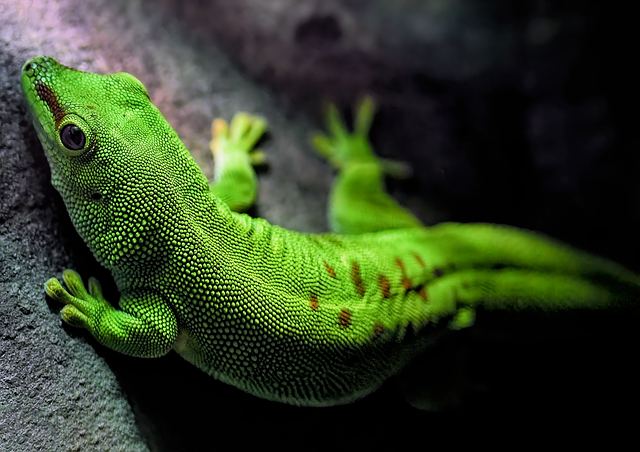
A team of engineers and oncologists at the University of Colorado has taken inspiration from gecko toes to create a new drug delivery system that adheres tightly to tumors while minimizing damage to healthy tissue. The technology, described in the journal Advanced Materials, uses biodegradable particles designed to mimic the microscopic gripping structures of gecko feet, delivering chemotherapy drugs over time without being quickly flushed from the body.
How a lizard’s toes could revolutionize cancer treatment
Geckos can cling to walls thanks to millions of tiny fibers on their toes that exploit a weak molecular attraction known as Van der Waals force. Mimicking this principle, the CU Boulder team developed “soft dendritic particles” from an FDA-approved polymer, giving them nanoscale branches similar to those setae-like fibers.
The researchers infused the particles with chemotherapy drugs and applied them to bladder tumors in mice, finding that the material stayed in place for several days—despite the bladder’s wet and constantly flushing environment—and elicited a strong immune response without obvious toxicity.
Key findings from the study
- Particles were made from biodegradable poly(lactic-co-glycolic acid) (PLGA) with a chitosan coating.
- They adhered to mouse and human bladder cancer cells for multiple days.
- Gemcitabine-loaded particles induced greater CD45+ immune cell response than controls.
- The system enabled sustained drug release with minimal side effects in preclinical trials.
Potential to reduce bladder cancer recurrence and side effects
Bladder cancer is notoriously hard to treat due to frequent urination washing out medications. Current treatments involve inserting a catheter to flood the bladder with drugs, a process that must be repeated often and can irritate healthy tissue. The researchers hope their sticky, drug-laden particles—delivered via a gel—will cling to tumors more selectively, allowing for fewer treatments and better outcomes.
The team believes the platform could be extended to other localized cancers, such as tumors in the mouth, head, or neck, offering a flexible new approach to targeted therapy. Further studies are needed before the method is tested in humans.
Quoting the source researchers
“Nature has been at this for millions of years and offers clues for developing better biomaterials,” said Wyatt Shields, senior author and assistant professor at CU Boulder. First-author Jin Gyun Lee said the results show strong potential for reducing treatment frequency and improving patient comfort.
“Bladder cancer is common, with most patients presenting with localized disease,” said Thomas Flaig, a co-author and medical oncologist at CU Anschutz. “There is a real need for new and effective therapies to prevent progression to more advanced stages of disease for these patients.”
Study information
The findings were published in Advanced Materials under the title “Soft Extrudable Dendritic Particles with Nanostructured Tendrils for Local Adhesion and Drug Release to Bladder Cancers.” The researchers emphasize that clinical trials are still years away, but the concept could transform how certain cancers are treated.