

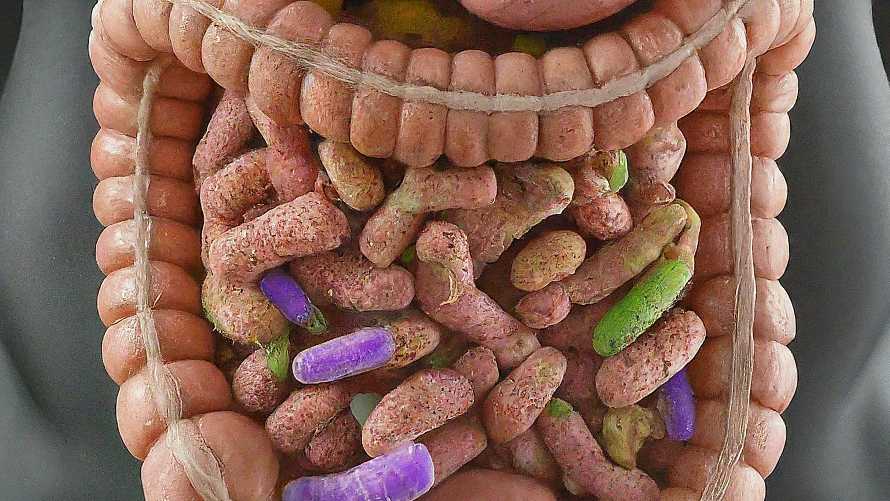
Canadian researchers have found a surprising way to improve blood sugar levels and reduce liver inflammation—by trapping a little-known fuel produced by gut bacteria before it enters the bloodstream.
The discovery, published July 29 in Cell Metabolism, sheds new light on how our microbiome affects metabolic diseases like type 2 diabetes and fatty liver disease, and opens the door to a potential new class of therapies that act entirely within the gut.
From the Gut to the Liver: A New Player in Metabolism
For decades, scientists have understood the so-called Cori cycle, a feedback loop in which muscles generate lactate that the liver uses to make glucose. This classic pathway earned Carl and Gerty Cori the Nobel Prize in 1947. But now, researchers at McMaster University and collaborating institutions have uncovered a microbial twist on this cycle: gut bacteria churn out a different form of lactate—D-lactate—that can sneak into the bloodstream and overfuel the liver.
“What we’ve discovered is a new branch of that cycle, where gut bacteria are also part of the conversation,” said Jonathan Schertzer, the study’s senior author and a professor at McMaster’s Department of Biochemistry and Biomedical Sciences.
Unlike the more familiar L-lactate made by muscles, D-lactate is mostly produced by intestinal microbes. In people with obesity, levels of D-lactate in the blood are higher—and that, the team found, may help explain why the liver ends up producing too much glucose and fat.
How a Polymer Trap Changes the Game
To test their hypothesis, the scientists developed a “gut substrate trap”—a biodegradable polymer that binds to D-lactate inside the intestine and prevents it from entering the bloodstream. Mice with obesity that were fed the polymer had better blood sugar control, less insulin resistance, and reduced signs of liver inflammation and fibrosis—even though their weight and diet stayed the same.
“Instead of targeting hormones or the liver directly, we’re intercepting a microbial fuel source before it can do harm,” said Schertzer, who also holds a Canada Research Chair in Metabolic Inflammation.
Key findings from the study include:
- People and mice with obesity had significantly higher blood levels of D-lactate, but not L-lactate
- A single gut bacterial strain producing more D-lactate raised blood glucose in mice
- Dietary polymers made of L-lactate trapped D-lactate in the gut, increasing its excretion in feces
- This “D-lactate trap” improved insulin sensitivity and lowered liver inflammation and fibrosis in obese mice
A Microbial Shortcut to Fatty Liver?
The polymer treatment also proved effective in a mouse model of metabolic dysfunction-associated steatohepatitis (MASH), a progressive form of fatty liver disease. Mice that received the D-lactate-trapping polymer had less liver scarring, fewer activated immune cells, and lower markers of inflammation.
“We found that oral delivery of specific poly-L-lactides forces the excretion of gut D-lactate, lowering blood D-lactate and improving liver outcomes,” the authors wrote. Notably, these effects occurred without altering overall food intake, body weight, or gut bacteria composition.
What Makes D-Lactate So Potent?
Although D-lactate appears in the body in much lower quantities than L-lactate, it may be more metabolically disruptive. The team showed that D-lactate promotes the formation of liver fat and glucose more efficiently than its better-known twin. It also activates immune cells in the liver that are linked to disease progression.
“D-lactate may be a more efficient substrate for liver mitochondrial respiration,” the authors note. Still, they emphasize that more work is needed to understand exactly how D-lactate contributes to metabolic disease in humans and how its metabolism differs from that of L-lactate.
Implications for Human Health
While most of the data come from mouse models, the researchers found elevated D-lactate levels in people with obesity, suggesting human relevance. They caution that future studies are needed to confirm whether the gut trap strategy works in humans and how it might integrate with other diabetes or liver disease treatments.
“This adds a microbial layer to the Cori cycle,” said Schertzer. “And it shows that stopping a single microbial metabolite in the gut can have far-reaching benefits for metabolism and liver health.”
As scientists continue to explore how the microbiome shapes chronic disease, this study offers a powerful example of how targeting bacterial byproducts could offer a new path to treatment—without ever touching human cells directly.
Journal: Cell Metabolism