

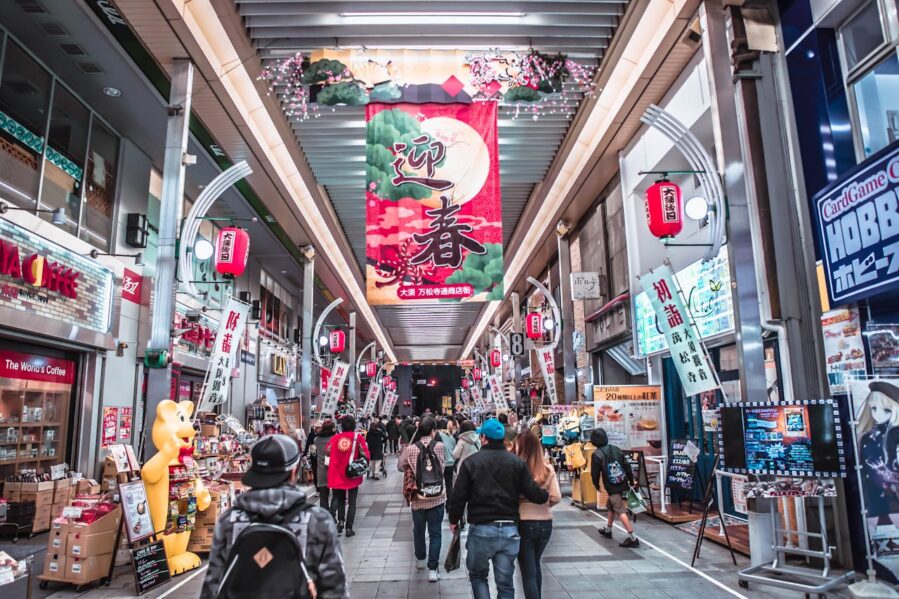
Morten arrives at the same time every morning. He sits in the same spot, orders the same coffee, and watches the same flow of strangers move past him. He has been doing this for years. When asked why, his answer is direct: “This is the best place.”
He is not alone in this habit. Across Norway’s Østfold county, a shopping center has become home to dozens of regulars who show up not to shop, but to be around other people. Some sit for hours. Some walk slow loops through the halls. A few have memorial plaques installed by management, honoring their years of loyalty.
New research from the Norwegian University of Life Sciences spent months observing this center and interviewing its frequent visitors. The findings, published in Cities, reveal how commercial spaces have quietly evolved into vital social infrastructure, particularly for older adults navigating loneliness and isolation.
What People Actually Do When They’re Not Shopping
The researchers used a method called “go-along interviews,” walking alongside visitors as they moved through the space. They found that many came for what sociologists call “unfocused interactions,” the experience of being near others without the pressure to engage directly.
Participants described the environment as soothing. The controlled climate, the steady hum of activity, the smell of coffee drifting from a nearby cafe. For those living alone, these sensory details created a sense of comfort that was hard to replicate at home. Even brief exchanges, a nod, a smile, a comment about the weather, could shift someone’s emotional state for the better.
Older adults were especially consistent in their routines. Many had built entire days around their visits, arriving at specific times and occupying the same benches or tables. Some had formed informal groups that met daily to talk about sports, politics, or memories from earlier decades. These relationships rarely involved deep personal disclosure, but they provided recognition and continuity.
“I don’t have anybody. It makes you understand why I leave the house. If I’m staying at home, the thoughts will come,” Inger, 85, explains.
The center offered something difficult to find elsewhere: a place to be social without obligation. No invitations were required. No one needed to explain why they showed up or what they hoped to gain. The space simply allowed people to exist among others, and that was enough.
Why These Spaces Work When Others Don’t
Shopping centers succeed as gathering places partly because of their practical design. They are centrally located, easy to reach by public transport, and accessible for people with limited mobility. Unlike parks or libraries, they remain comfortable year-round, insulated from weather and temperature extremes.
But the research suggests something deeper is at play. These spaces function as what urban sociologists call “third places,” distinct from home and work, where people can come and go freely. In a time when online activity has replaced much face-to-face contact, shopping centers have absorbed some of the social functions once served by high streets, community centers, and church halls.
The authors caution that their study focused on a single Norwegian center and involved mostly middle-aged and older participants. Still, the patterns they observed point to a broader shift in how cities support mental health and social connection.
As loneliness becomes a more recognized public health concern, particularly among aging populations, the findings suggest that accessible, lively, and neutral spaces can provide support without formal programming or intervention. The shopping center may not have been designed for this purpose, but it has adapted to meet a need that was always there.
Miss a day at the center, and someone might notice. That simple fact, more than anything else, explains why people keep coming back.