

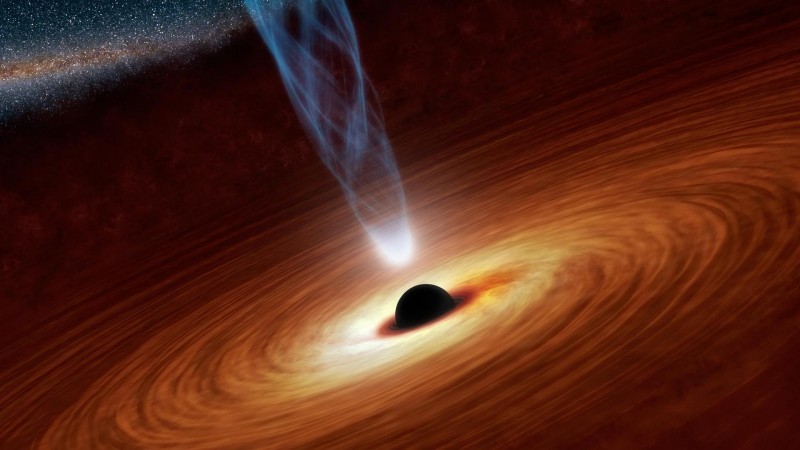
Scientists have recreated cosmic planet formation in a laboratory canister, using spinning cylinders filled with liquid metal to confirm that wobbling plasma rings around stars can cause matter to drift inward and coalesce into planets.
The experiments at Princeton Plasma Physics Laboratory revealed that these cosmic wobbles, known as magnetorotational instabilities, can grow more easily than previously thought—potentially explaining why planetary systems appear so common throughout the universe.
The discovery centers on an unexpected mechanism: wobbles arising in free shear layers, regions where two streams of plasma flow at different velocities. This finding suggests planet formation could occur more frequently across the cosmos than astronomers once believed possible.
Stellar Mimicry in Metal Cylinders
“This finding shows that the wobble might occur more often throughout the universe than we expected, potentially being responsible for the formation of more solar systems than once thought,” explained Yin Wang, a staff research physicist at Princeton Plasma Physics Laboratory and lead author of the study published in Physical Review Letters.
The experiments used nested metal cylinders, each roughly one foot high and two inches wide, that could spin at different rates. Researchers filled the space between cylinders with galinstan—a liquid metal mixture of gallium, indium, and tin—to mimic how different regions of stellar accretion disks rotate at varying speeds. When they applied magnetic fields, the setup faithfully reproduced conditions around young stars where planets form.
The liquid metal analog perfectly captured the essential physics. Just as in real stellar disks, the experimental wobble caused particles on the outer edges to accelerate and potentially escape, while inner particles slowed down and drifted inward toward the central mass.
The Shear Layer Surprise
Previous research focused on wobbles growing from interactions between plasma and magnetic fields in gravitational environments. But the Princeton team discovered wobbles could emerge more readily in free shear layers—boundaries where fluids of different velocities meet and mix, similar to turbulence created when aircraft fly through clouds.
Computer simulations using programs called SFEMaNS and Dedalus confirmed the experimental results and revealed the underlying mechanism. “Those computer simulations confirmed our previous experimental analyses, but they also opened up different frontiers to help us understand what that data meant,” noted Fatima Ebrahimi, a principal research physicist at PPPL and co-author of the study.
The simulations showed that these nonaxisymmetric magnetorotational instabilities represent a type of magnetohydrodynamic turbulence with added complexity from magnetic fields—similar to phenomena occurring on the sun’s surface and in Earth’s magnetosphere.
Universal Implications
The research builds on 2022 experiments that first demonstrated laboratory creation of magnetorotational instabilities. The new work reveals these cosmic wobbles can develop with magnetic field lines wound in twisting, interlaced patterns through shear layers, creating different magnetic strengths in different orientations.
This mechanism has profound astronomical implications because free shear layers occur throughout the universe in locations such as:
- Boundaries between stellar disks and their central stars
- The solar tachocline where the sun’s radiative and convective zones meet
- Edges of gaps that planets carve in protoplanetary disks
- Regions around black holes where matter spirals inward
The discovery helps solve what Ebrahimi called “a long-standing astrophysical mystery” about how efficiently matter can migrate inward in stellar disks to form planets. Previous models struggled to explain the rapid timescales observed for planetary system formation.
From Lab Bench to Cosmic Scale
The experimental approach demonstrates how laboratory plasma physics can illuminate cosmic processes occurring on scales billions of times larger. The Princeton team created conditions where the magnetic Reynolds number—a measure of how magnetic fields interact with moving plasma—reached the critical threshold for instability at much lower values than traditional models predicted.
“The simulations showed that in situations when two fluids with different velocities meet and mix, creating a free shear layer, a large-scale nonaxisymmetric MRI can grow, which makes the whole disk wobble,” Ebrahimi explained. This wobbling motion redistributes angular momentum, allowing matter to spiral inward and accumulate.
The findings suggest that planet formation mechanisms operate more universally than previously understood. Rather than requiring specific, rare conditions, the wobble instabilities can emerge wherever shear layers exist—making planetary systems a natural outcome of stellar disk evolution rather than an unlikely coincidence.
The research team included Erik Gilson, head of PPPL’s discovery plasma science; Hantao Ji, a distinguished research fellow and Princeton University professor; Jeremy Goodman, a Princeton astrophysical sciences professor; and summer intern Hongke Lu. Their work was supported by the Department of Energy, NASA, and the National Science Foundation.
Future experiments will explore how these laboratory-confirmed mechanisms scale to the vast disks surrounding young stars, potentially revealing new details about how Earth-like worlds emerge from cosmic dust and gas.