

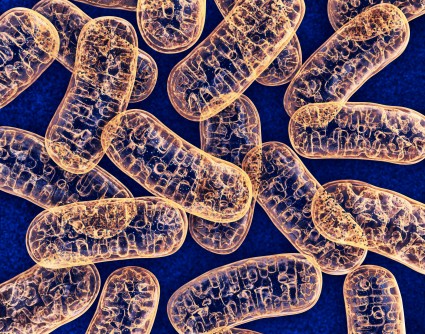
Molybdenum is a hard, silvery metal most people encounter only as an additive in steel alloys. Biologically, it does something remarkable: slotted into the active sites of enzymes, it bends the rules of what chemistry can do at body temperature, enabling reactions that fix nitrogen from the air, cycle sulfur through ocean water, and shuffle carbon between molecules at rates that, without it, would simply be too slow to sustain anything alive. Nearly every organism on Earth depends on it. Which makes the central puzzle of a new study in Nature Communications all the more striking: for most of life’s history, the metal was almost completely absent from the oceans.
Researchers at the University of Wisconsin-Madison have now traced molybdenum’s biological footprint back 3.4 billion years, to a time when the world’s seas held perhaps one-twenty-thousandth as much of it as they do today. The finding upends a tidy assumption in origins-of-life research, namely that early biochemistry was shaped primarily by what was plentiful, and opens a more unsettling possibility: that life does not merely adapt to its environment but latches on to whatever works, regardless of cost.
A Paradox Written in Ancient Rock
The case against molybdenum being a foundational element is, at first glance, compelling. The geochemical record preserved in black shales tells us that before about 2.45 billion years ago, there was essentially no oxygen in Earth’s atmosphere. That matters because molybdenum gets into seawater mainly through the oxidative weathering of sulfide minerals on land. No oxygen means almost no weathering, which means almost no dissolved molybdenum, which means ocean concentrations that modern biochemists would consider vanishingly trace. Aya Klos, a PhD student in bacteriology at UW-Madison and lead author of the paper, puts the paradox plainly. “What is kind of counterintuitive is that, according to the geochemical record, molybdenum abundance on the early Earth seems to have been a lot lower billions of years ago, particularly before the advent of oxygenic photosynthesis.” Yet for some reason, the enzymes built around it were already proliferating.
To pin down when, the team did something ambitious: they reconstructed the evolutionary history of more than 100 protein families involved in molybdenum and tungsten uptake, transport, cofactor biosynthesis, and catalysis across 1,609 genomes spanning the full sweep of known life. They then reconciled those family trees against independently dated species trees, using three different molecular clock models to bracket the uncertainty. The picture that emerged pushed the origin of molybdenum-dependent biochemistry back to somewhere between 3.7 and 3.1 billion years ago (the Eoarchean and Mesoarchean), geologically ancient territory.
Some of the oldest signals belong to the enzyme families that perform the widest range of jobs. The DMSOR and XO families, which together shuffle electrons through carbon, nitrogen, and sulfur chemistry, show gene events dating to that same deep window. The biosynthetic pathway that builds the molybdenum cofactor (the molecular cradle that holds the metal inside an enzyme, appears fully assembled by the Mesoarchean, around 3.1 billion years ago. A complete biochemical toolkit for molybdenum, operational well before oxygen changed everything.
Tungsten as a Parallel Experiment
Running alongside that story is a quieter one about tungsten, a metal that shares just enough chemistry with molybdenum to substitute for it in some enzymes, yet tends today to appear mainly in organisms living at extreme temperatures. The study suggests that early life was not betting solely on molybdenum; it was, in effect, running parallel experiments. Tungsten-specific transport systems appear to be at least as ancient as their molybdenum equivalents, and in strictly anaerobic environments, where oxygen never reaches, tungsten-based enzymes still dominate. The two metals may have carved out complementary niches from very early on, with tungsten handling lower-potential redox reactions under hot, anoxic conditions and molybdenum taking on the broader catalytic territory.
That the two metals were already being distinguished, transported, and incorporated into separate enzyme architectures billions of years before the atmosphere oxygenated suggests something about early biochemistry’s sophistication. These were not accidental associations, metal ions blundering into proteins by chance. They required dedicated uptake machinery, elaborate cofactor assembly lines, and enzymes tuned to exploit each metal’s particular electronic properties. Building all that under conditions of severe metal scarcity implies a selective pressure strong enough to sustain the investment.
One candidate source for what little molybdenum did exist: submarine hydrothermal vents, which can release dissolved molybdenum and molybdenum sorbed onto iron sulfide particles into surrounding seawater. The concentrations would have been local and probably patchy, but for microbial communities clustered around those vents, enough to make the biochemistry worth pursuing. After the Great Oxidation Event, when riverine input took over from vents as the dominant molybdenum delivery mechanism, the metal’s ocean concentration climbed orders of magnitude and the molecular record shows a corresponding burst of new molybdoenzyme diversity, as if the biochemical infrastructure that had been waiting was finally running at full capacity.
Rethinking What Life Requires
There is a longstanding and not unreasonable assumption in astrobiology that the elements life depends on should be abundant where life arose. Finding that something as central as molybdenum was essentially a trace contaminant during the critical window of early biochemical evolution complicates that picture considerably. Betül Kaçar, professor of bacteriology at UW-Madison and the paper’s senior author, draws out the implication directly. “This study shows that just because an element is scarce in the environment doesn’t mean life will not find a way to use it and even build an empire with it… Life works in surprising ways. Discoveries like this remind us that the search for life beyond Earth may require us to imagine possibilities we haven’t yet considered.”
The team notes some important caveats. Gene-tree-species-tree reconciliation methods carry inherent uncertainty; ancient gene events can be placed anywhere along a long branch, which means dates come with substantial error bars. New lineages and sequences, particularly from undercharacterized archaeal branches, may shift the picture. And there is always the possibility that ancient molybdoenzymes had structures or functions that no longer exist, making them difficult to identify through comparisons with modern proteins alone.
The researchers plan to continue examining how molybdenum actually moves through cells, tracking its intracellular trafficking to understand why life keeps reinvesting in metal-dependent chemistry even when metal supply is uncertain. Separately, they are interested in the peculiar late appearance of molybdenum storage proteins, which only show up in the fossil-gene record after the Great Oxidation Event. If the metal was scarce before oxygenation, why did organisms only evolve dedicated storage mechanisms once it became more available? Competition, perhaps: as more lineages gained access to higher molybdenum concentrations, the selective advantage of hoarding it may have intensified.
What all of this points toward is a picture of early biochemistry that was, in some ways, more audacious than we had assumed. Life did not simply make do with what was lying around in abundance. It reached for metals that were hard to find, built elaborate molecular infrastructure to capture and use them, and passed that infrastructure down through billions of years of subsequent evolution. The molybdenum in the enzyme that fixed the nitrogen in your breakfast this morning has an ancestry stretching back to anoxic oceans on a world without breathable air, built on scarcity, sustained by utility..
Source: Klos AS, Sobol MS, Boden JS, et al. Biological use of molybdenum and tungsten stems back to 3.4 billion years ago. Nature Communications 17, 3943 (2026). https://doi.org/10.1038/s41467-026-72133-0
Frequently Asked Questions
Why would early life evolve to depend on a metal that was almost nonexistent in the oceans?
Molybdenum’s chemical versatility appears to have made it worth the difficulty of obtaining. When incorporated into enzymes, it can catalyze reactions spanning an unusually wide range of conditions and substrates, particularly the kinds of carbon, nitrogen, and sulfur cycling reactions that early life urgently needed. The researchers suggest that molybdenum’s redox flexibility gave organisms a selective advantage significant enough to justify building elaborate molecular machinery to capture even trace amounts of it, possibly from hydrothermal vents. The rest of life’s biochemistry then inherited that investment.
Is tungsten just a backup for when molybdenum runs out?
Not quite — the two metals appear to have had distinct, complementary roles from the very beginning. Tungsten-dependent enzymes tend to operate at lower redox potentials and perform better at high temperatures, which is why they still dominate in thermophilic archaea living in extreme environments today. The new study suggests that ancient life was essentially running parallel experiments with both metals, not simply treating one as a substitute for the other. Whether tungsten preceded molybdenum in the earliest organisms, or whether the two were adopted simultaneously, remains an open question.
Does this change how scientists think about finding life on other planets?
It should prompt some recalibration. A common assumption in astrobiology is that life on other worlds would require abundances of the same elements life here uses. This study suggests that life can build sophisticated, long-lasting biochemical dependencies on elements that are nearly absent from its environment. A planet with very little molybdenum in its oceans is not, on that basis alone, ruled out as a potential home for complex biochemistry. The search for life elsewhere may require broader thinking about which elements count as prerequisites and which are merely convenient.
How do researchers actually trace which metals life was using 3.4 billion years ago?
The team used a technique called gene-tree-species-tree reconciliation. By mapping the evolutionary relationships of more than 100 protein families involved in molybdenum and tungsten metabolism across 1,609 modern genomes, then matching those family trees against independently dated species trees, they could estimate when various genes first appeared. Multiple molecular clock models were used to bracket the uncertainty, since there is no single agreed method for deep-time dating. The results consistently pointed to the Eoarchean and Mesoarchean, between roughly 3.7 and 3.1 billion years ago, as when the core molybdenum biochemical toolkit was assembled.