

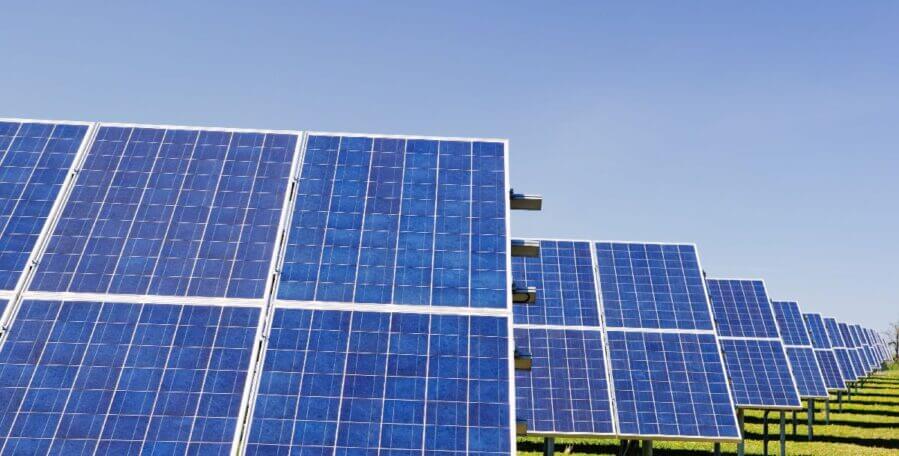
Somewhere in Victoria, Australia, a neighborhood wakes up, plugs in its electric vehicles, and the local grid quietly buckles. No blackout, nothing dramatic. Just a slow voltage sag that engineers call undervoltage, the kind of thing that stresses transformers and shortens equipment lifetimes rather than making headlines. By mid-morning the same street’s solar panels are pumping excess power back into the grid, and the problem flips: now there’s too much voltage. The grid that was supposed to benefit from all this clean energy is, in a technical sense, struggling to cope with it.
This is the paradox sitting at the heart of the renewable transition. The technologies we’ve deployed to fix the electricity system are, in certain respects, making parts of it more fragile.
A new study from Deakin University, published this month in IET Renewable Power Generation, has tried to quantify exactly what high concentrations of rooftop solar and electric vehicles do to the low-voltage distribution networks that serve homes and businesses. These are the final-stage lines, the ones running from neighborhood transformers to your meter box, that most grid planning has historically treated as an afterthought. They weren’t designed for two-way power flows. They weren’t designed for fleets of EVs all charging at midnight. And they weren’t, frankly, designed for the pace at which households have been adopting both.
A Grid Built for One Direction
The researchers modeled a real distribution network in Victoria and ran it through scenarios of increasing solar and EV penetration, watching what happened to voltages across the day. The pattern that emerged was almost clockwork in its regularity. Midday: solar generation peaks, more power flows back up the line than the network was engineered to handle, and voltages rise beyond acceptable limits. Midnight: the solar has switched off, but the EVs are charging, demand spikes, and voltages drop. Rinse and repeat.
The study assessed several ways to address this. You can curtail the solar output when the grid gets stressed, essentially telling panels to stop generating even when the sun is shining. You can install smart inverters capable of managing reactive power, which helps regulate voltage without actually storing anything. Neither is particularly satisfying. Curtailment wastes clean energy. Smart inverters help at the margins but can’t compensate for the scale of the mismatch.
Which leaves battery storage. The team looked at batteries at two levels: individual household installations (the kind of thing you might buy to pair with your rooftop solar) and community-scale systems that serve multiple homes from a single, larger unit. Both worked. But community-scale storage turned out to be roughly 52% more cost-effective than the household approach, a gap significant enough to carry real policy weight. “Cleaner energy brings new grid challenges, making coordinated storage essential for voltage stability,” said Khalil Gholami, who led the research.
The reason for that cost gap isn’t hard to follow. A battery serving a single house has to be sized for that house’s worst case: the night it’s coldest, the EV is charging, and no solar has been generated for two days. A community battery serving 50 houses doesn’t need to prepare for all 50 worst cases simultaneously; it can smooth across the variation of its users, storing and releasing as the aggregate demand requires. It’s the insurance-pool logic applied to kilowatt-hours.
The Aggregation Advantage
There’s something worth sitting with here. Batteries have generally been sold to households as individual purchases, a kind of personal energy resilience product you bolt to your garage wall. The Deakin study suggests that framing might be economically backward, at least when you’re thinking about grid health rather than individual energy bills. The community-scale approach requires coordination, probably some kind of shared ownership or utility involvement, and those things are administratively harder than simply selling people a box. But the numbers are fairly unambiguous about where the efficiency lies.
The study doesn’t resolve questions about who pays for community batteries, how they’re governed, or whether existing energy market rules even accommodate shared storage assets of this kind. Most regulatory frameworks weren’t written with this model in mind. In parts of Australia, the UK, and the US, rules around feed-in tariffs, network charges, and revenue stacking are still catching up to the reality of what distributed storage could do.
There are also limits to what any study of a single Victorian network can tell you. Different climates mean different solar profiles. Different car ownership patterns mean different overnight charging loads. A suburb with high apartment density and fewer rooftop panels faces a different version of this problem than a sprawling low-density area where almost everyone has solar. The broad finding, that community storage outperforms household storage on cost-effectiveness, is likely to hold across many settings, but the exact numbers will vary.
What the Grid Actually Needs
What the research does do is shift attention from generation to management. For most of the renewable transition, the central question has been how to build enough solar, wind, and other clean generation capacity to replace fossil fuels. That’s still crucial. But as penetration rises, a second question is becoming unavoidable: how do you operate a grid full of devices that all respond to the same weather, charge at the same time of night, and weren’t designed to cooperate? The answer, the Deakin team argues, involves storage systems sized and positioned at the community level, operating not for any single household’s benefit but for the grid’s collective stability.
In Victoria’s suburbs, the daily voltage cycle continues. Solar panels wake with the sun. EVs charge through the night. And somewhere between those two rhythms, there’s a gap that a well-placed battery, or perhaps a thousand of them, might eventually fill.
Source: Gholami et al., IET Renewable Power Generation, 2026. doi:10.1049/rpg2.70244
Frequently Asked Questions
Why do solar panels cause voltage problems on the grid?
When a large number of homes generate solar power simultaneously, the electricity flows back up distribution lines that were designed to carry power in only one direction. This reverse flow pushes voltages above safe operating limits, a condition called overvoltage. The more solar panels on a street or suburb, the more pronounced the effect during peak sunshine hours.
Why is community-scale battery storage so much cheaper than individual household batteries?
A community battery serves many homes at once and can smooth out variation in their energy use. Rather than sizing a battery for each household’s worst-case demand, a shared system handles the average across dozens or hundreds of users, who rarely all hit their peak demand at the same moment. This pooling effect means less total battery capacity is needed to deliver the same level of grid protection, cutting costs by around 52% compared with equivalent household installations, according to the Deakin University study.
Can’t smart inverters solve the voltage problem without batteries?
Smart inverters can help by managing reactive power, which provides some voltage regulation, but they can’t compensate fully for the scale of the mismatch between generation and demand in heavily electrified neighborhoods. They work best as a complement to storage, not a replacement for it.
Does this research apply outside Australia?
The specific findings come from a real distribution network in Victoria, so the exact figures won’t translate directly to every grid. However, the underlying dynamics, midday overvoltage from solar and overnight undervoltage from EV charging, are common to any low-voltage network with high renewable penetration. The conclusion that community-scale storage is more cost-effective than household storage is likely to hold broadly, though the size of the advantage will vary by location.
What is stopping wider adoption of community battery systems?
The main barriers are regulatory and commercial rather than technical. Energy market rules in many countries were written before shared storage assets existed, and questions about ownership, revenue sharing, and network charges haven’t been fully resolved. The technology works; the governance frameworks to deploy it at scale are still catching up.