

That wellness hack you just saw on TikTok? There’s a good chance medieval healers were using it a thousand years ago.
A sweeping new study of Dark Ages medical manuscripts reveals that people in medieval Europe were far more scientifically minded than previously thought—and some of their remedies bear striking resemblance to today’s alternative medicine trends.
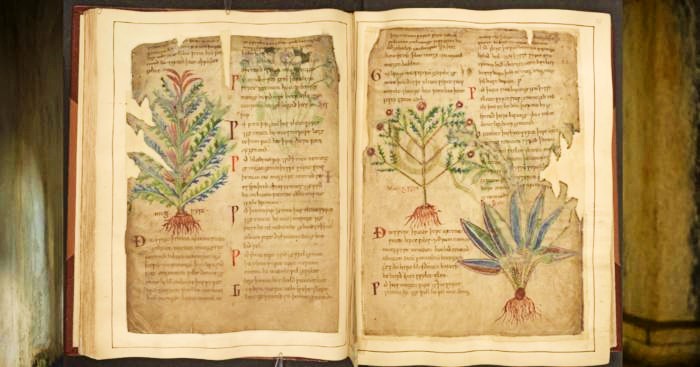
Researchers from Binghamton University and four other institutions have compiled the most comprehensive catalog ever assembled of early medieval medical texts, nearly doubling the known collection of medical manuscripts from before the 11th century. Their findings challenge long-held assumptions about medieval ignorance and superstition.
Ancient Wellness Wisdom
The parallels between medieval and modern medicine are surprisingly specific. Suffering from a headache? Medieval texts recommended crushing a peach pit, mixing it with rose oil, and applying the mixture to your forehead. Modern research published in 2017 actually supports this approach—rose oil can help alleviate migraine pain.
Then there’s “lizard shampoo,” where pieces of lizard were used either to promote luscious hair growth or remove unwanted hair entirely. It sounds bizarre, but the concept isn’t so different from modern waxing or other hair removal treatments that involve applying organic compounds to the skin.
Medieval healers documented these remedies everywhere—scribbled in the margins of grammar books, theology texts, and poetry manuscripts. This wasn’t organized medicine as we know it today, but rather a grassroots movement of health-conscious individuals sharing knowledge wherever they could find space to write.
Challenging the “Dark Ages” Myth
The research, led by the Corpus of Early Medieval Latin Medicine (CEMLM) project and funded by the British Academy, examined hundreds of manuscripts from across Europe. What they found contradicts the popular image of medieval people as scientifically backward.
Key discoveries include:
- Widespread medical literacy: People were actively recording health observations across diverse social groups
- Scientific thinking: Medieval healers emphasized observation, pattern recognition, and prediction
- Natural experimentation: Extensive documentation of plant and mineral remedies based on empirical testing
- Practical focus: Remedies addressed everyday health concerns rather than abstract medical theory
Meg Leja, a Binghamton University history professor who worked on the project, emphasized how this evidence reshapes our understanding of the period. Her research, drawing from her book “Embodying the Soul: Medicine and Religion in Carolingian Europe,” reveals a society deeply invested in understanding and controlling bodily health.
Science in the Margins
What makes these findings particularly compelling is where the medical knowledge appeared. Rather than formal medical treatises, most remedies were jotted down in the margins of completely unrelated texts—grammar lessons, religious writings, poetry collections.
This marginalia tells a story of people so concerned with health and healing that they couldn’t resist adding medical notes to whatever book they happened to be reading. It suggests a culture where wellness knowledge circulated informally, much like health tips spreading through social media today.
The researchers found that these everyday practitioners weren’t simply copying famous ancient authorities like Hippocrates. Instead, they were developing and sharing their own observations about which natural substances worked for specific ailments.
Modern Implications
The parallels to contemporary alternative medicine go beyond specific remedies. Medieval people approached health with the same combination of empirical observation and folk wisdom that characterizes modern wellness culture. They documented what worked, shared successful treatments, and continuously experimented with new approaches.
This historical perspective offers valuable context for today’s discussions about alternative medicine. Many treatments dismissed as “new age” actually have deep historical roots, representing continuous traditions of natural healing that have persisted across centuries.
The research team continues updating their catalog as they discover additional manuscripts. Their work provides crucial evidence that medieval people were “quite into science, into observation, into figuring out the utility of different natural substances,” challenging outdated narratives about medieval intellectual life.
Perhaps most importantly, this research reminds us that the desire to understand and improve human health transcends historical periods. Whether scribbled in medieval margins or shared through viral videos, people have always sought ways to feel better—and sometimes their ancient wisdom proves surprisingly modern.