

Gene therapies hold enormous promise for treating devastating genetic disorders, but they come with a dangerous trade-off: the higher the dose needed for effectiveness, the greater the risk of severe immune reactions or even death.
Now researchers have discovered a previously unknown cellular gateway that could allow doctors to use lower, safer doses while maintaining therapeutic benefits.
The discovery, published in Cell by scientists from the Centenary Institute and University of Sydney, identifies a receptor called AAVR2 that provides an alternative entry route for gene therapy viruses into human cells. This finding could make treatments safer and more affordable for patients with conditions like Duchenne muscular dystrophy, Pompe disease, and hemophilia.
The Dose Dilemma
Current gene therapies typically use modified adeno-associated viruses (AAVs) as delivery vehicles to shuttle healthy genes into patients’ cells. While these treatments can be life-changing, they often require massive doses to work effectively—sometimes triggering dangerous immune responses that have led to patient deaths in clinical trials.
The problem has been particularly acute with AAV8, one of the most widely used vectors in human gene therapy. High doses of AAV8 have been associated with serious complications, yet lower doses often fail to provide therapeutic benefits.
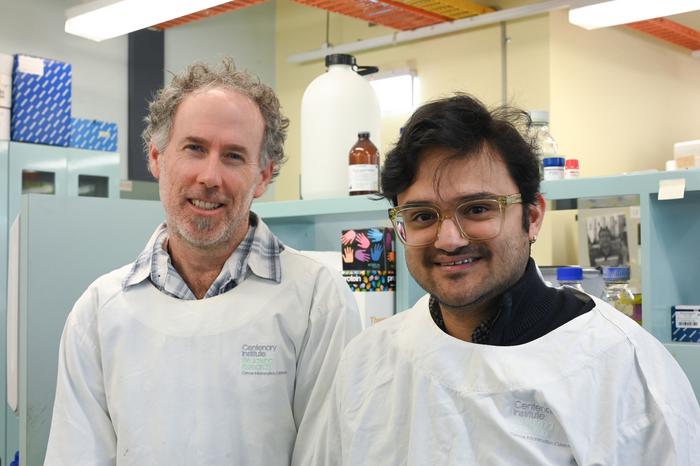
Dr. Bijay Dhungel, who led the study, and his team suspected that understanding how these viruses actually enter cells might reveal ways to improve their efficiency. Their genome-wide screening approach uncovered AAVR2 (carboxypeptidase D) as a crucial but previously unrecognized entry point for several important AAV types.
A Hidden Pathway Revealed
The researchers made their discovery using an innovative technique: they knocked out the known primary receptor (AAVR) in human cells, then systematically activated every gene in the genome to see which ones could restore the virus’s ability to infect cells. Only AAVR2 emerged as a significant hit.
Further investigation revealed that AAVR2 serves different roles for different virus types:
- Alternative route: For AAV8 and related viruses, AAVR2 provides a backup pathway when the primary receptor is unavailable
- Exclusive pathway: For AAV11 and AAV12, AAVR2 appears to be the only way in—these viruses can’t use the primary receptor at all
- Enhanced efficiency: Increasing AAVR2 levels dramatically improves virus uptake across multiple cell types
Using cryo-electron microscopy, the team solved the three-dimensional structure of AAV8 bound to AAVR2 at near-atomic resolution (2.32 angstroms). This revealed exactly how the virus grabs onto the receptor—knowledge that could guide the design of more efficient gene therapy vectors.
From Structure to Solution
The structural data showed that AAVR2 binds to a different region of the virus surface than the primary receptor, suggesting the two pathways could work simultaneously. More importantly, the researchers identified specific amino acid sequences that determine whether a virus can use AAVR2.
They demonstrated that this binding specificity could be transferred between virus types. By swapping a key region from AAV8 into AAV2 (which normally can’t use AAVR2), they created a hybrid virus that gained the ability to use the alternative pathway.
The practical implications became clear when the team tested whether boosting AAVR2 levels could enhance gene therapy in living mice. They created a miniaturized version of the receptor and delivered it alongside therapeutic genes.
Proof of Concept in Animals
The results were striking. In mouse liver, co-delivering the mini-AAVR2 increased gene therapy efficiency by 2-4 fold. In muscle tissue, the improvement was even more dramatic—up to 4-fold enhancement in some experiments.
This means doctors might achieve the same therapeutic effect using significantly lower virus doses, potentially reducing side effects while cutting costs. The approach worked whether the mini-receptor was delivered separately or packaged together with the therapeutic gene in a single treatment.
Dr. Charles Bailey, who heads the Centre for Rare Diseases & Gene Therapy, emphasized the discovery’s potential impact: the team not only identified the receptor but engineered a functional miniature version that “significantly enhances how efficiently the gene therapy is taken up in human cells and tissues.”
Evolutionary Insights
The discovery also provides new insights into viral evolution. The researchers found that some AAV types have evolved to depend exclusively on AAVR2, suggesting this receptor may have played an important historical role in viral biology. They propose classifying AAV11 and AAV12 as a distinct group (clade G) based on their unique dependence on AAVR2.
Interestingly, AAVR2 is found throughout the animal kingdom, with 98% similarity between human and macaque versions and 95% similarity to the mouse protein. This conservation suggests the receptor serves important biological functions beyond viral entry.
Clinical Potential and Challenges
While promising, the approach faces hurdles before reaching patients. The researchers used direct injection into the brain for some experiments because the current mini-receptor breaks down quickly in blood. However, they note that more stable versions could enable systemic delivery.
The work provides a foundation for developing next-generation gene therapies that could be safer, more effective, and accessible to more patients. By understanding the molecular details of how therapeutic viruses enter cells, scientists can engineer better delivery systems and optimize treatment protocols.
This research represents exactly the kind of fundamental discovery that could transform medicine: identifying basic biological mechanisms that can be harnessed to improve human health. For patients waiting for gene therapies, it offers hope that these treatments will become both safer and more widely available.