


Methylation of DNA is the best-known mode of epigenetic regulation (turning genes on and off). Methylation patterns are stable unless they are actively changed, and can persist over decades, even across generations.
Four years ago, biostatistician Steve Horvath of UCLA identified a set of 353 methylation sites that are best-correlated with human (chronological) age. These are sites where genes are turned on and off at particular stages of life. A computer analysis of a gene sample (from blood or skin or even urine) can determine a person’s age within about two years.
Two reasons the Horvath Clock is important. First, it is the best measure we have of a person’s biological age, so it provides an objective measure of whether our anti-aging interventions are working. Say you’re excited about a new drug and you want to know whether it really makes people younger. Before the Horvath clock, you had to give it to thousands of people and wait a long time to see if fewer of them were dying, compared to people who did not get the drug. The Horvath clock is a huge shortcut. You can give the drug to just a few people and measure their Horvath (methylation) age before and after. With just a few dozen people over a two-year period, you can get a very good idea whether your drug is working.
Second, there is evidence and theory to support the idea that the methylation sites that Horvath identified are not just markers of aging but causes of aging. That means that if we can figure out how to get inside the cell nucleus and re-configure the methylation patterns on the chromosomes, we should be able to address a root cause of aging. (Before we get too excited: “Gene therapy” has been around 20 years but is still in a developmental stage; “epigenetic therapy” is what we need, and it does not yet exist, but is technically feasible using genetically engineered viruses and CRISPR.)
The write-up below is taken directly from two talks that Horvath gave, and just .
In 2012-2013, three papers appeared proposing the idea that the deep cause of aging (in humans and many other higher animals) is an epigenetic program [Johnson, Mitteldorf, Rando]. Genes are turned on and off at various stages of life, producing growth, development and aging in seamless sequence. (A fourth paper by Blagosklonny proposed a similar idea, but focused on the role of a single transcription factor controlling gene expression (mTOR) and shied away from the conclusion that natural selection might have preferred aging affirmatively. Here’s an earlier presentiment by Blagosklonny.)
It’s a powerful hypothesis that proposes to resolve evolutionary and metabolic questions alike. It contains a seed of a prescription for anti-aging research—although epigenetics has proved to be so complicated that practical modification of the body’s gene expression schedule may require a lot more groundwork.
Unbeknownst to any of us working on these theoretical papers, Steve Horvath was already working on calibration and measurement of the epigenetic aging clock, and he published his basic result by the end of 2013.
One remarkable property of the Horvath clock is that it is more accurate than chronological age for predicting who will contract aging diseases and who will die. Even though the clock was derived with an algorithm that matched the output clock age as closely as possible to chronological age, the result proved to contain more information than chronological age. “In deriving the clock, chronological age was used as a proxy for biological age.” People whose “methylation age” is greater than their chronological age are likely to suffer health deterioration and to die sooner than people whose methylation age is less than their chronological age.
Horvath has openly shared his methodology and his computer program. Based on the Horvath clock, a California company began last year to offer a commercial test for methylation age. You can send a blood or urine sample to Zymo Research.
Candidate aging clocks
Horvath describes how he came up with the idea of a methylation clock by a process of elimination, beginning with four candidate clocks:
- Telomere length
- Gene expression profile
- Proteomic data
- DNA Methylation
In detail:
- Telomere length – This had been measured easily and cheaply for more than a decade, but its correlation with chronological age (and with mortality) is not strong enough to be useful as a biological clock.
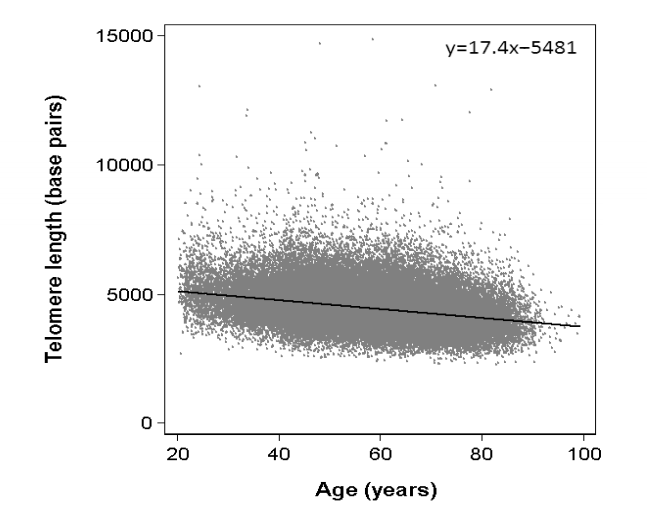
- Gene expression profile: Which genes are being transcribed into RNA at a given time? This can be measured by extracting RNA, and turns out to be highly tissue-specific. In other words, it varies according to which part of the body you’re looking at.
- Proteomic data: Genes, once transcribed, are translated into proteins. Some of these proteins stay in the cell while others circulate through the body. Gene CHIP technology measures levels of different proteins reliably and inexpensively.
- DNA Methylation: Easier to measure than (2) or (3). Methylation is only one of many mechanisms controlling gene expression, but it is one of the most persistent. Horvath found that a subset of DNA methylation sites seems to be characteristic of age no matter where in the body they are measured.
What is DNA methylation?
Adjacent to many genes is a promoter site, a location on the same chromosome which stores temporary information about whether the gene is turned on or off. Promoter sites contain the base sequence C-G-C-G-C-G-C repeated. This is called a CpG island (where the “p” just tells you that the C is linked to G on the same strand, rather than being linked across strands, in which C is paired with G.)
C stands for “Cytosine”, and the Cytosine molecule can be modified by adding an extra methyl group (CH3) to form 5-methyl Cytosine.

The cell has molecular workers that are deployed to go around specifically adding methyl groups in some parts of the DNA or removing them in others. The bottom line is that methylated Cytosine is a sign that says “don’t transcribe the adjacent gene.” When the methyl groups are removed, it is a signal that the gene are to be transcribed once more.
Enzymes called methyl transferases are deployed to precise regions of the genome to turn genes on and off. Methylation can be transient. There is evidence for circadian cycles of methylation. Or it can be quite long-lasting. Methylation patterns can persist for decades, and are copied when cells replicate, so that methylation patterns can be passed to offspring as part of one’s epigenetic legacy. Inherited methylation sites are the exception however; most of the genome is programmed fresh with age-zero, pluripotent methylation patterns when egg and sperm cells are generated.
How the methylation clock works
Using a standard statistical algorithm, Horvath identified 353 CpG sites that were most strongly correlated with chronological age, no matter where in the body he looked. The same algorithm provided 353 numbers to be multiplied by methylation levels at each site, then added up to produce a number. The number is not directly a measure of age, but in the last step a table is used (an empirically-derived curve) to associate the number with an age.
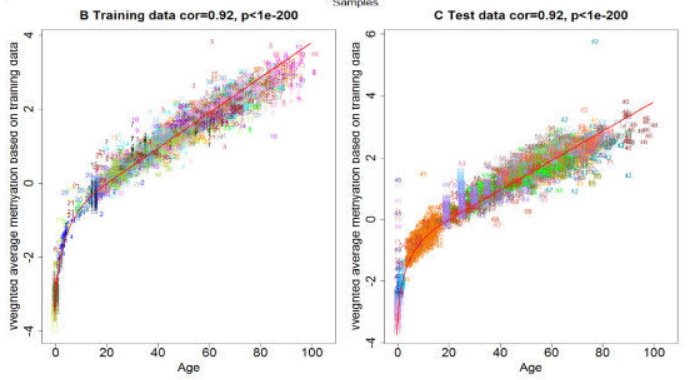
This is the raw output of the function before it is transformed into an age. Notice that methylation changes very rapidly during the first 5 years of life, gradually slowing during the growth phase and straightening out to constant slope after about age 18.
Even though the Horvath clock was designed to be independent of what part of the body DNA was drawn from, some variations appear. Most noticeable is female breast tissue, which ages faster than the rest of the body, and brain tissue, which ages more slowly. Blood and bone tissue tend to age a little faster. (Sperm and egg cells are “age zero” no matter the age of the person from whom the germ cells were drawn. Placentas from women of all ages are age zero.) Similarly, induced stem cells (using the 4 Yamanaka factors) have zero age. In contrast, a similar treatment can change one differentiated cell type into another, for example, turning a skin cell into a neuron. This does not affect epigentic age.
Liver cells tend to be older than the rest of the body in people who are overweight, and younger than the rest of the body in people who are underweight. Other tissues don’t seem to show this relationship. For example, fat cells do not have older methylation ages in people who are obese. And, perhaps surprisingly, weight loss does not reverse the accelerated methylation age of the liver (at least, not within the 9-month time frame of the one study looking at this).

Studies have been done correlating methylation age with various diseases and, of course, mortality. Corrections are made for every kind of environmental factor, including smoking, obesity, exercise, workplace hazards, etc, called collectively the “extrinsic factors”. The result is that methylation age rises with extrinsic factors, and independently methylation age is also correlated with intrinsic (genetic) factors that affect lifespan. Horvath estimates that genetics controls 40% of the variation in methylation age (as it differs from chronological age).
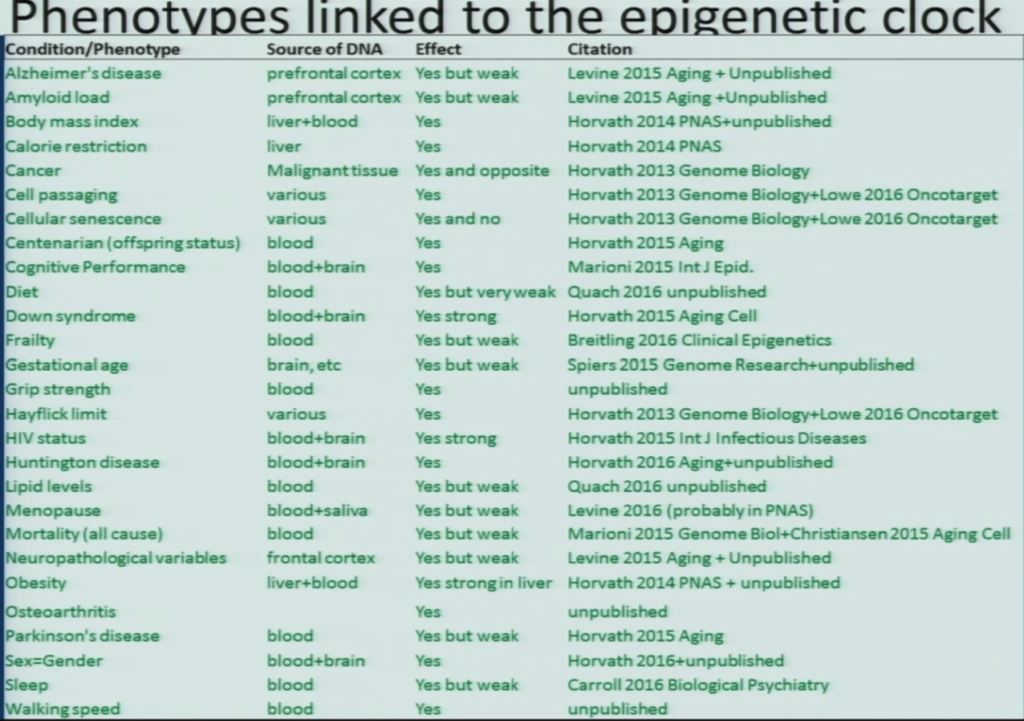
Men are slightly older than women in methylation age. This is already evident by age 2. Delayed menopause is associated with lower epigenetic age. Cognitive function correlates inversely with methylation age of the brain.
Speaking before Horvath at the same conference, Jim Watson claims there are many supplements and medications that can slow the Horvath clock. The one he focuses on is metformin, which, he says, has epigenetic effects via an entirely different pathway from lowering blood sugar (the purpose for which it has been prescribed to tens of millions of diabetics).
Here’s a curious clue: There is a tiny number of children who never develop or grow, and continue to look like babies through age 20 and perhaps beyond. These children have normal methylation age. Whatever it is that blocks their growth, it is not the methylation changes in their DNA. Does this mean that there are other epigenetic controls, more powerful than methylation, that control growth and development? Or does it mean that children with this syndrome have normal epigenetic development, but something downstream from gene expression is blocking their growth? Conversely, Hutchinson-Gilford progeria is caused by a defect in the LMNA gene which causes children to age and die before they even grow up. Hutchinson-Gilford children have normal methylation ages by the Horvath clock.

Radiation, like smoking and exposure to environmental oxidation, tends to age the body faster. This is independent of methylation age—which is unaffected by radiation. Neither smoking nor radiation exposure affect epigenetic age. HIV also accelerates aging, and HIV does affect methylation age.
Methylation age and telomere age are both correlated with chronological age, and they both predict mortality and morbidity independent of chronological age. But the two measures are not correlated with each other. In other words, the information contained in the methylation clock and in measures of telomere length complement one another to offer a better predictor of future aging decline than either of them separately.
Diet has a weak effect on methylation age. Very high carbohydrate, very low protein diets are noticeably terrible. Beyond this, there seem to be two sweet spots: one for the Ornish-style protein-restricted diet and one for the Zone/Atkins style diet. Weak evidence to be sure, but suggestive that they both work.
“The epigenetic clock is broken in cancer tissue.” [ref]
Building on the original clock
The original clock was optimized to track chronological age, and yet it fortuitously provided more information than chronological age. In a second iteration, Horvath set out explicitly to track biological age. He used historic blood samples from the 1990s, and paired them with hospital records and death certificates to search for methylation sites that correlate best with aging-related health outcomes. The result was the phenotypic clock, DNAm phenoAge. This uses 513 methylation sites to predict
- all-cause mortality
- cardiovascular mortality
- lung disease
- cancer
- diabetes
- (loss of) physical strength
- (loss of) cognitive ability
On the drawing board: An epigenetic clock specialized to work well with skin and blood cells, (which are the most accessible). (Enough skin cells can be scraped painlessly from the inside of your mouth (buccal epithelial cells) to do a DNAm test.)
Connection to Parabiosis and Plasma Transfusions
Several groups have begun to experiment with transfusions of blood plasma from a young donor as a possible path to rejuvenation. Horvath reports an encouraging finding: Sometimes older people contract a form of leukemia that requires a blood and marrow transfusion (including the stem cells that give rise to new blood) from a donor. The finding is that after this treatment, the blood of the patient continues to show the methylation age of the donor, not the patient.
Epigenetic Aging and Telomere Aging Bound to a See-Saw Relationship
(This was the most exciting new result for me personally, because it relates to an idea I have held dear for more than a decade.)
Methylation age is older or younger than chronological age in different people, generally by about +2 years. 40% of the variation is due to genetics. Some common genetic variants can make the clock run faster or slower. The most prominent genetic variants link telomere aging to methylation aging. The faster your epigenetic clock runs, the longer your telomeres. The slower your epigenetic clock runs, the shorter your telomeres. [preprint]
There’s a word for this in the genetic theory of aging. It’s called Antagonistic Pleiotropy. Back in 1957, George Williams theorized that the genes causing aging ought to have simultaneous beneficial and detrimental effects. That would explain why natural selection has permitted aging to occur, despite the fact that it cuts off fitness. Williams said: Nature had no choice but to accept the genes that cause aging because there was no other way to get the benefits of these same genes (which he surmised ought to enhance fertility).
My theory of Antagonistic Pleiotropy is that it is not a situation of “forced choice”; rather, aging is important for the health of the community, and mother nature has been faced with the dilemma: how to keep aging in place despite efficient natural selection against it on the individual level. Aging is so important to the community that evolution has been motivated to find ways to keep it in place, despite the short-term temptation for natural selection to favor those with longer lives (thus greater opportunities to leave offspring). In my hypothesis, evolution invented pleiotropy to address this problem. The telomerase-epigenetic clock connection is an example. There is no physically necessary connection between telomerase and epigenetic aging, but the two have evolved a see-saw link so that it is more difficult to mutate aging away.
This also relates to my coverage last fall of the telomerase-cancer connection. At the time, I was scratching my head, why should genetic variants that lengthen telomeres be associated with higher rates of some cancers? Here is a clue: The same genetic variants that lengthen telomeres also accelerate the epigenetic aging program. The specific example of a cancer that is most closely tied to higher telomerase levels is melanoma, which is a cancer that is less sensitive to age than other cancers. People tend to get melanoma earlier in life than other skin cancers. Therefore, I predict that other pleiotropic links will be found between these genetic variants that promote longer telomeres and other mechanisms linked specifically to melanoma.

The Bottom Line
All these data in a field so new is a tribute to Horvath’s industriousness and to the promise and fruitfulness of a new methodology.
The data so far suggest that methylation programming is a big part of the driver of aging, but not the whole story. Smoking affects life expectancy, but it doesn’t affect methylation age. Weight loss benefits life expectancy, but it is invisible to methylation age. Most curious are those children who fail to develop, or age prematurely, even though their methylation age is progressing on schedule.
What does it mean that radiation ages the body without advancing the methylation clock? Perhaps that accumulation of damage is part of the phenotype of aging, though I remain hopeful that the body remains capable of undoing that damage even late in life, if it is re-programmed to want to do so. What does it mean that AIDS advances the aging clock? Perhaps that the immune system is a central signaling mechanism in the aging process.
So, it’s “methylation plus”. Plus what? Not just methylation plus damage”; though we can certainly shorten our lifespan with radiation or smoking, we can’t increase our lifespan by avoiding toxins. “Methylation plus other epigenetic programs”—this would be my first guess. “Methylation plus mitochondrial state” would be a close second. Methylation is all in the nucleus, and the cytoplasm of the cell seems to store independent information, and can even re-program the state of the nucleus, as suggested by parabiosis experiments. There is also evidence for“Methylation plus telomere shortening”.
Discussion
287 reader comments
Imported threads are marked Archive. New comments are welcome and moderated for spam.
Is the Levine et al. 2018 new clock, regressing the clinical biomarkers based "phenotypic age" on blood DNA methylation data and producing the "DNAm PhenoAge" based on the 513 CpGs data, commercially available ? (see https://www.ncbi.nlm.nih.gov/pmc/articles/PMC5940111/#SD2)
Dobrota, as usual there is something in what you say. I thought to myself then Eskimo who eat a basically all meat diet, with plenty of saturated fat should be the healthiest people and it turns out that when on their traditional diet (seal blubber etc.) they have high triglycerides and saturated fatty acids in their blood, but their rate of heart disease is a quarter of the Caucasian population's. When they start westernizing their diet, taking in carbs, then their heart attack rate climbs to the Caucasian or 'Westernized' Eskimo rate. Of course the Eskimo are not the longest-lived people, as I said the Okinawans and Scandinavians (and the Japanese) are and their diet contains little or no animal fat, what there is is heavily marine oil so in ways like eating fish- so then what is the leading cause of mortality? The answer is strokes, high blood pressure is also common, and reevaluation of the original criteria for saying that cardiovascular diseases was lower among the Inuit (Eskimo) people was flawed and that atherosclerosis was just as common among the Inuits as the Europeans. So the surprising thing is that even if the heart disease rate was similar that should not have been the case if high saturated fat leads to heart disease. So I grant you the point that the link between saturated fat (animal fats, but perhaps only from marine animals) and heart disease doesn't exist or is weak, however the statistical approach; find the longest-lived populations are and test all the correlation between them to search for common factors (and not genetic ones, although they might exist as well) as resulting in increased lifespan. So there we'd have to stick with eating a lot of marine foods as the only common practice between Okinawans and Norwegians.
So before you said you ate fats to keep yourself young, now it's BHA and BHT? Truthfully I'd been interested in those substances as being anti-aging for decades - is that your new 'secret'? Many of use would be happy to try out your new assessment technique but our wives won't let us.
Even in lifeextension, they write that a high-calorie diet is beneficial.
http://viewer.zmags.com/publication/f526a8f8?sourcecode=CVD801E&utm_source=Zmag&utm_medium=email&utm_content=HeroImage&utm_campaign=CVD801E#/f526a8f8/74
And much depends on what fats you are going to eat, whether fats accelerating aging or saturated fats. Goose and duck lard, beef and lamb suet. Greasy cheeses and butter. And some trans fats, for example conjugated linoleic acid. Animal fats most prolong life, but in case of emergency, hydrogenated palm oil (margarine) also serves well. Mainly vegetarians should realize that they reduce their life by high-saccharide diet.
Even in lifeextension, they write that a high-calorie diet is beneficial. And much depends on what fats you are going to eat, whether fats accelerating aging or saturated fats. Goose and duck fat, beef and lamb carp. Bold cheeses and butter. Some trans fats, for example conjugated linoleic acid. Animal fats most prolong life, but in case of emergency, hydrogenated palm oil also works well. Mostly, vegetarians should realize that they are cutting their lives with a high-carbohydrate diet.
Is there any proof? Of course. The Mediterranean diet consists of a large amount of animal fats. Noodles larded with olive oil are not fed anywhere from France to Italy to Greece.
Honestly I think you are trying to kill our fellow travelers. Sure just take hydrogenated oils if you think you're not getting enough animal fats. So we just look at those places where lifespan is longest and we find little red meat some dairy (in Scandinavia) and lots of fish (Scandinavia and Japan and Okinawa). So which nation has a high fat diet that shows particular longevity? Where is evidence? We don't have longitudinal studies linking human life-expectancy to diet - we simply have statistics, and those tell us, for example, where people eats lots of greasy, fat-filled foods, they die early deaths of diabetes, heart disease even cancer. We can mark them on a map and see where people have the shortest lifespans and its in places where consumption of fat-filled foods predominate. So a person would be a fool to follow advise based on bizarre beliefs rather than clinical studies and statistical studies.
I want to kill you? Just not to be the opposite. You are influenced by the propaganda depopulation of the planet, which has the task of reducing the number of people.
Do you want proof? Google out the words:
Denham Harman aging
He discovered aging foods in 1956 and has been promoted by health insurers since then. But in our country, people are conservative and continue to eat fatty foods well-basted with animal fats.
Try adding animal fats to all meals and omitting vegetable oils for 14 days. So that fat constitute 80% of the caloric value. You will not give it anything. If it turns out I'm not right, in 14 days nothing happens to you.
Your studies have been poorly translated. When you translate fatty foods, fat-rich foods, it translates like calorie-rich meals. That is a big difference. Just after calorie-rich foods (non-fatty) people get fat.
I'm not interested in the sort of anti-aging that adds a fraction to your lifespan, that is unacceptable, it just puts off the suffering, and extends it. I'm interested in the only sort of life-extension that is worthwhile - life extension through serial rejuvenation. First it was cadmium that killed us, then carbohydrates and lack of saturated fats, even if you were correct about those things that's not the way I would like to extend life - by rejuvenating people over and over, each time giving them a new youth coupled with old and deep knowledge. living an extra fifteen or twenty years won't make much differences to us if our best years are behind us, but with rejuvenation, our best years will be ahead of us, the plasticity of the young brain coupled with the life experience of the old, even the older-than-have-ever-lived-before, what a combination that would be.
Dobrota, you seem very concerned about cadmium, but have you ever wondered, how PCB, dioxin and other neurotoxins tend to accumulate in animal fat? 80% animals fats? Thanks, but I'll pass.
I am informed that the risk of PCB, dioxin and other neurotoxins is irrelevant. They accumulate in both animal fat and vegetable oil. They also arise from the burning of coal and oil. These poisons are strictly guarded. The prime minister in the neighboring country was poisoned with dioxin soup and was cured.
By contrast, cadmium can not be removed from the body, more precisely from the brain. Cadmium is ubiquitous and it is not in human power to limit its emissions. Cadmium directly accelerates aging, interferes with the formation of sex hormones and insulin.
We are doomed..
Josh - I just received my results from DNAge today - DNAge: 70 and calendar age 83 which shows me at 99th percentile of my age. Four years ago my telomere length equated almost exactly with my age. I take Metformin, Rapamycin, and Quercetin +Q plus much, much more. I play tennis daily and am in excellent health. I'm not sure if a 13 year difference is really all that significant, but as more of your followers are tested, the cumulative results could prove highly informative.
Now that we have the Horvath clock, could you perhaps initiate and host a site to collect your individual reader's results that would include a list of nutraceuticals and drugs they take? And make the results available on your site?
> could you perhaps initiate and host a site to collect your individual reader’s results
I'm looking to do this on a larger scale with a standardized format for analysis. I think this will be more useful. Anecdotal evidence can be misleading.
I do not use Metformin, Rapamycin, or Quercetin. I do not even eat aging foods like other people. (canola, olive, sunflower oil, peanut butter, fish, etc).
http://www.foodcanmakeyouill.co.uk/uploads/1/2/7/4/12746572/antioxidants.pdf
The truth about BHA, BHT, TBHQ and other antioxidants used as food additives
Passing thought: Epigenetic "therapy" actually exists, in nature, even in primates, it's called metabolic torpor. If you look at all these torpor*-capable critters they're the only real-world animals that live inordinately long, many x10 longer than they should, practically don't age & don't manifest age-related diseases except very late in life, just when they're about to suddenly die. The more resiliant ones judiciously tap torpor daily & also have deep seasonal bouts, e.g., +10 y.o. dormouse, +25 y.o., +30 y.o. & +40 y.o. mouse-size lemur, mole-rat & bat, respectively. Even the +200 y.o. whale technically is torpid as evidenced by their very mole-rat cool core body temperature (Q10-effect). And, obesity is not a contraindication, it's an advantage, as long it's cyclic.
I'd Big-bet that if one were to look at the genes being methylated in Horvath's epigenetic clock they'd correspond to the ones expressed by torpor.
Here's the thing: some humans can express nocturnal torpor with daily CR. We've know about this scientifically since the 1930s, from Aboriginal Australians; world-unique phenomenal enigma phenotype corroborated by US DoD in the late 1950s, twice. In regards aging, here's a (non-scientific) observation by officers (one a surgeon) of the First Fleet upon arrival in Australia in 1788.
"They seemingly enjoy uninterrupted health, & live to a great age. ... We have seen them grey with age but not old." – Worgan, & Tench, The First Fleet (1788)
Disclosure: I'm R&D lead on those revamped old DoD human biomedical torpor R&D programs
* Torpor: Basal metabolic rate below predicted rates
I guess I do know why people assume that methylation of DNA is a cause of aging, rather than a result of aging. However, there's no reason to believe that it is. What we need to know is if the methylation age increases in cell culture, when telomerase keeps re-growing telomeres is what are the consequences of increased 'Horvath aging' if it doesn't result in cellular senescence? Does it result in a changed transcription or translation pattern? If there are no consequences to Horvath aging (in vitro at least) then why think of it as 'causative'? Methylation of DNA is at least partly the result of metabolic changes, the production of SAM needed for methylation and the opening of DNA TADs (topologically associated domains) to allow methylation to occur.
Off-topic, Paul I seem to recall that you once mentioned you were taking pycnogenol. A recent study found that it can induce calcium dysregulation in pancreatic cells. Any thoughts?
I wonder what, if anything, is the clinical significance of that? We know that pine bark increases endurance and treats ED via the nitric oxide pathway. It also induces apoptosis in multiple cancer cell lines including breast, ovarian, soft tissue, and others. It's very anti-inflammatory via TNF alpha. It can act both as an anti and pro oxidant depending on the circumstances. It is very protective against the problems caused by diabetes and metabolic syndrome and it raises adiponectin while reducing visceral fat.
Maybe they're saying that calcium dysregulation is the mechanism driving the apoptosis.
Exactly, calcium dysregulation driving cell apoptosis. The study was done on rats btw.
Paul, I asked into the details regarding the above study, and apparently the cells used were INS-1E cell derived from insulinoma, in other words cells already showing an abnormal growth pattern . In fact we might consider it advantage that these cells undergo apoptosis. We still need to see an in-vivo study on normal pancreatic cells.
Thanks Ole
Good to know
Hi everyone, somebody have thoughts on meldonium, it seems interesting. Haven't reseached it fully.
I will answer you soon on in regards to the lazers Paul :)
A comment on measuring telomere length as a biological clock: Fossel makes it clear in his recent book that it's not length but the changes in length with each replication that matters. So is there another biological clock possible here?
Yes - yeat-over-year differences in LTL should be a complement for the PhenoAge clock, adding to overall accuracy.
On the subject of inflammation, has anyone read this recent review paper?
'Circulating Mitochondrial DNA at the Crossroads
of Mitochondrial Dysfunction and Inflammation
During Aging and Muscle Wasting Disorders'.
We've talked about this before, in the context of coffee in older people preventing the inflammatory reaction, and also with respect to the mitochondrial transition pore opening leading to apoptosis and the release of these factors. To me this is the biggest smoking gun in terms of blood 'aging factors' discussed by Josh a couple of posts ago.
I also thought it was relevant to the Thymus discussion I had with Paul; WBC being low is associated with long life - perhaps only because this is a proxy for inflammation being low. Obviously WBC counts fall with age, and this is not a good thing, but it spiking in old age is even worse.
Maybe someone who knows more will help with this. I thought memory T cells go up while naive T cells go down.
To this point Albedo , there were 2 studies in Aging Cell just this month that show that old people who have been exercising their whole lives had the immunity, cholesterol, muscle mass, and thymic function identical to young people. They looked specifically at cyclists. Both of these studies came out of the University of Birmingham, and it doesn't seem that high intensity exercise was required but rather regular exercise over many years.
Excellent. Thank you for the clarification and the link to Duggal's thesis. It is interesting the roles she emphasizes for the DHEA or rather its ratio with Cortisol. It seems quite well established the role of DHEA as immune enhancer and Cortisol as immune suppressor. Personally, for what it matters, I cycle with DHEA as I am almost constantly deficient since I was 50 (now 62). When doing I try to supplement with supposedly Estrogen (E2) inhibitors as ellagic acid (pomegranate), I3C and Crysin. Even the trial of Greg Fahy for thymus rejuvenation using HGH uses DHEA if I recollect well to balance the negative effect on insulin.
I have tried ellagic acid, I3C and chrysin. Only chrysin acts as antiestrogen and should be taken 4 times a day.I also tested drugs with anti-estrogenic activity, namely the aromatase inhibitor astranozol and antiestrogen clofimene, Both increase LH and FSH, and the person will unbend after them.
I thought clofimene is better. Aastranozole also worked amazingly, and it also reduced testosterone consumption, but it seemed to me that I was wasting after it (diarrhea, break up).
An anti-spam filter will not allow me to tell you what medication they are.
That article was complicated but still informative. In terms of overall mitochondrial health would you say exercise, or maybe CoQ10, magnesium, or NR? What are your thoughts there?
Of course the bottom line is still the damage wrought by inflammation with toll like receptors playing a key role there.
One tiny comment is that CoQ10 actually decreases lifespan according to one article I've read. Not so surprising as lack of mitochondrial oxyphos in various mutants of C. elegans actually increases lifespan.
It's interesting. I've never felt good on it so I won't take it. As a side note, statins are known to reduce CoQ10 levels.
CoQ10 (ubiquinol. It is ubiquinone in its reduced form) also helps in congestive heart failure.
I have seen seemingly dramatic results in dogs with CHF.
I feel fine taking the ubiquinol.
Ubiquinone because it has to be reduced does work as well as ubiquinol, IMO.
Correction to my post on CoQ10.
I meant to say:
Ubiquinone because it has to be reduced does [NOT]work as well as ubiquinol, IMO.
That's is right Paul, the toll like receptors cascade signaling is lethal, not many clinicians realize this. I have had succes with Q10 and PQQ (Pyrroloquinoline quinon) + Low levels laser therapy.
I had a hope, that my short acting GH spike at night would keep my thymus big and healthy, but according to josh, this does not seem promising. (i however believe that my little spike a night, brings a lot more good then bad).
Lasers? Can you elaborate?
It's a complicated process, but the basic gist is that once bits of mito DNA get into the blood stream, the immune system thinks they are bacteria and ramps up inflammation. This then damages mitochondria through disabling mitophagy, and starts a negative death spiral.
Besides telomere attrition, ROS is the main reason for cell arrest (then converted to senescence by mTOR), so mitophagy boosters such as NR are a good bet, plus mitochondrial antioxidants such as C60 or SKQ1 maybe. Also, anything that boosts the body's own antioxidant response (Nrf2).
http://online.liebertpub.com/doi/10.1089/rej.2017.1989
https://www.ncbi.nlm.nih.gov/pubmed/28758328
http://med.stanford.edu/news/all-news/2017/01/caffeine-may-counter-age-related-inflammation-study-finds.html%20.html
https://www.nature.com/articles/nm.4267
Just this week:
http://science.sciencemag.org/content/359/6378/eaao6047
And this article has a nice video of mtDNA escaping mitochondria.
http://longevityfacts.com/researchers-catch-mitochondrial-dna-inflammation/
Which C60? C60 is not applicable. It is not absorbed, it does not dissolve in water and it is a relatively toxic substance. An other form of C60 with increased hydrophilicity has to be used as an antioxidant.
Thanks. I’ll check out SKQ1. There seem to be different brands. I wonder if the C60 results will ever be replicated?
Interesting, didn't know of the inverse relationship between Methylation age and telomere length. I've had both done and that was the experience I had. My DNA methylation age was 7 years older while my telomere-based age was 10 years younger. I tinkered with some stuff and plan to do both again in about a month.
I wonder if the difference in gene expression and lifespan extension might only be due to the concentration achieved in the blood. Females achieve a higher concentration with a lower dose.
Thank you Cassia. For those who haven't read this paper, its gist is that we have good evidence that rapamycin delays cancer in mice, but we don't yet have evidence that rapamycin delays aging generally in mice. The problem is that the great majority of mice die of cancer, so it's difficult to separate anti-cancer from anti-aging.
This is amazing! thanks for sharing!
Thanks Josh for summing it up. You are welcome Dr. Brand.
I am not against Rapamycin use by all means. On the other hand, we are all “gun slingers” of the western movie world when it comes to what we are willing to try to stay fit, myself included.
I believe that we know more about how to prevent cardiovascular diseases than how to preventing cancer. Often what prevents colorectal cancer doesn’t seem to prevent lung cancer, for example. The value of Rapamycin (and and metformin) lies in their capability to postpone the onset of different spectre of cancer, I believe.
I believe that the simplest way to reduce risk of all cancers is to eat a ton of vitamin D. That's in addition to the harder things: weight loss and exercise, which are even more important.
Josh, Do you think tropical sun exposure (not lying on the beach all day long kind of exposure, but day to day walking about from here to there kind) is enough for Vitamin D production?
Is tropical sun exposure enough vitamin D? Different people vary genetically in ability to absorb and metabolize vitamin D. This on top of variables such as skin pigment, cloud cover, clothing and time of day. The bottom line is to have your blood level checked. 90 to 100 is ideal. (100 is the max that is medically recommended but there is negligible likelihood of adverse side effects if you go up to 150 or 200.)
Josh
It’s interesting the clear link now between vitamin d and MS, as well as the very established increased risk in females. A recent article also showed the importance of adequate vitamin D in children aged 5 to 15 to prevent MS as adults. I wonder if a common thread here could be that as children males expose much more of their vitamin D activating thorax than do females?
I guess to a degree it’s a matter of semantics.Rapamycin makes you feel younger, prevents age related diseases, and extends lifespan. It also improves stamina and even mood. So I would call it an anti-aging drug, but I can see why others would not.
Yes, I don't buy it either. This paper is pretty old (4 years now) and the weight of evidence since then has surely shifted consensus away from this being only a cancer preventative drug. Cancers are fast growing so of course rapamycin would help prevent their growth, but as Blagosklonny has said many times, growth after maturity (beyond some minimum level to maintain tissues) IS aging.