

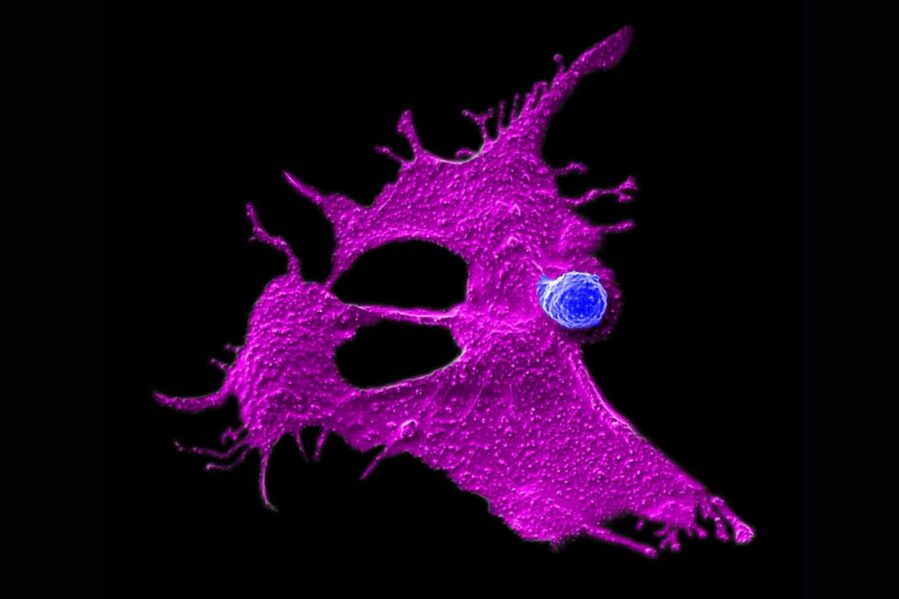
Pancreatic cancer patients rarely get good news, and they almost never get time to wait. Most learn they have the disease only after it has metastasized, leaving them with survival odds around 2-3% and often just months to live. Current immunotherapies that work wonders for blood cancers have struggled against pancreatic tumors, which build fortress-like barriers and constantly change their molecular signatures to evade detection.
UCLA researchers have engineered a cell therapy that might finally crack this problem. Their approach uses modified immune cells that can hunt down pancreatic tumors wherever they hide in the body, attack through multiple independent pathways simultaneously, and come ready to use off the shelf at roughly $5,000 per dose. The therapy demonstrated remarkable effectiveness across several mouse models designed to mimic the harsh realities of human pancreatic cancer.
“Developing a therapy that targets both the primary tumor and its metastases in preclinical studies, one that can be ready to use off-the-shelf, represents a fundamental shift in how we might treat this disease.”
The technology centers on CAR-NKT cells, a rare but powerful type of immune cell equipped with chimeric antigen receptors targeting mesothelin, a protein found on pancreatic cancer cells. What makes these cells different from conventional CAR-T therapies is their ability to recognize and destroy tumors through multiple mechanisms at once. When cancer cells try to escape detection by changing one molecular marker, the therapy hits them from several other angles simultaneously.
Finding Tumors in Their Hiding Places
One of pancreatic cancer’s cruelest tricks is its ability to spread to organs like the lungs and liver, where disseminated tumors become nearly impossible for immune cells to reach. Conventional CAR-T cells often get blocked outside tumor sites, unable to penetrate the dense tissue barriers that pancreatic cancers build from connective tissue and suppressive immune cells.
The UCLA team tested their therapy using advanced preclinical models specifically designed to replicate human pancreatic cancer conditions, including tumors growing directly in the pancreas and metastatic tumors that had spread to other organs. In these rigorous tests, the CAR-NKT cells demonstrated what first author Dr. Yanruide Li describes as molecular GPS systems.
“These cells express high levels of chemokine receptors, molecular GPS systems that guide them directly to tumor sites. When the tumor is in the lung, they go to the lung. When it’s in the pancreas, they go to the pancreas. They actively seek out and infiltrate the cancer wherever it’s hiding.”
The cells maintained their cancer-killing abilities even in the inflammatory tumor environment and showed minimal signs of exhaustion, a common problem that causes other cell therapies to lose effectiveness over time. Across different mouse models, including orthotopic tumors, metastatic disease, and subcutaneous growths, the therapy consistently slowed progression and extended survival.
Mass Production Changes the Economics
Current personalized cell immunotherapies require collecting each patient’s immune cells, shipping them to specialized facilities for genetic modification, then returning them weeks later. For pancreatic cancer patients in advanced stages, a delay of several weeks can mean the difference between treatment and no treatment at all. The manufacturing process also runs hundreds of thousands of dollars per patient.
Senior author Dr. Lili Yang’s team takes a fundamentally different approach. Since NKT cells are naturally compatible with any immune system without causing dangerous rejection reactions, they can be mass-produced from donated blood stem cells. One donor could provide sufficient cells for thousands of treatments, all stored and ready to use when needed.
The platform addresses another persistent problem in cancer immunotherapy: tumor heterogeneity and antigen escape. Many promising treatments fail when cancer cells stop expressing the target protein, effectively rendering the therapy blind. Because CAR-NKT cells attack through both CAR-dependent and CAR-independent mechanisms involving natural killer receptors, they can eliminate both antigen-positive and antigen-negative tumor cells.
The therapy also targets mesothelin, a protein highly expressed not just in pancreatic cancer but also in breast, ovarian, and lung cancers. The team has already demonstrated effectiveness against triple-negative breast cancer and ovarian cancer in separate preclinical studies, suggesting one product could potentially treat multiple cancer types.
With all preclinical studies now complete, the researchers are preparing FDA applications to begin clinical trials. The transition from laboratory success to patient benefit remains the critical test, but the preclinical data addresses many of the barriers that have stymied previous attempts to treat pancreatic cancer with cell therapy.
