

YOUR 8-YEAR-OLD drops an F-bomb at the dinner table. You freeze, fork halfway to your mouth. What do you do? Twenty years ago, the answer seemed obvious. Now? Less than half of parents think swearing is never acceptable for children, according to a national poll from the University of Michigan.
The shift is subtle but unmistakable. About 35 per cent of parents say whether swearing is acceptable depends on the situation. Another 12 per cent reckon it depends on the specific word. Six per cent say it’s no big deal at all.
At the same time, roughly one in four parents admit their child uses curse words at least occasionally. For teenagers, that figure jumps to nearly 40 per cent. Somewhere between soap-in-the-mouth punishment and complete permissiveness, modern parents are navigating what Sarah Clark, co-director of the Mott Poll, calls a grey area.
The poll surveyed 1,678 parents of children aged 6 to 17. Context matters, Clark says. Age matters. Intent matters.
Where do children pick up these words? Two thirds of parents point to friends and classmates, making peers the most commonly cited source. Popular media comes a close second. But parents also acknowledge a more uncomfortable truth: children hear profanity at home, from the adults who set the rules.
About one in three parents believe their child swears to fit in, which Clark describes as swearing becoming a form of social currency. Parents of teens are more likely to cite fitting in as motivation. Parents of younger children tend to think it’s about being funny or grabbing attention. Either way, the swearing itself isn’t happening in a vacuum – it’s social.
Some children may use strong language to express negative emotions, which Clark says might signal they need help managing anger or frustration in more appropriate ways. It’s not just rebellion (though that’s part of it too). It’s communication, even if clumsy.
When children do swear, most parents tell them to stop or explain why they don’t like it. About 14 per cent ignore it. Only six per cent resort to punishment like chores or grounding. Parents of teens are more likely than parents of younger kids to let it slide – perhaps recognising that some battles aren’t worth fighting, or perhaps just tired.
The response varies widely depending on what parents believe swearing represents. Some view it through a religious lens. Others see it as a manners issue – rude, disrespectful, inappropriate at school or in public but less concerning among friends. Clark notes that parents often struggle to maintain a consistent approach because their own attitudes aren’t entirely sorted.
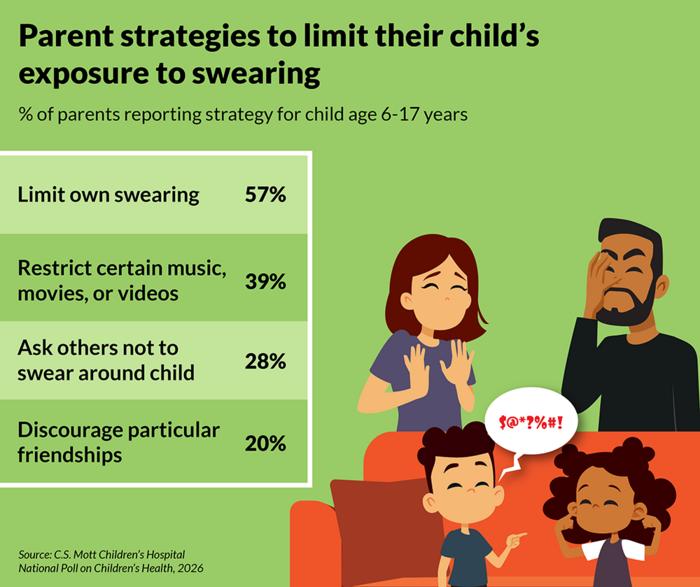
To limit exposure, parents report watching their own language, restricting certain media, and asking others to respect household rules. About one in five discourage friendships with children who frequently swear, suggesting their concerns go beyond language alone – they’re worried about what else these kids might introduce.
Gone are the days of soap in the mouth. What’s emerged instead is something messier: parents trying to guide behaviour without overreacting, whilst recognising that the world their children inhabit doesn’t always align with their own values. The swear jar, it turns out, might be less about punishment and more about acknowledging that language is evolving faster than the rules can keep up.