

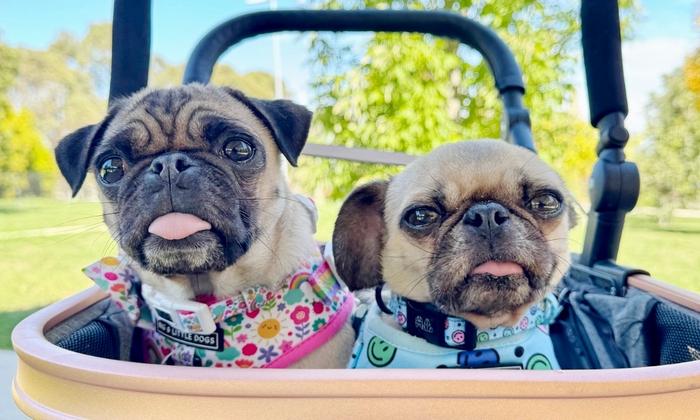
The three-minute trot test sounds almost gentle. A dog on a lead, encouraged to move at a brisk walking pace, its handler counting down the seconds. But for a bulldog or pug with severe brachycephalic obstructive airway syndrome, those three minutes are a kind of ordeal: the laboured wheeze audible without a stethoscope, the throat tissues pulling inward as the animal struggles to drag air through an airway that was never quite right to begin with. Six such dogs completed that test as part of a small Australian trial last year. Then they received a single injection. Weeks later, most of them trotted through the same test without the noise, without the struggle, their breathing measurably calmer than before.
What was in the injection is, depending on your perspective, either alarming or ingenious. The active ingredient is tetanus toxin, one of the most potent biological substances known, repurposed here not to paralyse but to do the opposite: to gently, locally, tone up the very muscles that hold a dog’s airway open.
Brachycephalic obstructive airway syndrome, or BOAS, is the collective name for what happens when selective breeding compresses a skull without proportionally reducing the soft tissue inside it. In French bulldogs, British bulldogs and pugs especially, the result is a throat replete with excess material: thickened soft palates, swollen tonsils, everted laryngeal saccules, all crowded into a space several sizes too small. As the animal inhales, negative pressure sucks that tissue inward, narrowing the airway further. Roughly 45 to 50 percent of extreme brachycephalic breeds are clinically affected, and the condition shortens lives. Dogs with the most severe grade of BOAS live, on average, up to four years less than less affected animals of the same breeds.
Surgery can help, sort of. Procedures to widen nostrils or remove excess tissue are currently the main option available, but outcomes are uneven; up to 60 percent of dogs remain symptomatic afterwards, and the mortality risk from the procedures themselves runs as high as 7 percent.
A Different Way In
It was those figures that pushed Tony Sasse and his colleagues at RMIT University in Melbourne toward a pharmacological alternative, one they had been quietly developing for more than 15 years. The key insight was anatomical. In flat-faced breeds, says RMIT biotechnologist Peter Smooker, “the soft tissue in the upper airway hasn’t adapted to the shorter skull,” leaving it crowded into a smaller space. But some of the problem is muscular too. The geniohyoid, a small muscle in the floor of the mouth, acts as one of the airway’s dilators, keeping structures from collapsing inward during breathing. If that muscle could be toned, strengthened with greater neural firing, the airway might stay open of its own accord.
Botulinum toxin, better known as Botox, reduces neural firing at injection sites. Tetanus toxin does the reverse, increasing the rate at which motor neurons discharge and thereby increasing muscle tone, at least locally and in small doses. “The therapy strengthens the muscles at the front of the airway, helping support the throat and maintain airflow during breathing,” says Smooker. The principle had been tested in a single bulldog case study back in 2005, with promising results. Getting from there to a publishable trial took considerably longer, and the main obstacle was immunological.
Most dogs, like most humans and horses, have some level of antibody response to tetanus toxin: through environmental exposure, vaccination, or just prior contact. Those antibodies would neutralise a therapeutic dose before it could act. The solution the RMIT team developed was an antibody decoy, an inactivated version of the toxin, structurally similar enough to mop up circulating antibodies before they could intercept the active ingredient. The combined formulation, branded Snoretox-1, had already been shown to work in vaccinated mice; the bulldog trial was the first step toward demonstrating it in the clinic. Under sedation, each dog received bilateral injections directly into the rostral geniohyoid, the front compartment of the floor-of-mouth muscle, with dosing at 25 units of tetanus toxin per kilogram of body weight (one dog, which did not respond to the lower dose, received 50 units in a second round).
From Struggling to Brisk
All six dogs improved by at least one grade on the four-point Respiratory Functional Grading scale used by the Kennel Club and the University of Cambridge’s BOAS research group, the improvement reaching statistical significance at all time points out to twelve weeks. Perhaps more striking than the statistical result was its persistence: effects lasted from 20 weeks to, in one case, 53 weeks after a single injection. That’s substantially longer than what you’d expect from botulinum toxin in comparable therapeutic contexts, which typically wears off after six to nine weeks. The researchers think the improvement might partly compound on itself, in that better airflow leads to less tissue trauma, less swelling, and thus more space for air to pass, a positive feedback loop that prolongs the benefit.
Not everything went smoothly. Two of the six dogs developed feeding difficulties and excessive salivation in the weeks after treatment, symptoms the team attributed to incorrect needle placement: the syringe tip likely passed through the target muscle and delivered part of the dose into adjacent subcutaneous tissue. Those effects resolved within about five and a half weeks. One dog died during the trial period from a hereditary cardiac condition common in British bulldogs, its death assessed as unrelated to the treatment.
Owner ratings were mixed too. Three owners rated their dogs’ breathing as improved; the others saw little change, though some of those owners noted their dogs simply preferred a sedentary life regardless of treatment. Snoring, interestingly, increased slightly in a couple of cases, possibly because improved airflow produces more soft palate vibration, which is its own sort of paradox.
The trial is small, six dogs is not a lot, and the researchers are careful to say so. It was also unblinded, with the same veterinarian administering the injection and assessing outcomes afterwards, a limitation they acknowledge directly. But the underlying mechanism, and the precedent from the botulinum toxin literature, gives the team reason for cautious optimism. Sasse has pointed to uses beyond the straightforward BOAS case: as a pre-anaesthetic tool for brachycephalic dogs undergoing major surgery, as adjunct therapy after insufficient surgical correction, and eventually, in larger breeds and other affected species.
The Bigger Picture
The human applications are perhaps what will draw the most attention beyond veterinary circles. Russell Conduit, who leads the sleep and neuroscience side of the RMIT team, frames the findings as “exciting evidence to support human drug trials for conditions involving poor muscle tone,” citing obstructive sleep apnoea, incontinence and pelvic floor disorders as candidate indications. Obstructive sleep apnoea in humans involves a closely analogous problem: airway tissue collapsing during sleep, often because upper airway dilator muscles aren’t firing with enough force to hold things open. The challenge of pre-existing tetanus immunity is, if anything, a more significant obstacle in human populations than in dogs, which is why the decoy mechanism matters so much as a platform technology.
For now, Snoretox-1 remains well away from any clinic, pending the larger trials and regulatory process that Sasse says are needed before wider use. But the proof of concept is there. An injection into a small muscle in a dog’s jaw, lasting perhaps a year, quietly keeping the airway open. It might, one day, do the same thing for a great many others.
Source: Sasse et al. “Clinical observations of tetanus toxin plus decoy, Snoretox-1, a novel targeted neuromuscular stimulant, in a pilot study of 6 British bulldogs with BOAS.” The Veterinary Journal, Volume 317, June 2026. DOI: 10.1016/j.tvjl.2026.106636
Frequently Asked Questions
What is brachycephalic obstructive airway syndrome and which dogs does it affect?
Brachycephalic obstructive airway syndrome (BOAS) is a breathing condition caused by the compressed skull anatomy of flat-faced dog breeds. The skull is shortened through selective breeding, but the soft tissue inside, including the soft palate, tonsils and throat structures, doesn’t shrink proportionally, leaving excess tissue that blocks airflow. French bulldogs, British bulldogs and pugs are most severely affected, with roughly 45 to 50 percent of those breeds showing clinically significant symptoms. In the worst cases, it can shorten a dog’s life by up to four years.
How does Snoretox-1 actually work?
Snoretox-1 combines a small dose of tetanus toxin with an inactivated decoy version of the same protein. Tetanus toxin, unlike botulinum toxin (Botox), increases muscle tone rather than reducing it, by raising the rate at which motor neurons fire. When injected into the geniohyoid muscle in the floor of the mouth, it strengthens that muscle’s ability to hold the airway open during breathing. The decoy component acts as a molecular smokescreen, absorbing any antibodies the dog has against tetanus so they don’t neutralise the active drug before it can work.
Could this treatment be used for dogs that have already had surgery?
Possibly, and the trial authors specifically flag this as one of the more useful potential applications. Among the six bulldogs in the study, some had previously undergone BOAS surgery without sufficient improvement, and the injection still produced measurable benefit in those animals. The researchers suggest Snoretox-1 could function as a complement to surgery rather than purely as an alternative, and are also exploring its use as a pre-anaesthetic aid to stabilise the airway before elective procedures.
What are the risks and side effects?
In the pilot study, two of six dogs experienced temporary difficulty eating and excess salivation, most likely because the injection was placed slightly outside the target muscle. Those symptoms resolved within about five and a half weeks. No signs of generalised tetany or serious systemic effects were observed in any of the animals. One dog died during the trial period from a genetic heart condition, which the researchers considered unrelated to the treatment. Larger trials will be needed to establish the full safety profile.
Is this close to becoming available, and could it eventually be used in humans?
Not yet. The treatment requires larger clinical trials and regulatory approval before it can be offered commercially, and the researchers are clear that these early results, while promising, represent a first step. The human applications, particularly obstructive sleep apnoea, are on the team’s longer-term agenda; the plan is to work through veterinary approvals first, since that pathway is less complex, then use the safety and mechanism data to support eventual human trials.