

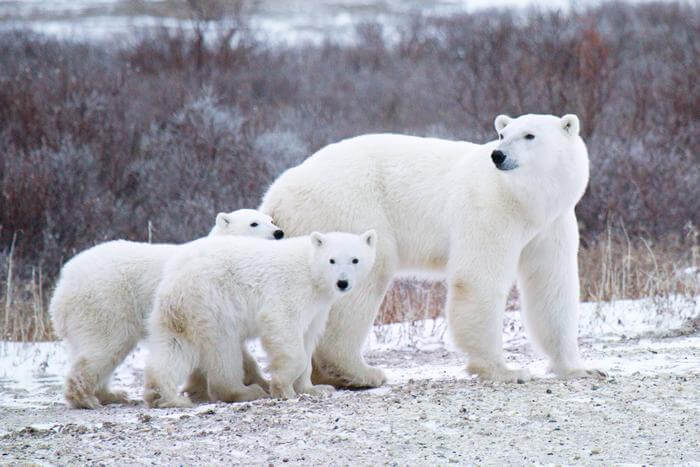
For most polar bears, the future looks grim. More than two-thirds face extinction by 2050 as sea ice vanishes beneath their paws. But in southeast Greenland, a small population is living through what might be a preview of survival, adapting to conditions that resemble the devastating climate predicted for the rest of the Arctic by century’s end.
New research published in Mobile DNA reveals these bears are doing something remarkable at the molecular level: they appear to be rapidly rewriting sections of their own genetic code in response to rising temperatures. The mechanism involves so-called “jumping genes,” mobile pieces of DNA that can copy themselves around the genome and alter how other genes function.
Which is, frankly, wild. This represents the first statistically significant link between warming temperatures and genome-level changes in a wild mammal population.
A Natural Experiment in Climate Adaptation
The southeast Greenland bears inhabit an environment that looks uncomfortably like tomorrow’s Arctic. Their habitat includes steep coastal terrain, heavy precipitation, and patchy, unstable ice. Temperatures fluctuate more dramatically than in the colder northeast region, and the bears face chronic nutritional stress as their primary prey, seals, becomes harder to access.
Researchers from the University of East Anglia compared blood samples from 17 adult bears across two distinct regions: the relatively stable, colder northeast and the warmer, more variable southeast. They matched patterns of gene activity to decades of temperature data from the Danish Meteorological Institute. What emerged was striking.
The southeastern bears showed dramatically increased activity of transposable elements, particularly a class known as LINE elements. These “jumping genes” are normally kept under tight control in mammalian genomes, but environmental stress can wake them up. Many of these active elements were located within or near protein-coding genes, regions where changes can influence core biological processes.
The team found alterations in genes related to metabolism, fat processing, aging pathways, and cellular stress responses. Heat-shock proteins, which help cells cope with thermal stress, were also more active in the warmer population. It’s the kind of comprehensive genetic response you’d expect from an organism under serious pressure.
“By comparing these bears’ active genes to local climate data, we found that rising temperatures appear to be driving a dramatic increase in the activity of jumping genes within the southeastern Greenland bears’ DNA.”
Lead author Dr. Alice Godden emphasized the unprecedented nature of the discovery. The southeastern population became genetically separated from their northeastern relatives about 200 years ago, creating what amounts to a natural experiment in climate adaptation. That isolation period matters because it’s recent enough that we can track the changes, but long enough that real genetic divergence has occurred.
Hope With Serious Caveats
Here’s where the story gets complicated, though.
The genetic changes represent a kind of molecular desperation as the bears’ world melts around them. The southeastern population offers what researchers call a “genetic blueprint” for how polar bears might respond to climate change, making them a critical focus for conservation genomics. But the scientists are emphatic about what this does not mean.
Genetic flexibility is not a safety net. Jumping gene activity can create useful variation, but it can also disrupt genomes in harmful ways. The changes were observed in blood cells, not reproductive cells, meaning they may not all pass to offspring. More fundamentally, the bears are adapting to survive in marginal habitat that barely supports them.
Their southeastern environment forces them toward rougher, plant-based diets when they need fatty seals. The ice platforms they depend on for hunting continue to disappear. You can adapt all you want genetically, but if there’s nowhere to hunt and nothing to eat, it doesn’t matter much.
“This finding is important because it shows, for the first time, that a unique group of polar bears in the warmest part of Greenland are using ‘jumping genes’ to rapidly rewrite their own DNA.”
Dr. Godden stressed that rapid adaptation does not reduce extinction risk. The pace of warming remains the dominant threat, and no amount of genetic innovation can substitute for reducing carbon emissions and slowing temperature increases.
Still, the work provides rare molecular evidence of how wild mammals respond to climate pressure. Understanding which populations show adaptive capacity and which remain vulnerable could help target conservation efforts. The southeast Greenland bears may be rewriting their genetic code, but they’re also demonstrating something uncomfortable: adaptation has limits, and those limits are approaching fast.