

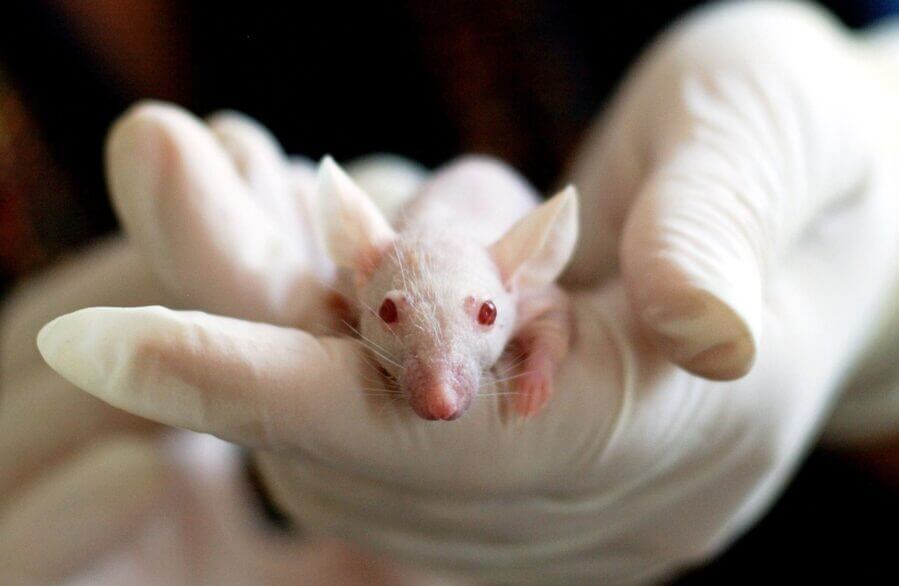
The mice that got the older microbiome all had pups. Every single one. The mice that got the younger microbiome? Some never reproduced at all.
That sentence, almost casual in its delivery, is the kind of result that stops a laboratory in its tracks. Minhoo Kim, a postdoctoral researcher at the University of Southern California’s Leonard Davis School of Gerontology, was expecting to see the opposite. He and his colleagues had transplanted gut bacteria from elderly, post-reproductive female mice into young adults, after first clearing the recipients’ own microbiomes with antibiotics. The working assumption — the sensible assumption, the one the whole field would have made — was that old gut bacteria would age the recipient’s ovaries prematurely. Accelerate decline. Push the clock forward. “Our original hypothesis was that we would see damaging effects of the older microbiome on ovarian function,” Kim says, “but surprisingly, we found the opposite.”
What the team found instead, published this week in Nature Aging, is that something in the gut microbiome of post-reproductive female mice acts like a rejuvenating signal for the ovary. Recipients didn’t just have slightly better fertility outcomes — their ovarian tissue showed gene expression patterns characteristic of much younger animals. The inflammatory markers associated with ageing ovaries dropped. Even the genes linked to cellular senescence, those molecular hallmarks of biological age, were significantly dialled down.
This matters for reasons that extend well beyond fertility. Ovarian decline doesn’t simply end a woman’s reproductive years — it’s the starting gun for a cascade of health risks. Earlier menopause is statistically linked to shorter lifespan, and the transition is associated with elevated rates of osteoporosis, cardiovascular disease, and dementia. Some of the mechanisms are becoming clearer: follicle-stimulating hormone, which surges after menopause as the pituitary gland tries futilely to coax eggs from unresponsive ovaries, has been implicated in Alzheimer’s disease susceptibility and increased body fat. The ovary, it turns out, is not just a reproductive organ. It’s a regulator of ageing itself. “Menopause isn’t just about no longer being fertile,” says Bérénice Benayoun, the study’s senior author. “It has dramatic negative effects on women’s overall health and is associated with huge increases in risks of diseases ranging from osteoporosis and diabetes to heart disease and dementia.”
The experiment itself was almost absurdly direct. Young female mice had their gut bacteria wiped out, then received transplants of faecal microbiome material from either other young females or from estropausal females — the rodent equivalent of post-menopausal. Researchers then tracked what happened to the ovaries. The group receiving old-donor bacteria showed ovarian transcriptomes that looked, at the molecular level, considerably younger than the group receiving young-donor bacteria. They also got pregnant faster — a median of 21.5 days to first litter compared with 23 days — and more reliably. “Some of the mice that received the younger microbiome never produced pups,” Benayoun says, “while all of the mice that received the older microbiome did.”
So why would the gut bacteria of an elderly, infertile animal improve reproductive function in a young one? The leading hypothesis involves a specialised community of gut microbes called the estrobolome, a collection of bacteria that regulate how oestrogen circulates in the body. These microbes produce enzymes that free oestrogen to be reabsorbed rather than excreted, effectively tuning circulating hormone levels. As the ovaries age and stop responding to normal hormonal signals, the estrobolome may mount something like a compensatory response — ramping up the very signals the reproductive system has stopped hearing. When that turbocharged hormonal microbiome is transplanted into a young animal with perfectly responsive ovaries, it may simply work better than it ever would in its ageing original host. A signal finally reaching its target.
The team went looking for the molecular gears behind this effect. Using causal mediation analyses they identified four bacterial species — including Bacteroides stercoris, previously flagged in research on polycystic ovary syndrome — whose abundance appeared to directly influence changes in the ovarian transcriptome. Metabolomics analysis of recipients’ blood revealed shifts in metabolites involved in fatty acid metabolism and immune regulation. Notably, the microbiome established by old-donor bacteria showed enrichment of pathways related to vitamin K2 synthesis and, intriguingly, NAD metabolism. The latter connection is particularly suggestive: a gene called CD38, which depletes cellular NAD and accelerates ovarian ageing, showed reduced expression in the ovaries of mice given older microbiome transplants. The gut bacteria appear to be talking to the ovary, and the conversation seems to involve some of the same molecular currency that anti-ageing researchers have been chasing for years.
There is a broader context here. A small number of studies over the past decade have explored heterochronic microbiome transfers — giving young animals the gut bacteria of old ones, or vice versa — with wildly inconsistent results. Transferring old microbiomes has sometimes accelerated brain and retinal ageing in young mice; other times it has promoted hippocampal neurogenesis. The microbiome’s effects appear to depend enormously on which organ you’re watching, and possibly on the sex of the animals involved. Benayoun and colleagues found substantial differences between how the gut microbiome shifts with ageing in female versus male mice, suggesting that studying one sex tells you surprisingly little about the other. “These findings suggest that there is two-way communication between the ovary and the microbiome and that this communication changes throughout life with age,” she says.
The caveats matter. All of this is in mice. The specific bacterial species implicated — some of them unfamiliar names from the Lachnospiraceae family, some from Bacteroides — may not translate directly to human biology. The fertility differences between the two transplant groups, while statistically significant, were modest: about a 6.7 per cent reduction in the time to first pregnancy. More work will be needed with larger cohorts, older animals, and eventually human subjects before anyone should be adjusting their probiotic intake with fertility in mind.
But the principle the experiment establishes is something genuinely new. Your gut bacteria are not passive passengers during reproductive ageing. They change as your ovaries change, they influence what your ovaries do in return, and the relationship between them — it turns out — can be manipulated. Whether that manipulation will eventually mean delaying menopause, or improving outcomes in premature ovarian insufficiency, or simply understanding why some women age reproductively faster than others, is the question the field is now properly equipped to ask. The possibility that the answer might come, of all places, from a faecal transplant is the kind of thing that makes a laboratory stop and think.
Study link: https://www.nature.com/articles/s43587-026-01069-3