

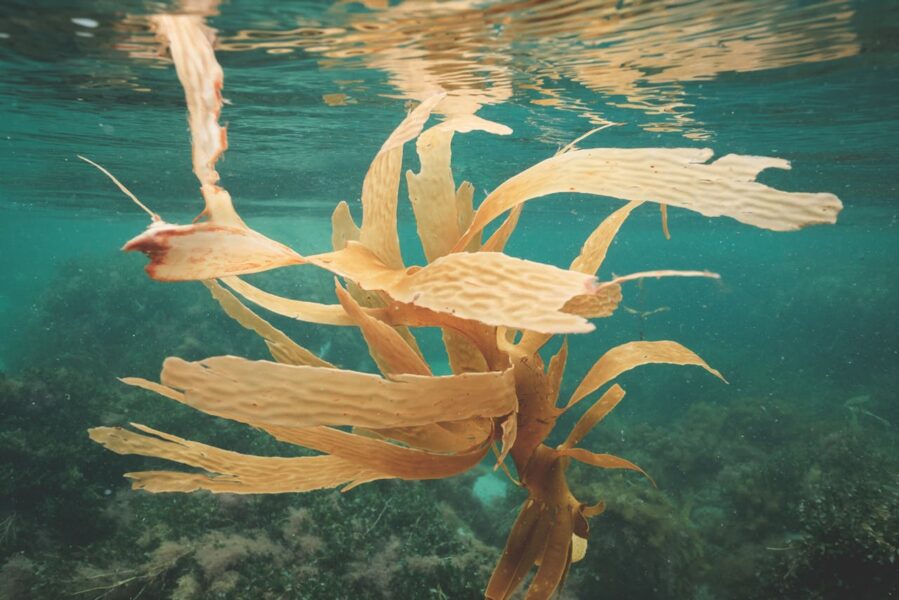
It started with a trip to a farmers market. Researchers from Oregon State University spotted packets of Pacific dulse, a reddish marine seaweed typically sold as a snack or salad ingredient, and wondered: could this ocean vegetable double as a scaffold for growing human heart cells?
The answer, published this week in the journal Biointerphases, is a resounding yes. After stripping away the seaweed’s own cells and leaving behind only its structural skeleton, the team successfully grew human cardiomyocytes (the muscle cells that power your heartbeat) on the repurposed marine scaffold. Within six days, the cardiac cells had blanketed 90% of the seaweed’s surface, multiplying at two and a half times their normal rate.
“Why can’t we utilize seaweed? It’s abundant in the oceans and, when compared with animal derived or synthetic material, the cost is very low,” said author Gobinath Chithiravelu.
From Ocean Floor to Laboratory Bench
The researchers weren’t just curious, they were practical. Traditional tissue scaffolds used in medical research rely on materials extracted from animals or synthesized through complex chemistry. Both approaches carry baggage: animal-derived scaffolds perpetuate the need for lab animals, while synthetic versions require industrial processes that aren’t exactly green. Seaweed, by contrast, grows without coaxing in cold ocean waters and requires minimal processing.
The team tested Pacific dulse (scientific name Devaleraea mollis), cleaning and drying the specimens before treating them with sodium dodecyl sulfate, a common lab reagent also found in many household detergents. The chemical dissolved the seaweed’s original cells while preserving its extracellular matrix, the honeycomb-like framework that gives the tissue its structure. What remained was a cellulose scaffold with architecture uncannily similar to the environments where human cells naturally thrive.
They experimented with six different concentrations of the chemical treatment, ranging from 3% to 15%. The sweet spot turned out to be on the higher end: scaffolds treated with 10%, 12%, or 15% sodium dodecyl sulfate kept their fibrous networks intact while clearing out enough cellular debris to welcome new tenants.
Cells That Feel at Home
“So initially, we want to utilize the natural framework of the seaweed. We don’t want to disturb the structure,” said Chithiravelu.
That structural preservation paid off. When the researchers seeded human cardiomyocytes onto the treated seaweed scaffolds, the heart cells didn’t just survive, they flourished. Scanning electron microscopy revealed cells spreading across the scaffold’s surface, weaving themselves into the seaweed’s architecture like vines climbing a trellis. Immunohistochemistry confirmed the cells were expressing the right proteins, behaving as healthy cardiac tissue should.
The implications extend beyond mere curiosity. Tissue scaffolds are critical tools in preclinical drug testing, allowing researchers to study how human cells respond to treatments without immediately involving human subjects. Currently, much of that testing still relies on animals or expensive synthetic systems. A seaweed-based alternative could reduce both practices, offering a path that’s cheaper, more sustainable, and arguably more ethical.
The scaffolds also showed promising degradation behavior when submerged in solution, suggesting they could eventually be engineered to break down at controlled rates inside the body. Whether seaweed will one day serve as temporary frameworks for repairing damaged hearts in living patients remains speculative, but the biocompatibility results are encouraging enough to keep asking the question.
For now, the researchers are focused on refining their methods and testing other seaweed species. The oceans hold thousands of candidates, each with slightly different structural properties. Some might prove even better suited for specific tissue types: bone, skin, liver. The farmers market find, it turns out, was just the beginning.