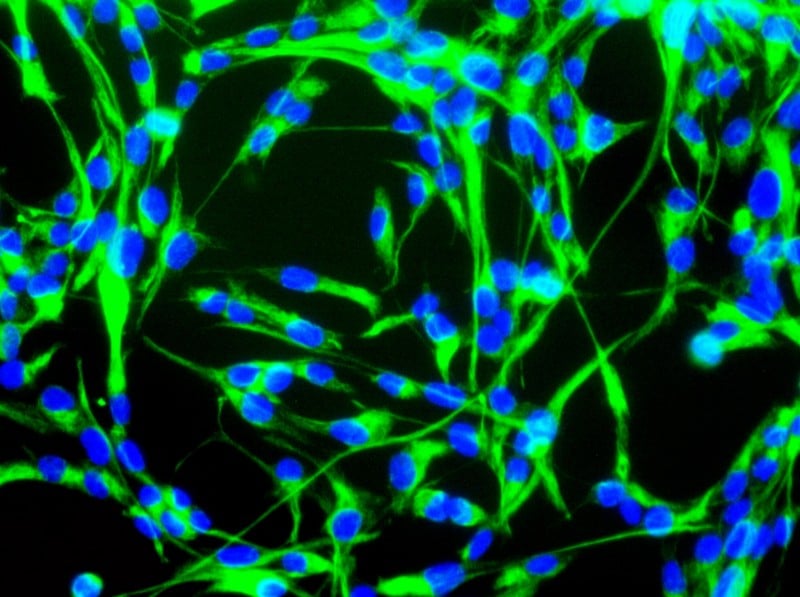
Scientists at Cambridge University have demonstrated that neural stem cell transplants can successfully repair the protective coating around nerve fibers damaged by multiple sclerosis, offering fresh hope for treating the progressive form of this debilitating disease.
The research, accepted for publication in the journal Brain, represents the first evidence that induced neural stem cells can mature into myelin-producing cells within the central nervous system.
Multiple sclerosis affects more than 150,000 people in the UK alone, causing the immune system to attack myelin—the insulating sheath that wraps around nerve fibers like electrical tape around wires. When this protective coating deteriorates, nerve signals slow down or stop entirely, leading to progressive disability in young adults.
A Cellular Repair Squad
The study focused on induced neural stem cells (iNSCs), laboratory-grown cells that researchers transplanted into mice with MS-like brain lesions. These cellular grafts successfully transformed into oligodendrocytes, the specialized cells responsible for manufacturing myelin in the brain and spinal cord.
“This research provides critical evidence that induced neural stem cell grafts can effectively turn into myelin-producing cells within the damaged central nervous system, suggesting a potential new way to treat progressive MS,” explained Dr. Luca Peruzzotti-Jametti from Cambridge’s Department of Clinical Neurosciences, who led the research.
Current treatments for MS primarily manage symptoms rather than addressing the underlying damage. While the body can initially repair some myelin damage in early-stage MS, this regenerative capacity fails dramatically as the disease progresses to its chronic phase.
Beyond Symptom Management
The Cambridge findings suggest stem cell therapy could do more than just replace damaged tissue. The research team discovered that the transplanted cells not only produced new myelin but also demonstrated safety profiles suitable for human trials.
Key study results include:
- Successful maturation of stem cell grafts into myelin-producing oligodendrocytes
- Evidence supporting safety of human neural stem cell transplantation
- Demonstration that grafts can target specific brain lesions
- Potential for neuroprotective and anti-inflammatory effects
Senior author Stefano Pluchino, Clinical Professor of Regenerative Neuroimmunology, emphasized the broader implications. “We are particularly excited about the potential to develop central nervous system directed therapies that not only manage symptoms but also address the underlying neurodegenerative processes in progressive MS,” he noted.
From Lab Bench to Clinical Reality
The research directly supports RESTORE, a collaborative European and US consortium working toward clinical trials of neural stem cell therapy for progressive MS. This initiative, backed by the International Progressive MS Alliance, places patients at the center of research design to ensure treatments address real-world needs.
Dr. Catherine Godbold from the MS Society, which helped fund the study, acknowledged the early-stage nature of the work while highlighting its significance. “Neural stem cell therapy for MS is still in the very early stages of research, but these results with mice are invaluable,” she said. “They help us understand how neural stem cells might one day be able to unlock desperately needed myelin-repair treatments.”
The team plans to leverage these findings for future clinical trial designs, potentially leading to what Pluchino describes as “a fully biological disease-modifying therapy.” For the thousands living with progressive MS, such an approach could represent a fundamental shift from managing decline to actively restoring function.
While human trials remain on the horizon, this research marks a crucial step toward understanding how stem cell technologies might one day halt or even reverse the neurological damage that defines multiple sclerosis.