

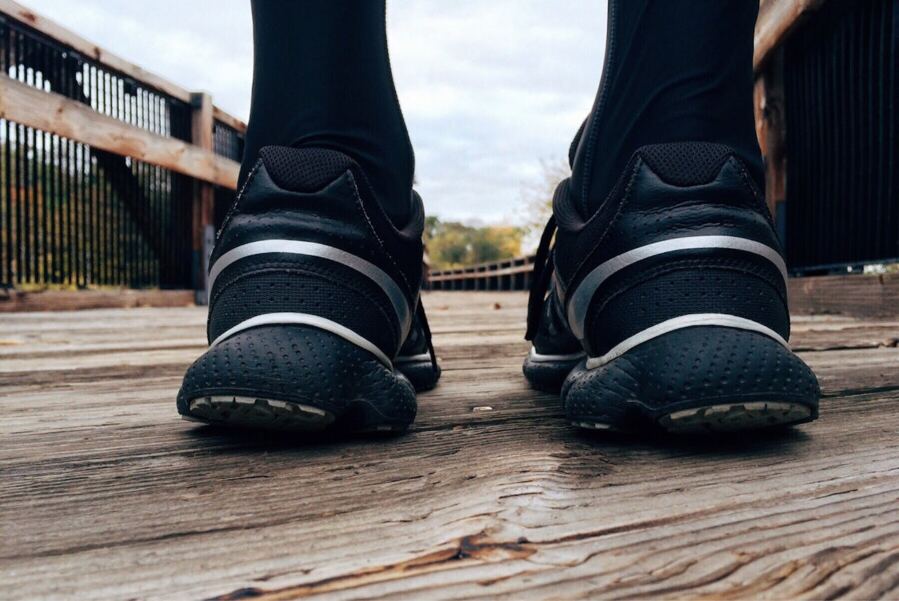
The carbon fiber plate sits roughly 30 millimeters deep inside the sole, sandwiched in a foam so springy it seems almost alive. Slip on a pair of advanced footwear technology shoes, lace them up, and something odd happens: you feel faster before you’ve taken a single step.
Since Nike’s Vaporfly first crossed a finish line in 2016, the running world has been transfixed by these so-called super shoes, and for obvious reasons. They shave real minutes off real times. At the elite level, where careers turn on seconds, that is not a trivial thing. But a study published this spring in PM&R raises a question the sport has been mostly reluctant to ask: what, exactly, are these shoes doing to the bodies inside them?
The answer is complicated, probably inconvenient, and may matter quite a lot for the millions of recreational runners who have adopted the technology alongside the professionals who made it famous.
Researchers at Mass General Brigham recruited 23 healthy elite distance runners (11 women, 12 men, average age around 25) and put them through a biomechanical assessment across three shoe types: a standard neutral shoe, a lightweight responsive foam model, and a full advanced footwear technology shoe fitted with both highly cushioned foam and the now-ubiquitous stiff embedded plate. Each runner wore all three pairs, in randomized order, at three different paces: an easy training trot, a tempo effort, and something approaching 5-kilometer race speed. The researchers measured seven biomechanical variables known to predict bone stress injuries, those overuse insults that start as swelling in the bone and can deepen into stress fractures serious enough to end a season.
What came back was, at first glance, a mixed picture. In some respects the super shoe behaved itself.
In others, it did not. Cadence, the number of steps per minute, dropped significantly in the advanced footwear technology shoe compared to both alternatives. Fewer steps per minute means each stride covers more ground, which sounds efficient, but biomechanists tend to wince at it: overstriding loads the lower limb differently, and not in ways bones generally appreciate. Meanwhile the foot’s arch was collapsing inward more in the super shoe than in the neutral model, a motion called rearfoot eversion excursion that has its own unflattering relationship with bone stress injury. Both of those changes were small, the researchers are careful to note. Small, though, is relative. When you log a hundred miles a week, small cumulative stresses have a way of arriving as big cumulative problems.
“AFT improves performance, but runners should balance this benefit with the possibility of subtle changes in loading on the body,” said Michelle Bruneau, the study’s lead author and a postdoctoral research fellow at Spaulding Rehabilitation. “Rotating shoes and gradually adapting to AFT may help reduce potential injury risk while optimizing running performance.”
There was, interestingly, one genuinely protective-looking signal buried in the data. The super shoe substantially reduced the demand placed on the ankle during push-off (the plantarflexion moment, in the jargon), which is noteworthy because the Achilles tendon and its neighboring structures take a considerable beating during that phase of the gait cycle. So the shoe is not simply a villain. It is, perhaps, more like a complicated character: redistributing load rather than eliminating it, moving stress away from some tissues and, possibly, concentrating it elsewhere. Whether that redistribution is a net benefit depends on which particular tissues you happen to be asking about and, presumably, on which ones you can least afford to damage.
What the Body Is Actually Doing Inside a Super Shoe
Bone stress injuries are not really bone injuries in the traditional sense, or at least they don’t start that way. They emerge from a mismatch between mechanical loading and the bone’s capacity to remodel; push the bone faster than it can adapt and you get microdamage accumulating ahead of repair. The biomechanical variables the Mass General team chose to measure were all selected precisely because they have shown up, in prior research, as flags for that kind of accumulated stress. Rearfoot eversion, for instance, alters the twisting forces on the tibia. Lower cadence shifts peak force distribution. These are not exotic laboratory abstractions; they are the mechanical signatures of injuries that sideline runners at every level of the sport.
What makes the super shoe findings harder to parse is that the shoes were not designed with any of this in mind. They were engineered for performance, full stop. The carbon plate’s job is to store and return energy; the cushioning foam’s job is to smooth impact. The fact that they appear to alter cadence and eversion in ways that might accumulate into injury risk is almost certainly an unintended side effect, the biomechanical equivalent of a drug with a useful primary action and a list of small print worth reading.
Should Elite Runners Be Worried?
The study had real limitations. Twenty-three runners is a small cohort, the assessment was cross-sectional (meaning each participant was measured once, not tracked over months of training), and the researchers could observe changed mechanics without being able to say whether those mechanics had actually injured anyone. That last gap is significant. A changed gait pattern is a risk factor, not a diagnosis.
Still, there is something worth sitting with here. The advanced footwear market has expanded with remarkable speed; these shoes are no longer worn only by Olympic hopefuls. Amateur runners shell out two, three, sometimes four hundred dollars for them, train in them daily, and have access to rather less physiological guidance than the elite athletes who were, in some sense, the original test population. Adam Tenforde, the study’s senior author and director of Running Medicine at Mass General Brigham, put it carefully: “Our study highlights the need for careful integration of AFT into training and underscores the importance of further research to better understand long-term strategies to modify risk for injury while recognizing the exciting gains related to this footwear on performance.”
Careful integration. It’s a phrase that probably deserves more attention than it’s getting in the general frenzy around these shoes. The biomechanical changes the researchers documented were small enough that they might, for some runners, matter very little. For others, particularly those already close to their bone stress injury threshold through high training loads or dietary factors or simply bad luck with geometry, the cumulative effect could tip the balance in an uncomfortable direction. Running medicine specialists increasingly recommend rotating between shoe types rather than training exclusively in advanced footwear, giving the body time to adapt across different loading patterns instead of settling into whatever the carbon plate is quietly teaching it to do.
The super shoe is not going anywhere. It is too fast, too lucrative, and (for many runners) too genuinely pleasurable to abandon on the basis of small biomechanical shifts that may or may not translate into injury. But sports science is in the early stages of understanding exactly what these shoes are doing beneath the surface, and the answers are likely to be more complicated than the marketing suggests. The next decade of running medicine research may well look back at the super shoe era the way cardiology now looks at certain miracle drugs from the 1990s: grateful for the gains, clearer-eyed about what was silently accumulating all along.
Source: Bruneau MM et al. “Biomechanics associated with bone stress injuries while using advanced footwear technology in elite distance runners” PM&R (2026). https://doi.org/10.1002/pmrj.70153
Frequently Asked Questions
Do super shoes actually cause bone stress fractures?
The research doesn’t show that directly, at least not yet. What the Mass General Brigham study found is that running in advanced footwear technology shoes produces subtle changes in gait mechanics, specifically lower cadence and greater inward arch collapse, that are known risk factors for bone stress injuries. Whether those small biomechanical shifts translate into actual fractures over months of training is the question the next wave of research will need to answer.
Why would a shoe designed to protect runners actually stress their bones?
The advanced cushioning foam and carbon fiber plate in super shoes were engineered to return energy and smooth impact, not to preserve any particular gait pattern. The biomechanical changes appear to be unintended side effects of that energy-return design: the shoe subtly encourages longer strides and alters how the foot lands, which shifts mechanical loading across the lower limb in ways that bone doesn’t always welcome over high training volumes.
Is it safer to train in regular shoes and only race in super shoes?
That’s essentially what the researchers are suggesting, though they stop short of a firm prescription. Rotating between shoe types means the body doesn’t fully adapt to the gait mechanics any single shoe promotes, which may spread the mechanical load more broadly. Elite runners who train in neutral shoes and reserve advanced footwear for race day are probably getting most of the performance benefit with less accumulated biomechanical risk, though the data to confirm this definitively don’t yet exist.
Could the protective ankle effect in super shoes offset the other injury risks?
Possibly, for some runners. The study found that the super shoe significantly reduced the load on the ankle during push-off, which is good news for the Achilles tendon and surrounding structures. The problem is that the shoe appears to redistribute stress rather than eliminate it, moving demand away from the ankle while potentially concentrating it elsewhere in the lower limb. Whether that trade is favorable depends on the individual runner’s injury history and structural vulnerabilities.