Skip to content
ScienceBlog.com
  • Featured Blogs
    • EU Horizon Blog
    • ESA Tracker
    • Experimental Frontiers
    • Josh Mitteldorf’s Aging Matters
    • Dr. Lu Zhang’s Gondwanaland
    • NeuroEdge
    • NIAAA
    • SciChi
    • The Poetry of Science
    • Wild Science
  • Topics
    • Brain & Behavior
    • Earth, Energy & Environment
    • Health
    • Life & Non-humans
    • Physics & Mathematics
    • Social Sciences
    • Space
    • Technology
  • Our Substack
  • Follow Us!
    • Bluesky
    • Threads
    • FaceBook
    • Google News
    • Twitter/X
  • Contribute/Contact

Aging

Woman playing CandyCrush-like game on iPhone

Digital puzzle games could be good for memory in older adults, study shows

Elderly man's hands. Pixabay

A novel theory of aging — independent of damage accumulation

Air pollution

Air pollution linked to higher mental health service use by people with dementia

Pink and green illustration of mitochondria. Wikimedia.

Inflammation discovery could slow aging, prevent age-related diseases

Supplement capsules. Pixabay

New Approach to Free Radicals Holds Promise for Treating Metabolic Syndrome

Person running on a pier. Courtesy of UCL.

Lack of sleep dampens good effects of exercise on the brain

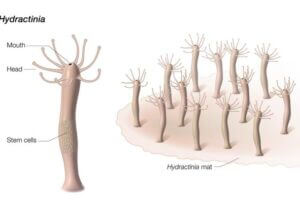
Hydractinia's regeneration driving stem cells are stored in the lower trunk of the animal's body, far from the mouth.

How a Sea Creature’s Mouth Could Unlock the Secrets of Aging and Revolutionize Human Healing

Lab mouse.

Methionine restriction reverses old-age obesity in mice

The power of stillness to reduce stress and slow ageing

Back massage near hip. Credit Pixabay

Projected Increase in Hip Fracture Burden Calls for Urgent Prevention and Care Strategies

A handful of neurons in the fly brain were identified as a key component of how adverse experiences, in this case the perception of dead conspecifics, modulate aging.

How seeing corpses reduces the lifespan of flies

Photo by Cristina Gottardi on Unsplash

Urban Blues: Why Living in a Deprived Neighborhood Makes You Age Faster

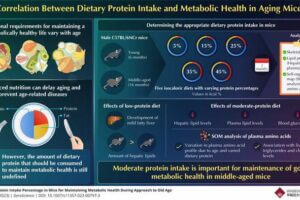
In a new study by Waseda University researchers, young and middle-aged mice were fed isocaloric diets with varying amounts of protein. Mice consuming moderate amounts of dietary proteins (25% and 35%) exhibited lower blood glucose, and hepatic and plasma lipid levels.

Optimal Protein Intake for Aging: Study Reveals the Key to Metabolic Health and Longevity

Raw cacao. Credit Pixabay

Low-flavanol diet drives age-related memory loss

Older posts
Newer posts
← Previous Page1 … Page5 Page6 Page7 … Page9 Next →
Substack subscription form sign up

Comments

  • Mark Mellinger on Living Plastic Can Self-Destruct on Command
  • Marie Feret on The Silent Frequency That Makes Old Buildings Feel Haunted
  • Dax on The Silent Frequency That Makes Old Buildings Feel Haunted
  • Karoly Mirnics on Common Prescription Drugs May Disrupt Cholesterol Pathways in the Womb and Raise Autism Risk
  • Aizen on Laziness helped lead to extinction of Homo erectus
© 2026 ScienceBlog.com | Follow our RSS / XML feed