Skip to content
ScienceBlog.com
  • Featured Blogs
    • EU Horizon Blog
    • ESA Tracker
    • Experimental Frontiers
    • Josh Mitteldorf’s Aging Matters
    • Dr. Lu Zhang’s Gondwanaland
    • NeuroEdge
    • SciChi
    • The Poetry of Science
    • Wild Science
  • Topics
    • Brain & Behavior
    • Earth, Energy & Environment
    • Health
    • Life & Non-humans
    • Physics & Mathematics
    • Social Sciences
    • Space
    • Technology
  • Our Substack
  • Follow Us!
    • Bluesky
    • Threads
    • FaceBook
    • Google News
    • Twitter/X
  • Contribute/Contact

Alzheimers disease

neurons associated with alzheimer's

Early onset dementia more common than reported and Alzheimer’s seems to be on the rise

Alzheimer's brain artistic illustration

Data from largest clinical trial of pre-symptomatic Alzheimer’s now widely available

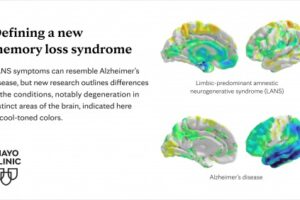
infographic on new memory loss condition

Mayo Clinic scientists define new type of memory loss in older adults

brain illustration

Researchers identify vascular changes in the brain linked to Alzheimer’s disease

Photo via iStock/dem10, Courtesy of Boston University

AI Model Predicts Alzheimer’s Risk with 78.5% Accuracy from Speech Patterns

Mark T. W. Ebbert, Ph.D., is Sanders-Brown faculty and an associate professor in the Department of Internal Medicine in the College of Medicine with a joint appointment in the Department of Neuroscience.

Innovative Approach to Identify Early Signs of Alzheimer’s Disease

From left: Siddharth Chittaranjan, Nathan A. Smith, MS, PhD, Tracy Bubel, MS, and Bartosz Kula, PhD, who is the first author of this research paper.

Ketones may enhance cognitive function and protect brain networks

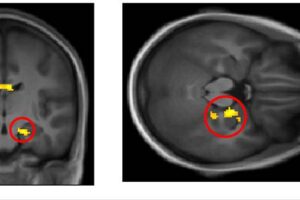
MRI visualisation of hippocampal activation. Photo: UNIGE

Surprising Findings for Young Adults at Genetic Risk for Alzheimer’s

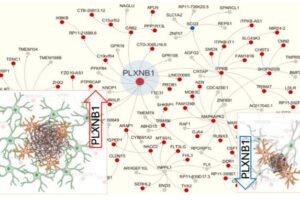
Icahn Mount Sinai researchers find PLXNB1, a hub gene predicted to drive a gene subnetwork causally linked to human AD, is upregulated in reactive astrocytes surrounding amyloid plaques.

New Protein Target Could Halt Alzheimer’s Progression

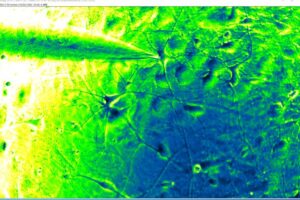
A tiny glass tube (top left) represents the electrode recording from an excitatory human Alzheimer’s neuron, generated using modern stem cell techniques (dark blue, at tip of tube).

New Single-Cell Technique Uncovers Molecular Drivers of Alzheimer’s

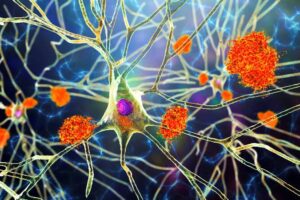
Protein clump amid neurons

The vicious cycle of protein clumping in Alzheimer’s and normal aging

A microscopic view of neurons with a glowing molecule representing the miR-519a-3p biomarker, offering hope for early Alzheimer's detection.

MicroRNA Biomarker Offers Hope for Early Alzheimer’s Detection

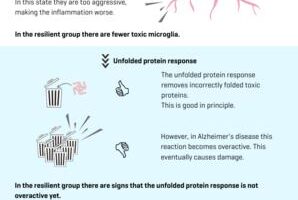
Infographic: "Alzheimer’s Disease Without Symptoms. How is That Possible?"

Unraveling the Secrets of Resilient Brains: How Some Individuals Defy Alzheimer’s Symptoms

Michelle Mielke

Racial Discrimination in Midlife Linked to Higher Risk of Alzheimer’s Disease

Older posts
Newer posts
← Previous Page1 … Page3 Page4 Page5 … Page10 Next →
Substack subscription form sign up

Comments

  • Kalpna on Why the Weight-Loss Drug Revolution Still Needs Surgeons, Scopes and a Plan
  • Foo on A New Theory Says DMT Entities Might Be Real, and Proposes How to Test It
  • John E on A New Theory Says DMT Entities Might Be Real, and Proposes How to Test It
  • Fully Whelmed on A New Theory Says DMT Entities Might Be Real, and Proposes How to Test It
  • Tom on The Serotonin Circuit That Makes Tinnitus Louder
© 2026 ScienceBlog.com | Follow our RSS / XML feed