Skip to content
ScienceBlog.com
  • Featured Blogs
    • EU Horizon Blog
    • ESA Tracker
    • Experimental Frontiers
    • Josh Mitteldorf’s Aging Matters
    • Dr. Lu Zhang’s Gondwanaland
    • NeuroEdge
    • SciChi
    • The Poetry of Science
    • Wild Science
  • Topics
    • Brain & Behavior
    • Earth, Energy & Environment
    • Health
    • Life & Non-humans
    • Physics & Mathematics
    • Social Sciences
    • Space
    • Technology
  • Our Substack
  • Follow Us!
    • Bluesky
    • Threads
    • FaceBook
    • Google News
    • Twitter/X
  • Contribute/Contact

Alzheimers disease

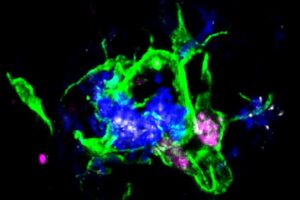
Scientists at Washington University School of Medicine in St. Louis have shown that treating mice with an antibody that blocks the interaction between APOE proteins (white) sprinkled within Alzheimer’s disease plaques and the LILRB4 receptor on microglia cells (purple) activates them to clean up damaging plaques (blue) in the brain.

New Alzheimer’s Treatment Shows Promise by Activating Brain’s Immune Cells

This is a painting representing Alzheimer's transmissibility as reported in this Stem Cell Reports study.

Familial Alzheimer’s disease transferred via bone marrow transplant in mice

Microglia illustration

Unlocking the Role of Human Microglia in Alzheimer’s Disease

A Black woman with Alzheimer's

Study Identifies Genetic Variants Linked to Alzheimer’s Disease Risk

Brain illustration

How cognition changes before dementia hits

Woman using an air quality app on her cell phone

Tiny magnetic particles in air pollution linked to development of Alzheimer’s

Woman in a yoga position meditating

Yoga gives cognitive benefits to older women at risk of Alzheimer’s

olive oil

Can Olive Oil Reverse Genetic Predisposition for Alzheimer’s?

Dajiang Zhu, an associate professor in computer science and engineering at UTA

New tool helps predict progression of Alzheimer’s

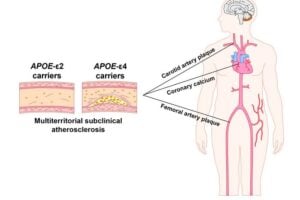
Individuals who carry the APOE4 gene variant have an elevated riskof developing subclinical atherosclerosis in middle age, whereas carriers of the variant APOE2 are protected.

APOE genetic variants linked to Alzheimer’s also tied to aterosclerosis

brain wave illustration

Research on Gamma Stimulation Offers Promising Insights into Alzheimer’s Treatment

brain rna illustration

New cause of neuron death in Alzheimer’s

brain wave chart

For Dementia Prevention, Sleep Quality in Midlife Matters More

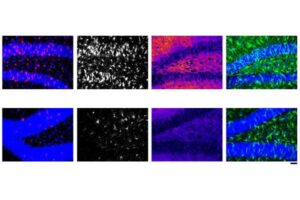
In the brain's immune cells, called microglia, the gene product PU.1 is associated with excessive inflammation in neurological disorders such as Alzheimer's disease. MIT researchers delivered a small interfering RNA (siRNA) via lipid nanoparticles to reduce expression of PU.1 in mice. Microglia stained for PU.1 or related markers are less evident in the bottom row, which reflects the effects of the siRNA, compared to an experimental control (top row).

Nanoparticles Target Brain Cells to Quell Alzheimer’s Inflammation

Older posts
Newer posts
← Previous Page1 … Page4 Page5 Page6 … Page10 Next →
Substack subscription form sign up

Comments

  • Kalpna on Why the Weight-Loss Drug Revolution Still Needs Surgeons, Scopes and a Plan
  • Foo on A New Theory Says DMT Entities Might Be Real, and Proposes How to Test It
  • John E on A New Theory Says DMT Entities Might Be Real, and Proposes How to Test It
  • Fully Whelmed on A New Theory Says DMT Entities Might Be Real, and Proposes How to Test It
  • Tom on The Serotonin Circuit That Makes Tinnitus Louder
© 2026 ScienceBlog.com | Follow our RSS / XML feed