Skip to content
ScienceBlog.com
  • Featured Blogs
    • EU Horizon Blog
    • ESA Tracker
    • Experimental Frontiers
    • Josh Mitteldorf’s Aging Matters
    • Dr. Lu Zhang’s Gondwanaland
    • NeuroEdge
    • NIAAA
    • SciChi
    • The Poetry of Science
    • Wild Science
  • Topics
    • Brain & Behavior
    • Earth, Energy & Environment
    • Health
    • Life & Non-humans
    • Physics & Mathematics
    • Social Sciences
    • Space
    • Technology
  • Our Substack
  • Follow Us!
    • Bluesky
    • Threads
    • FaceBook
    • Google News
    • Twitter/X
  • Contribute/Contact

biodiversity

Europe seeks flourishing forests through restoration

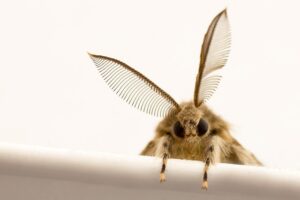
A moth in mid flight. Credit Pixabay

Moths: The Nighttime Heroes of Pollination

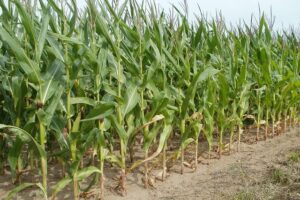
Corn on a farm

Global Farm Consolidation Threatens Food Systems

Trees seen from overhead

Tree diversity increases storage of carbon and nitrogen in forest soils, mitigating climate change

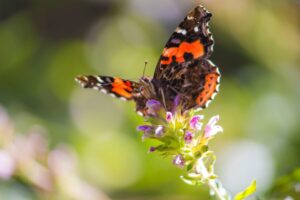
Butterflies and dodos hold clues to protecting biodiversity

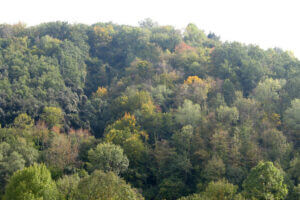
canopy of trees

Beneath Shifting Canopies

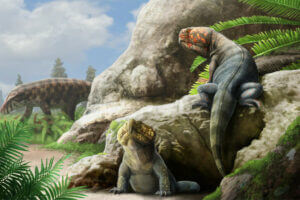
This artist’s depiction shows how Beesiiwo cooowuse may have appeared while roaming the Earth between 250 and 227 million years ago. The newly described rhynchosaur species was named in the language of the northern Arapaho, who live where its fossils were discovered in central Wyoming. GABRIEL UGUETO

Newly described ancient reptile named in language of First Nations where fossils were found

Bee flying mid-air

Bees flock to clearcut areas but numbers decline as forest canopy regrows

Bird singing

Environmental impact reports hugely underestimate consequences for wildlife

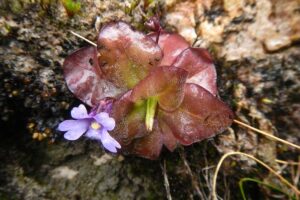
Photograph of Pinguicula ombrophila sp. nov.

Two new meat-eating plants found in the Andes

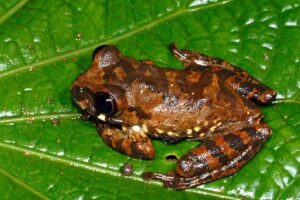
African frog on a bright green leaf. Photo Credit: Copyright 2010 by Eli Greenbaum

‘The Last of Us’ fungus attacking African amphibians

A ‘cucumber green spider’

Wings, not webs: Certain bugs are the winners of urbanization

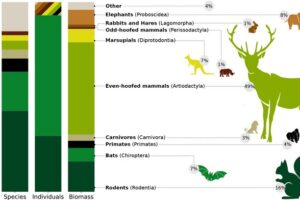
Sometimes more is less: Certain wild land mammals contribute relatively little to the global biomass despite having numerous individuals and species

The weight of responsibility: biomass of livestock dwarfs that of wild mammals

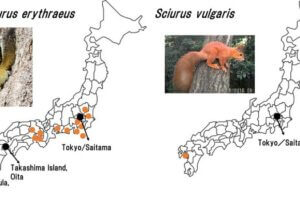
Distribution of two non-native squirrel species in Japan: Pallas's squirrel (Callosciurus erythraeus; left) and Eurasian red squirrel (Sciurus vulgaris; right). Sites of invasion are depicted in orange. The four successful eradication sites are shown in black.

Alien squirrels invade Japan

Older posts
Newer posts
← Previous Page1 … Page5 Page6 Page7 Next →
Substack subscription form sign up

Comments

  • Karoly Mirnics on Common Prescription Drugs May Disrupt Cholesterol Pathways in the Womb and Raise Autism Risk
  • Aizen on Laziness helped lead to extinction of Homo erectus
  • Norwood johnson on Electrons in New Crystals Behave as If They Live in Four Dimensions
  • ScienceBlog.com on Hidden Geometry Could Finally Fix Quantum Computers
  • Theo Prinse on America Is Going Back to the Moon. This Time, It Plans to Stay
© 2026 ScienceBlog.com | Follow our RSS / XML feed