Skip to content
ScienceBlog.com
  • Featured Blogs
    • EU Horizon Blog
    • ESA Tracker
    • Experimental Frontiers
    • Josh Mitteldorf’s Aging Matters
    • Dr. Lu Zhang’s Gondwanaland
    • NeuroEdge
    • NIAAA
    • SciChi
    • The Poetry of Science
    • Wild Science
  • Topics
    • Brain & Behavior
    • Earth, Energy & Environment
    • Health
    • Life & Non-humans
    • Physics & Mathematics
    • Social Sciences
    • Space
    • Technology
  • Our Substack
  • Follow Us!
    • Bluesky
    • Threads
    • FaceBook
    • Google News
    • Twitter/X
  • Contribute/Contact

brain activity

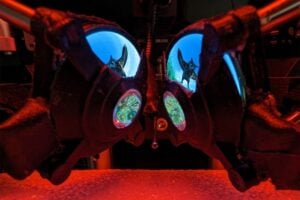
Immersive VR goggles for mice unlock new potential for brain science

Immersive VR goggles for mice unlock new potential for brain science

Thanksgiving Food Still Life

From the first bite, our sense of taste helps pace our eating

Electricity. Pixabay

New studies explain benefits of electroconvulsive therapy on brain

Image created with generative AI (Michael S. Helfenbein)

Zoom suppresses thought

A subject is wearing the deep sleep stimulation system.

Increased deep sleep benefits your heart

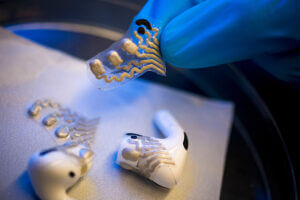
The screen-printed, flexible sensors are attached to the earbuds on a flexible, stamp-like surface.

Earbuds Record Brain Activity and Exercise Levels

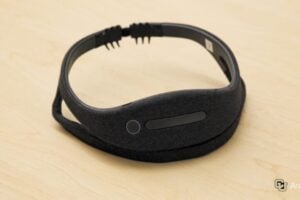
Brain tracker

A fitness tracker for brain health: How a headband can identify early signs of Alzheimer’s disease in your sleep

Feet on bathroom scale.

Anti-obesity drug improves associative learning in people with obesity

Dying brain illustration Credit Pixabay

Evidence of conscious-like activity in the dying brain

Four different autism subtypes identified in brain study

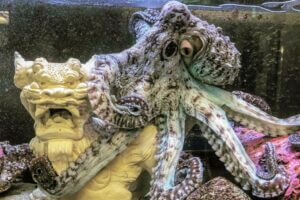
Octopuses are mollusks, a large evolutionary group to which slugs and snails also belong. Their complex brains, and those of other closely-related cephalopods, like squid and cuttlefish, have evolved separately from vertebrates, and so octopuses are often referred to as alien-like. Here, a day octopus (Octopus cyanea) poses with a Shisa, a creature from Okinawan folklore.

Scientists record first-ever brain waves from freely moving octopuses

Films of a brain scan

Can neuroimaging reveal the roots of psychiatric disorders? Not just yet

(Illustration by Michael S. Helfenbein)

How the brain gives rise to cravings: neuromarker sheds new light

Plate of donuts

Brain Patterns Can Predict Drug and Food Cravings

Older posts
Newer posts
← Previous Page1 Page2 Page3 Next →
Substack subscription form sign up

Comments

  • Curtis Webber on The GPS-Killer? This Quantum Device ‘Feels’ Motion Like a Brain—Down to the Atomic Level
  • Ran on How the Age You First Had Sex Could Shape How You Age Decades Later
  • Sparty on How the Age You First Had Sex Could Shape How You Age Decades Later
  • Josh Mitteldorf on A Single TV Segment Sent Leucovorin Prescriptions for Autistic Children Soaring 2,000 Percent
  • Josh Mitteldorf on A Single TV Segment Sent Leucovorin Prescriptions for Autistic Children Soaring 2,000 Percent
© 2026 ScienceBlog.com | Follow our RSS / XML feed