Skip to content
ScienceBlog.com
  • Featured Blogs
    • EU Horizon Blog
    • ESA Tracker
    • Experimental Frontiers
    • Josh Mitteldorf’s Aging Matters
    • Dr. Lu Zhang’s Gondwanaland
    • NeuroEdge
    • NIAAA
    • SciChi
    • The Poetry of Science
    • Wild Science
  • Topics
    • Brain & Behavior
    • Earth, Energy & Environment
    • Health
    • Life & Non-humans
    • Physics & Mathematics
    • Social Sciences
    • Space
    • Technology
  • Our Substack
  • Follow Us!
    • Bluesky
    • Threads
    • FaceBook
    • Google News
    • Twitter/X
  • Contribute/Contact

cancer treatment

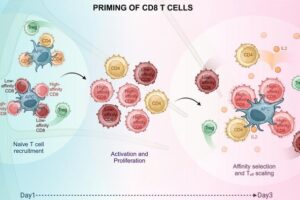
CD8 T cell priming occurs in two phases. In the activation phase (day 1), naïve T cells engage with dendritic cells (DC) for 24 hours, then detach, proliferate, and move deeper into the lymph node. In the selection phase (days 2-3), activated T cells regain sensitivity, re-engage with antigen-presenting cells, and receive IL-2 support from CD4 T cells. Regulatory T cells limit IL-2 availability, driving the expansion and differentiation of high-affinity CD8 T cells into effector cells.

Hidden Dance of T-Cells Reveals New Immune System Strategy Against Viruses

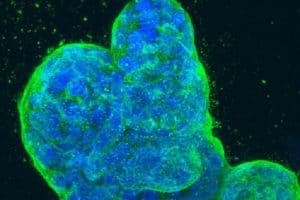
Three-dimensional culture of human breast cancer cells, with DNA stained blue and a protein in the cell surface membrane stained green. Image by NIH

One Shot Wonder: New Drug Eliminates Large Breast Tumors with Single Dose

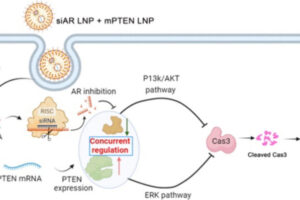
infographic of process involved in the liposomal treatment

Cancer Treatment Uses RNA to Restore Natural Tumor Fighting Balance

Grape-based compounds kill colon cancer stem cells in mice

Common Grape Compound Could Make Cancer Treatment More Effective

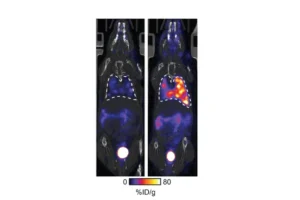
Example scan

New Scan Spots Drug-Resistant Cancer Before Treatment Starts

Brain Tumors Hijack Body’s Clock to Fuel Growth

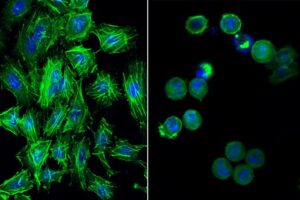
Left: Normal cervical cancer cells with well-formed nuclei in blue and well-organized, elongated actin filaments – which play an essential role in cell survival and division – in green. Right: destabilised cervical cancer cells after gold compound treatment show structural integrity compromised while the nuclei in blue are breaking apart, indicating cell death. 

Gold Outshines Platinum in Cancer Fight

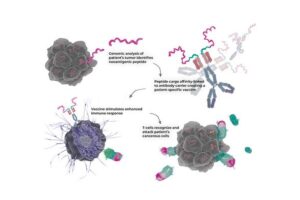
Illustration of a new form of precision medicine, an antibody, with the potential to treat several types of cancer. Researchers have managed to combine three different functions in the antibody, which together strongly amplify the effect of T cells on the cancer tumour.

New ‘3-in-1’ Antibody Shows Promise in Cancer Treatment

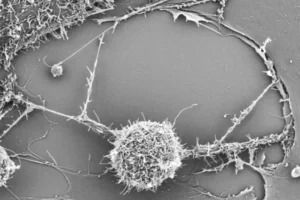
Nanotubes deliver mitochondria to T cells, supercharging the T cells to make them more effective in the fight against cancer. Image courtesy of Shiladitya Sengupta, BWH

Scientists Discover How to Recharge ‘Exhausted’ Cancer-Fighting Immune Cells

New Drug Strategy Makes Aggressive Brain Cancer Visible to Immune System

A caterpillar infected with Cordyceps militaris, the pretty orange fungus that produces Cordycepin.

Asian Caterpillar Fungus Reveals New Potential in Cancer Treatment

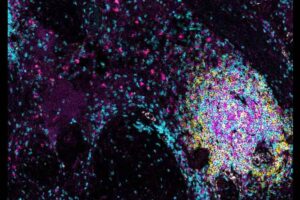
Tertiary lymphoid structure.

Novel Immune Structures in Liver Tumors Point to Cancer Treatment Breakthrough

Corresponding author Dr. Evan Lien and first author Kelly Sokol in the lab at Van Andel Institute.

Study Shows Blocking Fat Access Makes Cancer Treatment More Effective

Cameron Clarke is leading a study to evaluate whether proton therapy cancer treatments may serve as a safer alternative to treatments using radioactive isotopes.

Scientists Explore Proton Therapy as Safer Cancer Treatment Alternative

Older posts
Page1 Page2 … Page4 Next →
Substack subscription form sign up

Comments

  • Karoly Mirnics on Common Prescription Drugs May Disrupt Cholesterol Pathways in the Womb and Raise Autism Risk
  • Aizen on Laziness helped lead to extinction of Homo erectus
  • Norwood johnson on Electrons in New Crystals Behave as If They Live in Four Dimensions
  • ScienceBlog.com on Hidden Geometry Could Finally Fix Quantum Computers
  • Theo Prinse on America Is Going Back to the Moon. This Time, It Plans to Stay
© 2026 ScienceBlog.com | Follow our RSS / XML feed