Skip to content
ScienceBlog.com
  • Featured Blogs
    • EU Horizon Blog
    • ESA Tracker
    • Experimental Frontiers
    • Josh Mitteldorf’s Aging Matters
    • Dr. Lu Zhang’s Gondwanaland
    • NeuroEdge
    • NIAAA
    • SciChi
    • The Poetry of Science
    • Wild Science
  • Topics
    • Brain & Behavior
    • Earth, Energy & Environment
    • Health
    • Life & Non-humans
    • Physics & Mathematics
    • Social Sciences
    • Space
    • Technology
  • Our Substack
  • Follow Us!
    • Bluesky
    • Threads
    • FaceBook
    • Google News
    • Twitter/X
  • Contribute/Contact

cardiovascular disease

Eggs, nuts and other sources of protein

Eating too much protein is bad for your arteries, and this amino acid is to blame

Illustration of woman experiencing migraine and hot flahses

Combination of migraine and persistent hot flashes could prove deadly

Illustration of a human body without skin

Study finds new treatment to reverse inflammation and arterial blockages in rheumatoid arthritis

Man taking his blood pressure

Weight loss medication tirzepatide may help lower blood pressure in adults with obesity

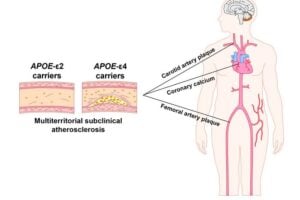
Individuals who carry the APOE4 gene variant have an elevated riskof developing subclinical atherosclerosis in middle age, whereas carriers of the variant APOE2 are protected.

APOE genetic variants linked to Alzheimer’s also tied to aterosclerosis

Man running around a track while doing an overhead bench press

New research finds half-cardio, half-strength training reduces cardiovascular disease risks

stressed out young girl

Childhood stress linked to higher risk of high blood pressure, obesity, diabetes in adults

Edward Hopper style illustration of a woman checking her cholesterol in a sparse hotel room

Gene-editing treatment could replace cholesterol meds

Infographic on smoking and biome

What smoking does to oral bacteria

Trucks on a highway

Breathing highway air increases blood pressure

Black senior man exercising with others

Any activity is better for your heart than sitting – even sleeping

Heart attack

Why people with obesity are at a higher risk of developing cardiovascular disease

Cambridge scientists have grown beating heart cells in the lab and shown how they are vulnerable to SARS-CoV-2 infection. In a study published in Communications Biology, they used this system to show that an experimental peptide drug called DX600 can prevent the virus entering the heart cells.

SARS-CoV-2 infects coronary arteries, increases plaque inflammation

Stairs at a train station. Pixabay

Walking more than five flights of stairs a day can cut risk of heart disease by 20%, study says

Older posts
Newer posts
← Previous Page1 Page2 Page3 Next →
Substack subscription form sign up

Comments

  • Karoly Mirnics on Common Prescription Drugs May Disrupt Cholesterol Pathways in the Womb and Raise Autism Risk
  • Aizen on Laziness helped lead to extinction of Homo erectus
  • Norwood johnson on Electrons in New Crystals Behave as If They Live in Four Dimensions
  • ScienceBlog.com on Hidden Geometry Could Finally Fix Quantum Computers
  • Theo Prinse on America Is Going Back to the Moon. This Time, It Plans to Stay
© 2026 ScienceBlog.com | Follow our RSS / XML feed