Skip to content
ScienceBlog.com
  • Featured Blogs
    • EU Horizon Blog
    • ESA Tracker
    • Experimental Frontiers
    • Josh Mitteldorf’s Aging Matters
    • Dr. Lu Zhang’s Gondwanaland
    • NeuroEdge
    • NIAAA
    • SciChi
    • The Poetry of Science
    • Wild Science
  • Topics
    • Brain & Behavior
    • Earth, Energy & Environment
    • Health
    • Life & Non-humans
    • Physics & Mathematics
    • Social Sciences
    • Space
    • Technology
  • Our Substack
  • Follow Us!
    • Bluesky
    • Threads
    • FaceBook
    • Google News
    • Twitter/X
  • Contribute/Contact

Covid 19

Covid virus. Pixabay

Gene mutation may explain why some don’t get sick from COVID-19

Research, published in BMC Medicine, suggests that antidepressants – particularly the most commonly prescribed class called selective serotonin reuptake inhibitors (SSRIs) - may have a preventative role against COVID-19 infection, and could provide a complementary approach to mass vaccination.

Antidepressants prescription associated with a lower risk of testing positive for COVID-19

Covid virus. Pixabay

Machine learning IDs best drug combos to prevent COVID recurrence

Patient receiving a COVID-19 vaccination in their arm Credit: Steven Cornfield

Obesity speeds the loss of Covid immunity

Illustration of long covid with a man's brain leaking information

COVID’s Got Your Brain in a Fog? Scientists Finally Shed Light on Murky Symptoms

Heart attack

Severe COVID-19 linked with 16-fold risk of life-threatening heart rhythm within 6 months

Omicron virus

Long Covid is much less likely after omicron than earlier variant

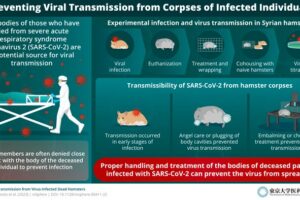
SARS-CoV-2-infected dead hamsters had high virus titers. Angel care or embalming could prevent transmission from infected hamsters' dead bodies. Proper treatment of SARS-CoV-2-infected corpses is critical to prevent the spread of COVID-19 infection.

Guidelines to prevent Covid transmission from the dead

Preliminary results from a Scripps Research and eMed digital medicine study show an unexpectedly high proportion of COVID-19 rebound cases in untreated people, as well as those treated with Paxlovid.

“COVID rebound” is common, even in untreated patients

The novel coronavirus SARS CoV-2 is responsible for the COVID-19 global pandemic. A new form of monoclonal antibody therapeutic to treat the disease is described in a new study, which graces the cover of Plant Biology Journal.

New treatment for COVID-19 is made from plants

A study from Osaka Metropolitan University found that more than half of COVID-19 patients still had residual symptoms, even close to a year afterwards. Symptoms such as fatigue, abnormalities in senses of taste and smell, hair loss, and sleep disorders persisted long after contracting COVID-19, regardless of the severity of the initial infection.

More than half of COVID patients suffer long COVID symptoms

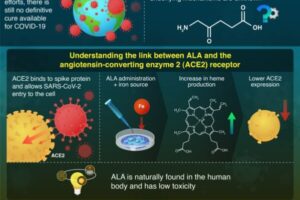
Infographic of how ALA could fight Covid

A naturally occurring amino acid could lead us to a cure for COVID-19

Lungs

Organ damage for 59% of patients with long COVID continues a year after initial symptoms

Political leaning shapes physician beliefs about Covid treatments

Older posts
Newer posts
← Previous Page1 … Page3 Page4 Page5 Page6 Next →
Substack subscription form sign up

Comments

  • Marie Feret on The Silent Frequency That Makes Old Buildings Feel Haunted
  • Dax on The Silent Frequency That Makes Old Buildings Feel Haunted
  • Karoly Mirnics on Common Prescription Drugs May Disrupt Cholesterol Pathways in the Womb and Raise Autism Risk
  • Aizen on Laziness helped lead to extinction of Homo erectus
  • Norwood johnson on Electrons in New Crystals Behave as If They Live in Four Dimensions
© 2026 ScienceBlog.com | Follow our RSS / XML feed