Skip to content
ScienceBlog.com
  • Featured Blogs
    • EU Horizon Blog
    • ESA Tracker
    • Experimental Frontiers
    • Josh Mitteldorf’s Aging Matters
    • Dr. Lu Zhang’s Gondwanaland
    • NeuroEdge
    • NIAAA
    • SciChi
    • The Poetry of Science
    • Wild Science
  • Topics
    • Brain & Behavior
    • Earth, Energy & Environment
    • Health
    • Life & Non-humans
    • Physics & Mathematics
    • Social Sciences
    • Space
    • Technology
  • Our Substack
  • Follow Us!
    • Bluesky
    • Threads
    • FaceBook
    • Google News
    • Twitter/X
  • Contribute/Contact

energy efficiency

Two scientists working with coolant

New tech could revolutionize refrigeration

Data center

Heating data centers to 41°C/105°F, could save big on global energy consumption

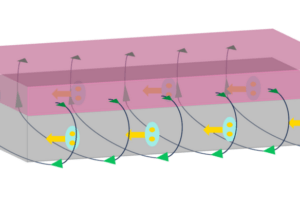
In one design of the new superconducting device, the diode consists of a ferromagnetic strip (pink) atop a superconducting thin film (grey). The team also identified the key factors behind the resulting current that travels in only one direction with no resistance. Credits:Image courtesy of A. Varambally, Y-S. Hou, and H. Chi.

Simple superconducting device could dramatically cut energy use in computing

New tech for old buildings means gains for the wallet and climate

A fully recyclable transistor

Taming AI’s Outsized Electricity Appetite

Computer memory

Researchers Develop Brain-Inspired Computer Memory

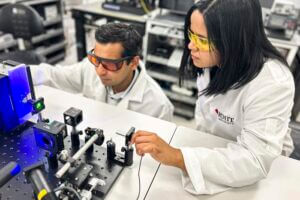
Prof Sumeet Walia (left) and PhD researcher Aishani Mazumder with a demonstration (using visible light) of the experimental set up for the research that used ultraviolet light.

Tiny device mimics human vision and memory abilities

Solar panels on a green lawn. credit pixabay

Hong Kong Researchers Achieve Record Efficiency of 19.31% in Organic Solar Cells

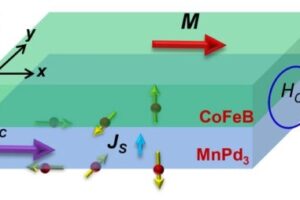
Unconventional z-spin polarization in MnPd3 material. (Image credit: The Wang Group)

Electron Spin Dance: New Memory Material Jives with AI

Emergence of the bitriplet exciton in crystalline pentacene.

Exciton fission: One photon in, two electrons out

Researchers have developed a new light-based computing scheme called LightHash that reduces the energy necessary for cryptocurrency and blockchain applications. First author Sunil Pai is pictured with the optical setup used for the new research.

Light-based computing scheme reduces power needed to mine cryptocurrencies

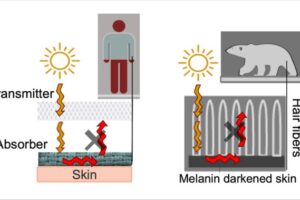
Inspired by polar bears, this new textile creates an on-body “greenhouse” effect to keep you warm.

New cloth unravels warmth-trapping secrets of polar bear fur

Mano Mavrikakis

New atomic-scale understanding of catalysis could be energy breakthrough

The people power being harnessed for cleaner and cheaper energy

Older posts
Newer posts
← Previous Page1 Page2 Page3 Next →
Substack subscription form sign up

Comments

  • Karoly Mirnics on Common Prescription Drugs May Disrupt Cholesterol Pathways in the Womb and Raise Autism Risk
  • Aizen on Laziness helped lead to extinction of Homo erectus
  • Norwood johnson on Electrons in New Crystals Behave as If They Live in Four Dimensions
  • ScienceBlog.com on Hidden Geometry Could Finally Fix Quantum Computers
  • Theo Prinse on America Is Going Back to the Moon. This Time, It Plans to Stay
© 2026 ScienceBlog.com | Follow our RSS / XML feed