Skip to content
ScienceBlog.com
  • Featured Blogs
    • EU Horizon Blog
    • ESA Tracker
    • Experimental Frontiers
    • Josh Mitteldorf’s Aging Matters
    • Dr. Lu Zhang’s Gondwanaland
    • NeuroEdge
    • NIAAA
    • SciChi
    • The Poetry of Science
    • Wild Science
  • Topics
    • Brain & Behavior
    • Earth, Energy & Environment
    • Health
    • Life & Non-humans
    • Physics & Mathematics
    • Social Sciences
    • Space
    • Technology
  • Our Substack
  • Follow Us!
    • Bluesky
    • Threads
    • FaceBook
    • Google News
    • Twitter/X
  • Contribute/Contact

Evolution

A confrontation between stalk-eyed flies. Image by Gerald Wilkinson.

Male Flies Compensate for Shorter Eyestalks with Fiercer Fighting

Neanderthal eating ice cream

Ancient DNA Reveals Our Long-Standing Love Affair with Carbs

Colony of the species Atta colombica, unearthed in Gamboa, Panama. In the center of the photo, much larger than the workers, is the queen

Asteroid that wiped out the dinosaurs led to the invention of ‘ant agriculture’

This picture shows a very famous outcrop where nearly horizontal black and white layers are observed. The BIC made of layers of igneous rock in a basin shape, formed over a period of about 1 million years, after which it seems to have barely changed.

2-billion-year-old rock home to living microbes

Pterosaurs standing

New Pterosaur Fossils Reveal Diverse Flight Styles in Giant Flying Reptiles

Spider embryo with a loss of the waist region upon knockdown of the gene waistless. Hoechst staining with fluorescent stereomicroscopy.

Ancient Gene Key to Spider’s Iconic Waistline

bat in a bag with researcher

Bats Defy Diabetes: How Sugar-Loving Species Thrive on Extreme Blood Sugar Levels

A view of Garbh Eileach, the largest island in the Garvellach island chain where the gradational transition into snowball Earth is recorded.

Ancient Scottish and Irish Rocks Unveil Earth’s Icy Past, Shaping Life as We Know It

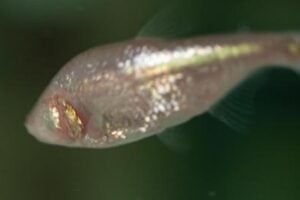
blind cave fish

Blind cavefish have extraordinary taste buds

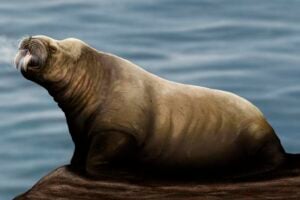
A new discovery by a team of paleontologists, led by Dr. Mathieu Boisville (University of Tsukuba, Japan), has uncovered a new species of the extinct genus Ontocetus from the Lower Pleistocene deposits in the North Atlantic.

Extinct Walrus-Like Species Discovered: New Insights into Marine Mammal Evolution

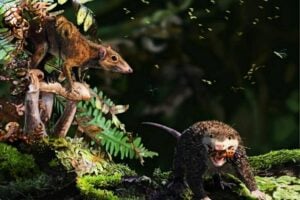
On the left is a parent of the early mammal Dryolestes which raises a brood after reaching sexual maturity at age four. On the right is a Haldanodon, a member of the family of mammal-like docodonts, before fully reaching the mammalian evolutionary level; the creature's lifespan was eleven to fourteen years.

Early mammals lived longer

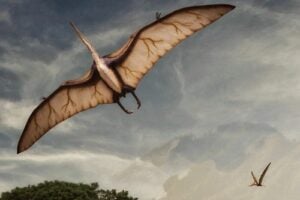
The pterosaur likely used all four limbs to propel itself in the air, as seen in bats today, researchers have found.

Giant prehistoric flying reptile took off using similar method to bats, study finds

Aggie alumna Kim Conley (center) competed in the 5,000 and 10,000 meter events at the 2012 and 2016 Olympic Games. New research supports the idea that humans have long used endurance running as a way to chase down prey. (Photo by Brian Davies/The Register-Guard, Eugene, Oregon)

Endurance Running a Key Factor in Human Evolution

Bacterial cellulose in the wet state.

How researchers turn bacteria into cellulose-producing mini-factories

Older posts
Newer posts
← Previous Page1 Page2 Page3 … Page10 Next →
Substack subscription form sign up

Comments

  • Kidreadytobreed on Global warming reduces available wind energy
  • James on Global warming reduces available wind energy
  • James on Global warming reduces available wind energy
  • Booklet AI on Key to online education: Test early and often
  • Karoly Mirnics on Common Prescription Drugs May Disrupt Cholesterol Pathways in the Womb and Raise Autism Risk
© 2026 ScienceBlog.com | Follow our RSS / XML feed