Skip to content
ScienceBlog.com
  • Featured Blogs
    • EU Horizon Blog
    • ESA Tracker
    • Experimental Frontiers
    • Josh Mitteldorf’s Aging Matters
    • Dr. Lu Zhang’s Gondwanaland
    • NeuroEdge
    • NIAAA
    • SciChi
    • The Poetry of Science
    • Wild Science
  • Topics
    • Brain & Behavior
    • Earth, Energy & Environment
    • Health
    • Life & Non-humans
    • Physics & Mathematics
    • Social Sciences
    • Space
    • Technology
  • Our Substack
  • Follow Us!
    • Bluesky
    • Threads
    • FaceBook
    • Google News
    • Twitter/X
  • Contribute/Contact

Evolution

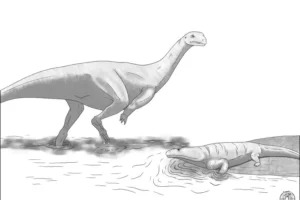
Artist reconstruction of Musankwa sanyatiensis, walking in Triassic shallow waters past a metoposaur.

New Dinosaur Species Discovered on the Shores of Lake Kariba in Zimbabwe

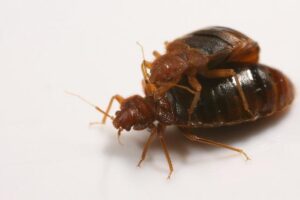
Copulating bedbugs

New findings on fertility: Sperm can adapt to sexually transmitted microbes

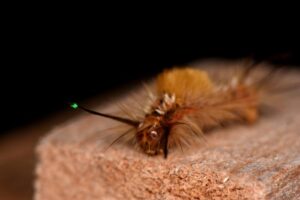
Vapourer moth caterpillar being measured with the laser Doppler vibrometer

Caterpillars can detect their predators by the static electricity they emit

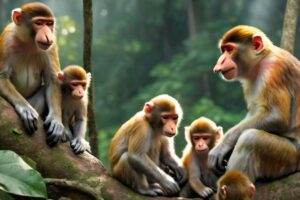
Probiscus monkey family

Proboscis Monkeys’ Large Noses Attract the Ladies

baby chick

Male Chicks Play More Than Females, Hinting at Evolutionary Benefits of Play

a sugar glider soaring through the air, with its patagium fully extended

Unlocking the Secrets of Flying Mammals: How Evolution Shaped the Patagium

The updated bird family tree, published in Nature, delineating 93 million years of evolutionary relationships between 363 bird species.

Computational tools fuel reconstruction of new and improved bird family tree

colorful bar chart

Music: Song lyrics have become simpler and more repetitive since 1980

Killuragh Cave, County Limerick, Ireland.

Unearthing Ancient Dental Secrets: How Our Ancestors’ Mouths Differed from Our Own

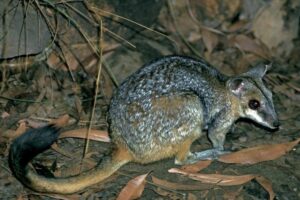
A dwarf species of rock-wallaby, the nabarlek. Image: Ian Morris Small Aussie mammal's bite 'packs a punch'

Tiny Wallabies Pack a Powerful Bite

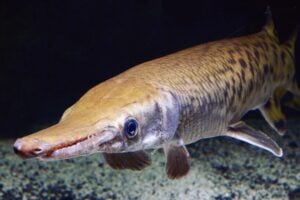
The alligator gar, and other gar species, are “living fossils” that it shows little species diversity or physical differences from ancestors that lived tens of millions of years ago. (Photo by Solomon David)

How ‘Living Fossils’ Like Gars Persist Over Millions of Years

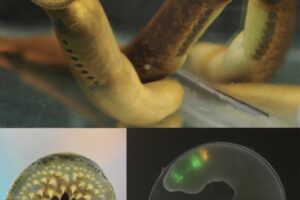
Top and left images are adult sea lampreys. On the right is a fluorescence microscopy image of a developing sea lamprey embryo.

An awkward family reunion: Sea monsters are our cousins

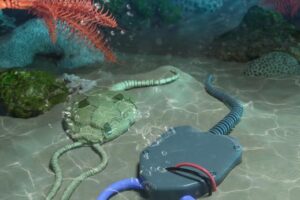
Rendering of pleurocystitid (left) next to the soft robot they modeled after the ancient sea creature.

How ancient sea creatures can inform soft robotics

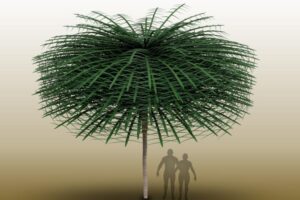
fossil tree

Rare 3D fossils show that some early trees had forms unlike any you’ve ever seen

Older posts
Newer posts
← Previous Page1 … Page3 Page4 Page5 … Page10 Next →
Substack subscription form sign up

Comments

  • Marie Feret on The Silent Frequency That Makes Old Buildings Feel Haunted
  • Dax on The Silent Frequency That Makes Old Buildings Feel Haunted
  • Karoly Mirnics on Common Prescription Drugs May Disrupt Cholesterol Pathways in the Womb and Raise Autism Risk
  • Aizen on Laziness helped lead to extinction of Homo erectus
  • Norwood johnson on Electrons in New Crystals Behave as If They Live in Four Dimensions
© 2026 ScienceBlog.com | Follow our RSS / XML feed