Skip to content
Menu
Featured Blogs
EU Horizon Blog
ESA Tracker
Experimental Frontiers
Josh Mitteldorf’s Aging Matters
Dr. Lu Zhang’s Gondwanaland
NeuroEdge
SciChi
The Poetry of Science
Wild Science
Topics
Brain & Behavior
Earth, Energy & Environment
Health
Life & Non-humans
Physics & Mathematics
Social Sciences
Space
Technology
Our Substack
Follow Us!
Bluesky
Threads
FaceBook
Google News
Twitter/X
Contribute/Contact
Evolution
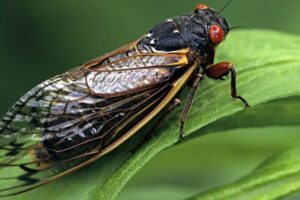
Swarming cicadas, stock traders, and the wisdom of the crowd
Feathered Dinosaurs’ Surprising Purpose: Scaring, Not Flying
Syphilis-like diseases were already widespread in America before the arrival of Columbus
Pacific kelp forests are far older that we thought
Ancient Predator Fossils Unearthed in Greenland
Early primates likely lived in pairs
“Juvenile T. rex” fossils are a distinct species of small tyrannosaur
People, not the climate, caused the decline of the giant mammals
Were Neanderthals morning people ?
It turns out, this fossil plant is really a fossil baby turtle
Fruit, nectar, bugs and blood: How bat teeth and jaws evolved for a diverse dinnertime
Velvet Worm slime could inspire sustainable synthetic materials
Stolen genes allow parasitic control of behavior
Extinct ape gets a facelift, 12 million years later
Older posts
Newer posts
←
Previous
Page
1
…
Page
4
Page
5
Page
6
…
Page
10
Next
→

![Figure 1. (A) Reconstructed Caudipteryx © Christophe Hendrickx. Used under the terms of the Creative Commons license (CC BY-SA 3.0). Licensing details: [https://creativecommons.org/licenses/by-sa/3.0/deed.en]. (B) Robopteryx, imitating the morphology of Caudipteryx, positioned in front of a grasshopper in the field (marked by a red arrow). (C) Grasshopper tested in the experiments.](https://scienceblog.com/wp-content/uploads/2024/01/tiny-feathered-dinosaur-300x200.jpg)