Skip to content
ScienceBlog.com
  • Featured Blogs
    • EU Horizon Blog
    • ESA Tracker
    • Experimental Frontiers
    • Josh Mitteldorf’s Aging Matters
    • Dr. Lu Zhang’s Gondwanaland
    • NeuroEdge
    • NIAAA
    • SciChi
    • The Poetry of Science
    • Wild Science
  • Topics
    • Brain & Behavior
    • Earth, Energy & Environment
    • Health
    • Life & Non-humans
    • Physics & Mathematics
    • Social Sciences
    • Space
    • Technology
  • Our Substack
  • Follow Us!
    • Bluesky
    • Threads
    • FaceBook
    • Google News
    • Twitter/X
  • Contribute/Contact

Evolution

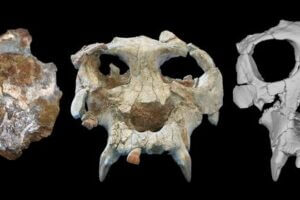
From left, the Pierolapithecus cranium shortly after discovery, after initial preparation, and after virtual reconstruction.

Extinct ape gets a facelift, 12 million years later

Ohio State logo

Genomic analysis in snakes shows link between neutral, functional genetic diversity

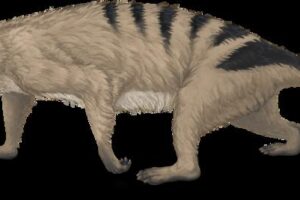
Life reconstruction of the ancient mammal relative Thrinaxodon from the Triassic Period of Earth history. Similar in size and shape to a modern mink, Thrinaxodon is close to the inferred size of the ancestor of the group of ancient mammal relatives called cynodonts, and it shared that ancestor’s likely preference for animal food. Image by April Neander.

Survival of the newest: the mammals that survive mass extinctions aren’t as “boring” as scientists thought

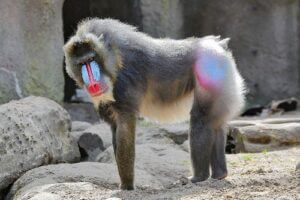
Mandrill

Colorful primates don’t have better color vision

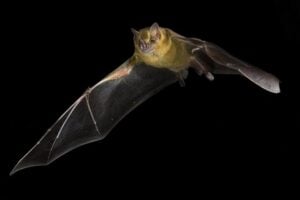
Artibeus jamaicensis, the Jamaican fruit bat

How bats evolved to avoid cancer

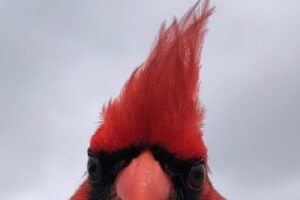
Researchers found that songbirds including the Northern Cardinal (pictured here) that live year-round in the urban core of San Antonio, Texas, had eyes about 5% smaller than members of the same species from the less bright outskirts.

Urban light pollution linked to smaller eyes in birds

Ohio State logo

COVID-19 virus is evolving rapidly in white-tailed deer

Prehistoric animals offer new evolutionary hints as riddles persist

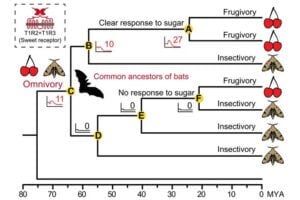
The ancestral sweet receptor of all extant bats (Node C) was functionally sensitive to natural sugars, with a lower level of sugar sensitivity than modern pteropodid bats (Node A), suggesting that common ancestors of bats were omnivorous.

Common ancestors of bats were omnivorous suggested by resurrection of ancestral sweet receptors

Photo credit: Michael L. Smith

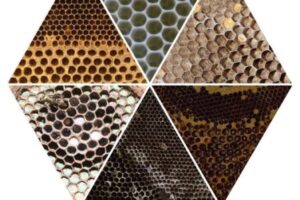
Bees and Wasps Independently Invent Ingenious Nest-Building Solutions

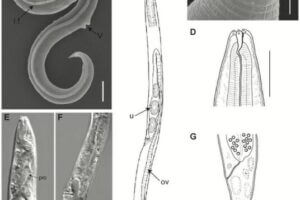
General morphology of P. kolymaensis, female. Scanning electron pictures (A, C), light microscopy photographs (E, F) and graphic presentations (B, D, G) of holotype: A, B) entire body, C, D) anterior ends, E) anterior body, F) perivulvar body region, G) tail. Abbreviations: l.f.–lateral field, ov–ovary, pro–procorpus of the pharynx, t.b.–terminal bulb of the pharynx, u–uterus with eggs, v–vulva, v.p.–ventral pore. Scale bars: A, D, E, F, G– 20 μm, B– 100 μm, C– 2 μm

Worm resurrected from Siberian permafrost laid dormant for 46,000 years

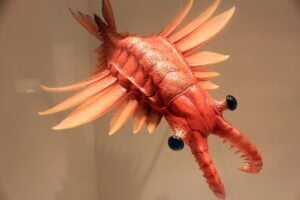
Prehistoric sea creature of the Cambrian period. Photo: Getty

Life on Earth didn’t arise as described in textbooks

Funky animal from Cambrian period. Pixabay

Genes for Learning, Aggression Traced Back 650 Million Years

Circular DNA, thought to be an accidental byproduct, is borrowing the cell’s DNA repair mechanisms to copy itself

DNA Parasites Manipulate Cellular Machinery for Their Own Advantage

Older posts
Newer posts
← Previous Page1 … Page5 Page6 Page7 … Page10 Next →
Substack subscription form sign up

Comments

  • Dax on The Silent Frequency That Makes Old Buildings Feel Haunted
  • Karoly Mirnics on Common Prescription Drugs May Disrupt Cholesterol Pathways in the Womb and Raise Autism Risk
  • Aizen on Laziness helped lead to extinction of Homo erectus
  • Norwood johnson on Electrons in New Crystals Behave as If They Live in Four Dimensions
  • ScienceBlog.com on Hidden Geometry Could Finally Fix Quantum Computers
© 2026 ScienceBlog.com | Follow our RSS / XML feed