Skip to content
ScienceBlog.com
  • Featured Blogs
    • EU Horizon Blog
    • ESA Tracker
    • Experimental Frontiers
    • Josh Mitteldorf’s Aging Matters
    • Dr. Lu Zhang’s Gondwanaland
    • NeuroEdge
    • NIAAA
    • SciChi
    • The Poetry of Science
    • Wild Science
  • Topics
    • Brain & Behavior
    • Earth, Energy & Environment
    • Health
    • Life & Non-humans
    • Physics & Mathematics
    • Social Sciences
    • Space
    • Technology
  • Our Substack
  • Follow Us!
    • Bluesky
    • Threads
    • FaceBook
    • Google News
    • Twitter/X
  • Contribute/Contact

Evolution

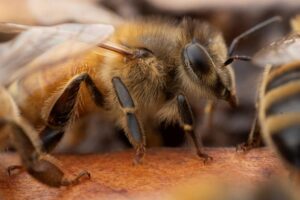
Bees make decisions better and faster than we do, for the things that matter to them

How Honey Bees Inspire Advanced Robotics and AI

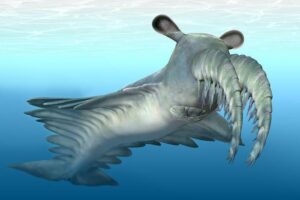
Apex predator of the Cambrian likely sought soft over crunchy prey

Ancient Sea Scourge Not So Fearsome After All

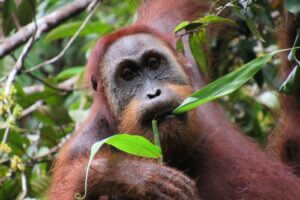
An unflanged migrant orangutan male feeding on Rotan Tikus leaves (Flagellaria indica) Orangutan species: Pongo abelii

When Orangutans Go Global: The Art of Jungle Assimilation 101

Farmer ants and drama-prone wasps in spotlight for their climate adaptation

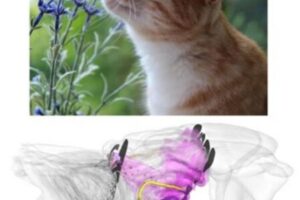
Researchers use a 3D model to find that house cats’ noses may function like highly efficient chemical analysis equipment.

House cats’ noses may function like highly efficient chemical analysis equipment

Ohio State logo

How the cat nose knows what it’s smelling

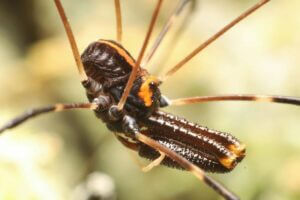
An alpha male harvestman

Arachnid has three versions of `male.’ How does that happen?

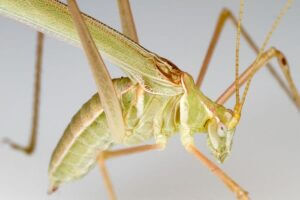
Present-day katydids of the genus Arethaea, pictured here, have the same internal structures as those seen in the fossil.

Exceptional Preservation of Internal Organs in 50-Million-Year-Old Katydid Fossil

A new species of early toothed whale

New Species of Ancient Toothed Whale Unveiled: Olympicetus thalassodon

Climate change could lead to "widespread chaos" for insect communities

Climate change could lead to “widespread chaos” for insect communities

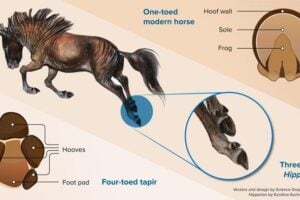
Plantar (underneath) view of feet of a four-toed tapir (left) and a one-toed horse (right) and in the middle, a reconstruction of the extinct three-toed horse

Modern horses have lost their additional toes, scientists confirm

Bone cavities called air sacs appeared in the ancestors of long-necked dinosaurs about 225 million years ago, according to the analysis of a specimen found in Rio Grande do Sul state, South Brazil. The study also shows that air sacs did not evolve as linearly as scientists believe (credit: Márcio L. Castro)

Brazilian fossil provides earliest evidence of evolutionary trait that enabled dinosaurs to become giants

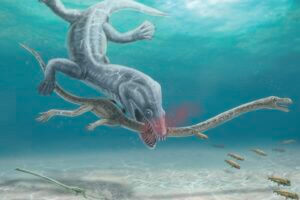
Artistic rendition of the decapitation scene of Tanystropheus hydroides

Decapitated Dinosaurs: Fossil Evidence Confirms Predators Exploited Long Necks of Ancient Marine Reptiles

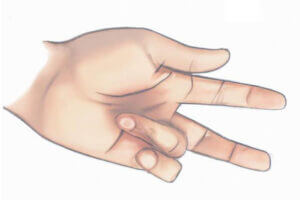
A ring finger locked in a bent position as seen in Dupuytren's disease, colloquially known as the "Viking disease."

“Viking disease” hand disorder may come from Neandertal genes

Older posts
Newer posts
← Previous Page1 … Page6 Page7 Page8 … Page10 Next →
Substack subscription form sign up

Comments

  • Karoly Mirnics on Common Prescription Drugs May Disrupt Cholesterol Pathways in the Womb and Raise Autism Risk
  • Aizen on Laziness helped lead to extinction of Homo erectus
  • Norwood johnson on Electrons in New Crystals Behave as If They Live in Four Dimensions
  • ScienceBlog.com on Hidden Geometry Could Finally Fix Quantum Computers
  • Theo Prinse on America Is Going Back to the Moon. This Time, It Plans to Stay
© 2026 ScienceBlog.com | Follow our RSS / XML feed