Skip to content
ScienceBlog.com
  • Featured Blogs
    • EU Horizon Blog
    • ESA Tracker
    • Experimental Frontiers
    • Josh Mitteldorf’s Aging Matters
    • Dr. Lu Zhang’s Gondwanaland
    • NeuroEdge
    • NIAAA
    • SciChi
    • The Poetry of Science
    • Wild Science
  • Topics
    • Brain & Behavior
    • Earth, Energy & Environment
    • Health
    • Life & Non-humans
    • Physics & Mathematics
    • Social Sciences
    • Space
    • Technology
  • Our Substack
  • Follow Us!
    • Bluesky
    • Threads
    • FaceBook
    • Google News
    • Twitter/X
  • Contribute/Contact

Evolution

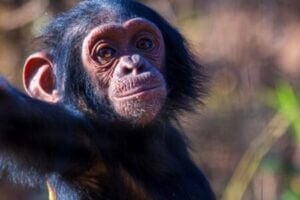
Very young chimp reaching out its hand. Credit Durham University.

Development of communication in chimpanzees echoes that of human infants

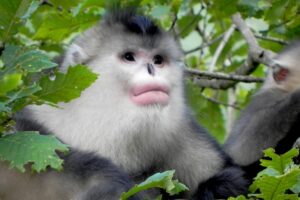
An adult male black and white snub-nosed monkey (Rhinopithecus bieti).

Asian Monkeys in the Cold Evolve for Survival

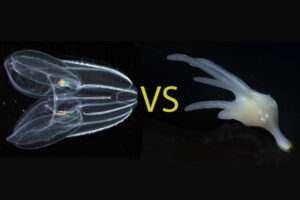
Scientists have long debated whether comb jellies (left) or sponges (right) are the sister group to all other animals. A detailed comparison of the chromosomes of these and other animals to the chromosomes of three single-celled non-animal groups finally resolves the question. (Photos courtesy of MBARI)

What did the earliest animals look like?

The realllly long neck of a brontosaurus

How Sauropods Achieved Their Record-breaking Sizes

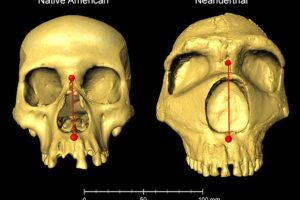
Modern human and Neanderthal skulls, showing difference in nasal height. Courtesy of Dr, Kaustubh Adhikari, UCL.

Neanderthal noses influence human honkers

Bee flying mid-air

Buzzworthy Research Suggests Insect Brains May Help Us Understand Our Own

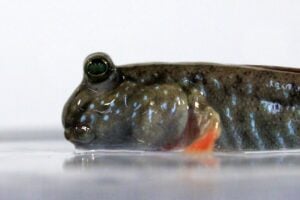
Mudskipper CREDIT Georgia Tech

Mudskippers could be key to understanding evolution of blinking

Spiderweb with dew in the morning

Orb weaver spider glue properties evolve faster than their glue genes

Gossip illustration

Gossip influences who gets ahead in different cultures

Origin of Life: Unsolved or Unsolvable?

Plant being recorded

Stressed plants emit airborne sounds that can be detected from over a meter away

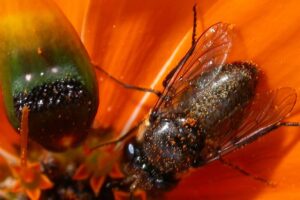
A real fly (right) lands on a daisy petal next to the fake fly (left)

Deceptive daisy’s ability to create fake flies explained

Example of a long-tailed macaque using a stone tool to access food.

Surprising similarities found in stone tools of early humans and monkeys

The microprotein in the mitochondria (green) and in the nucleus (blue) was overexpressed in human cells. The yellow and pink areas show that the signal of the microprotein overlaps with the mitochondrial and nuclear signals.

Evolution: Miniproteins appeared “from nowhere”

Older posts
Newer posts
← Previous Page1 … Page7 Page8 Page9 Page10 Next →
Substack subscription form sign up

Comments

  • Karoly Mirnics on Common Prescription Drugs May Disrupt Cholesterol Pathways in the Womb and Raise Autism Risk
  • Aizen on Laziness helped lead to extinction of Homo erectus
  • Norwood johnson on Electrons in New Crystals Behave as If They Live in Four Dimensions
  • ScienceBlog.com on Hidden Geometry Could Finally Fix Quantum Computers
  • Theo Prinse on America Is Going Back to the Moon. This Time, It Plans to Stay
© 2026 ScienceBlog.com | Follow our RSS / XML feed