Skip to content
ScienceBlog.com
  • Featured Blogs
    • EU Horizon Blog
    • ESA Tracker
    • Experimental Frontiers
    • Josh Mitteldorf’s Aging Matters
    • Dr. Lu Zhang’s Gondwanaland
    • NeuroEdge
    • NIAAA
    • SciChi
    • The Poetry of Science
    • Wild Science
  • Topics
    • Brain & Behavior
    • Earth, Energy & Environment
    • Health
    • Life & Non-humans
    • Physics & Mathematics
    • Social Sciences
    • Space
    • Technology
  • Our Substack
  • Follow Us!
    • Bluesky
    • Threads
    • FaceBook
    • Google News
    • Twitter/X
  • Contribute/Contact

Evolution

Young boy climbing a tree using a rope

How could we evolve such a huge brain?

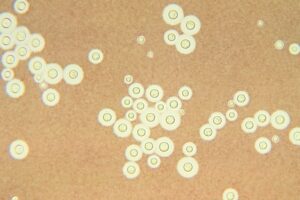
This photomicrograph depicts Cryptococcus neoformans a fungal pathogen that has been causing an increasing number of life-threatening infections. People with AIDS, and those using immunosuppressive drugs are most vulnerable.

Warmer climate drives fungi to be more dangerous to our health

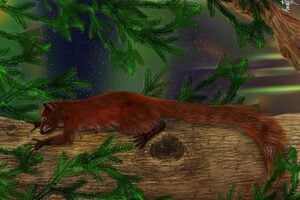
Artist's reconstruction of Ignacius dawsonae surviving six months of winter darkness in the extinct warm temperate ecosystem of Ellesmere Island, Arctic Canada.

Fossils show near-primates were cool with colder climate

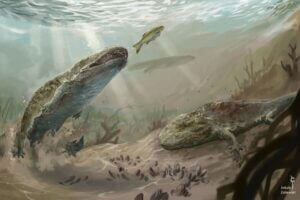
Reconstruction of the metoposaurs, - representatives of temnospondyl amphibians in their environment, some 215 million years ago.

A tumor more than 215 million years old

A Nile crocodile swallows an impala, its reward for lying in wait beneath the water’s surface. By resurrecting the hemoglobin of ancient crocodilian ancestors, a Husker-led team has helped explain why other vertebrates failed to evolve the adaptations that allow crocs to go hours without air.

Decoding Croc Blood: Mutations Make it an Oxygen-Ferrying Winner

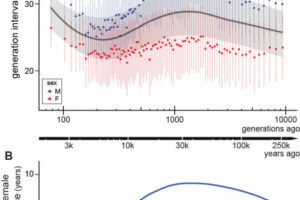
Graphs showing the average age at conception for men versus women over the past 250,000 years. Images courtesy of the Hahn Lab

Fathers consistently older than mothers throughout human history

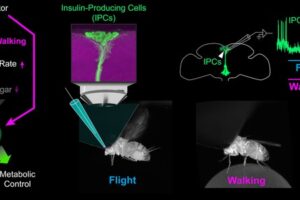
The figure shows the relationship between movement and regulation of insulin-producing cells in the fruit fly.

Exercise curbs insulin production

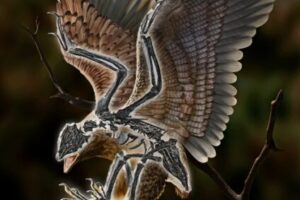
Life reconstruction of the 120-million-year-old bird Cratonavis zhui

Bizarre bird from China shows decoupled skull and body

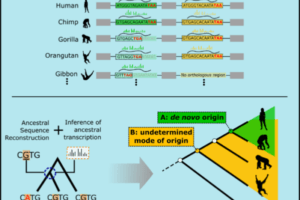
This graphical abstract depicts the rise of new genes in humans.

Humans continue to evolve with the emergence of new genes

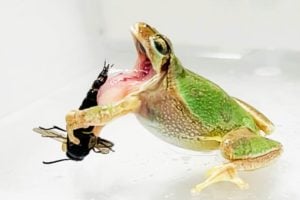
A tree frog (Dryophytes japonica) spitting out a male wasp (Anterhynchium gibbifrons) after being stung (by pseudo-stings)

Male wasps sting predators with their genitals

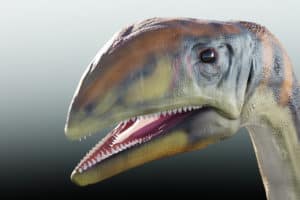
Dinosaur face

First dinosaurs ate pretty much everything

Human bipedalism – walking upright on two legs – may have evolved in trees, and not on the ground as previously thought, according to a new study involving UCL researchers.

Early humans may have first walked upright in the trees

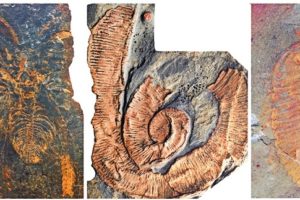
Fossils from the Fezouata Shale. From left to right, a non-mineralized arthropod (Marrellomorpha), a palaeoscolecid worm and a trilobites

Giant arthropods dominated the seas 470 million years ago

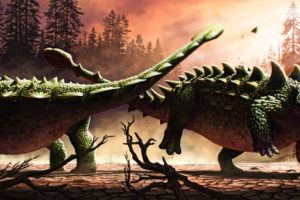
Zuul crurivastator in battle, illustrated by Henry Sharpe. © Henry Sharpe

Ankylosaurs battled each other as much as they fought off T. rex

Older posts
Newer posts
← Previous Page1 … Page8 Page9 Page10 Next →
Substack subscription form sign up

Comments

  • Karoly Mirnics on Common Prescription Drugs May Disrupt Cholesterol Pathways in the Womb and Raise Autism Risk
  • Aizen on Laziness helped lead to extinction of Homo erectus
  • Norwood johnson on Electrons in New Crystals Behave as If They Live in Four Dimensions
  • ScienceBlog.com on Hidden Geometry Could Finally Fix Quantum Computers
  • Theo Prinse on America Is Going Back to the Moon. This Time, It Plans to Stay
© 2026 ScienceBlog.com | Follow our RSS / XML feed