Skip to content
ScienceBlog.com
  • Featured Blogs
    • EU Horizon Blog
    • ESA Tracker
    • Experimental Frontiers
    • Josh Mitteldorf’s Aging Matters
    • Dr. Lu Zhang’s Gondwanaland
    • NeuroEdge
    • NIAAA
    • SciChi
    • The Poetry of Science
    • Wild Science
  • Topics
    • Brain & Behavior
    • Earth, Energy & Environment
    • Health
    • Life & Non-humans
    • Physics & Mathematics
    • Social Sciences
    • Space
    • Technology
  • Our Substack
  • Follow Us!
    • Bluesky
    • Threads
    • FaceBook
    • Google News
    • Twitter/X
  • Contribute/Contact

evolutionary biology

New project explores warfare in animal societies

New project explores warfare in animal societies

Illustration of the body plan of a toothed whale, with a cross section of the head showing the melon (dark yellow) and the extramandibular fat bodies (light yellow) which are key organs for using sound such as echolocation. (Hayate Takeuchi, Takashi Fritz Matsuishi, Takashi Hayakawa. Gene. January 20, 2024)

Toothed whale echolocation organs evolved from jaw muscles

Polite bird

Polite Japanese bird signals “after you!” to others

It’s no surprise that dogs can learn to understand and respond to human words. Your dog can learn to sit when you say “sit” and come when called. But a new study has made the surprising discovery by recording brain activity that dogs generally also know that certain words “stand for” certain objects. When they hear those words, they activate a matching mental representation in their minds. The findings are reported in Current Biology on March 22, 2024.

Your dog understands that some words ‘stand for’ objects, new study shows

screenshot of youtube video of playful apes

WATCH: Great ape children poke and run from adults, like humans

DNA illustration

Link Between Risk-Taking and Genetic Basis of Male Bisexual Behavior

Frankenfrog illustration

Developing Frankenfrogs hold clues to the secrets of body plan formation

a windswept tree on a plain

How antibiotic-resistant bacteria can teach us to modify behavior

abstract illustration of aging man and dna

Genetic mutations that promote reproduction tend to shorten human lifespan

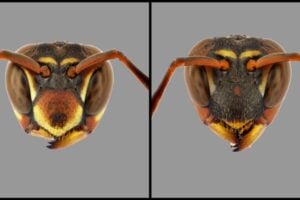
wasp faces

Wasps that recognize faces cooperate more, may be smarter

Ohio State logo

Advances in soft robotics usher in a new era of scientific analysis

Pair-bonded Java sparrows examined in the study (Photo: Soma Lab)

Something in the eyes: Java Sparrows in love show enhanced eye rings

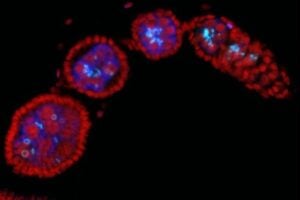
A mei-P26 mutant Drosophila melanogaster ovariole infected with wMel bacterial symbionts. DNA is stained in red, anti-Vasa protein is stained blue, and anti-Hu-li tai shao ring canal protein is stained cyan.

Bacteria can enhance host insect’s fertility

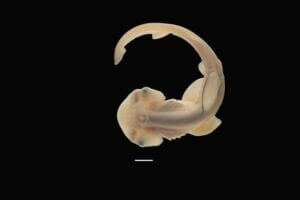
A baby hammerhead during development with a nascent hammerhead snout.

A look at how monsters form: How the hammerhead gets its hammer

Older posts
Newer posts
← Previous Page1 Page2 Page3 Page4 Next →
Substack subscription form sign up

Comments

  • Karoly Mirnics on Common Prescription Drugs May Disrupt Cholesterol Pathways in the Womb and Raise Autism Risk
  • Aizen on Laziness helped lead to extinction of Homo erectus
  • Norwood johnson on Electrons in New Crystals Behave as If They Live in Four Dimensions
  • ScienceBlog.com on Hidden Geometry Could Finally Fix Quantum Computers
  • Theo Prinse on America Is Going Back to the Moon. This Time, It Plans to Stay
© 2026 ScienceBlog.com | Follow our RSS / XML feed