Skip to content
ScienceBlog.com
  • Featured Blogs
    • EU Horizon Blog
    • ESA Tracker
    • Experimental Frontiers
    • Josh Mitteldorf’s Aging Matters
    • Dr. Lu Zhang’s Gondwanaland
    • NeuroEdge
    • NIAAA
    • SciChi
    • The Poetry of Science
    • Wild Science
  • Topics
    • Brain & Behavior
    • Earth, Energy & Environment
    • Health
    • Life & Non-humans
    • Physics & Mathematics
    • Social Sciences
    • Space
    • Technology
  • Our Substack
  • Follow Us!
    • Bluesky
    • Threads
    • FaceBook
    • Google News
    • Twitter/X
  • Contribute/Contact

Machine Learning

Person demonstrating use of a handheld device for heart disease screening Credit: Acoustics Lab

Handheld device could transform heart disease screening

Coffee-making robot pours water from a kettle into a cup

Robot Barista Breaks New Ground for AI Machines

The SuperMUC-NG at the Leibniz Supercomputing Centre is the eighth fastest computer in the world.

New method significantly reduces AI energy consumption

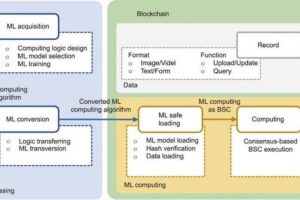
The overall architecture of the MLOB framework.

Blockchain Shield: New Framework Tackles Critical Security Gaps in Engineering AI

an_abstract_illustration_that_demonstrates_the_strength of diversity in LLMs

The Secret to Smarter AI? Linguistic Diversity, Not Bigger Data

A mosaic of simulations included in the Well collection of datasets.

AI Takes Scientific Cross-Training to New Heights with Massive Open Dataset

mouse

AI System Spots Early Warning Signs of Alzheimer’s Through Mouse Behavior

Untreated patient-derived glioblastoma cells (left) compared to glioblastoma cells treated with a combination of radiation and ABBV-155 (right). Green fluorescence marks viable cells, illustrating how the therapy induces cell death. Courtesy of the Nathanson Laboratory.

Machine Learning Breakthrough Reveals New Hope for Deadly Brain Cancer Treatment

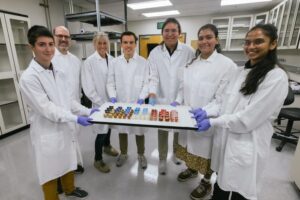
Is it possible to close the texture gap between plant-based meat and animal meat? Ellen Kuhl and her lab are trying. From left: Skyler St. Pierre, Marc Levenston, Ellen Kuhl, Reese Dunne, Ethan Darwin, Valerie Perez Medina, and Divya Adil pose with the meat and plant-based meat they analyzed.

Bridging the Texture Gap: AI and Engineering Drive Plant-Based Meat Innovation

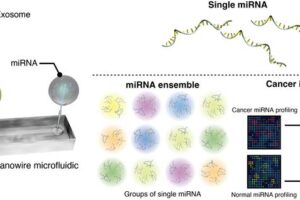
Scientists utilized zinc oxide nanowires to capture cancer-associated miRNAs in urinary extracellular vesicles. By integrating machine learning analysis, they identified specific miRNA ensembles that differentiate lung cancer patients from healthy individuals, showing promise as a non-invasive, early-stage cancer detection tool. This pioneering approach could transform cancer diagnosis, enhancing patient outcomes through earlier intervention.

New Nanowire Technology Detects Early-Stage Cancer Through Urine Test

Atmospheric blocking events can be associated with extreme heat waves, such as in Europe in 2023.

Deep learning illuminates atmospheric blocking events of past, future

abstract illustration of computer code

AI Models Revolutionize Plasma Heating Predictions for Fusion Research

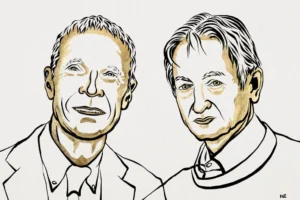
Ill. Niklas Elmehed © Nobel Prize Outreach

Physics Pioneers Awarded Nobel Prize for Machine Learning Breakthroughs

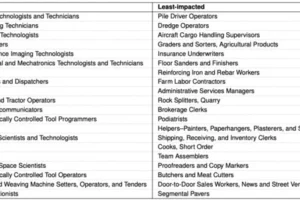
20 most- and least-impacted occupations ranked by the AII (Artificial Intelligence Impact) measure.

AI’s Uneven Impact: Study Reveals Most and Least Affected Occupations

Older posts
Page1 Page2 … Page9 Next →
Substack subscription form sign up

Comments

  • brenojames on Global warming reduces available wind energy
  • Kidreadytobreed on Global warming reduces available wind energy
  • James on Global warming reduces available wind energy
  • James on Global warming reduces available wind energy
  • Booklet AI on Key to online education: Test early and often
© 2026 ScienceBlog.com | Follow our RSS / XML feed