Skip to content
ScienceBlog.com
  • Featured Blogs
    • EU Horizon Blog
    • ESA Tracker
    • Experimental Frontiers
    • Josh Mitteldorf’s Aging Matters
    • Dr. Lu Zhang’s Gondwanaland
    • NeuroEdge
    • NIAAA
    • SciChi
    • The Poetry of Science
    • Wild Science
  • Topics
    • Brain & Behavior
    • Earth, Energy & Environment
    • Health
    • Life & Non-humans
    • Physics & Mathematics
    • Social Sciences
    • Space
    • Technology
  • Our Substack
  • Follow Us!
    • Bluesky
    • Threads
    • FaceBook
    • Google News
    • Twitter/X
  • Contribute/Contact

Machine Learning

The picture on the left was generated by a standard method while the picture on the right was generated by ElasticDiffusion. The prompt for both images was, “Photo of an athlete cat explaining its latest scandal at a press conference to journalists.” (Image courtesy of Moayed Haji Ali/Rice University)

Rice research could make weird AI images a thing of the past

A researcher at Binghamton University, State University of New York has developed a tool to root out bogus, AI-generated research articles.

New AI Tool Detects Fake Scientific Articles with 94% Accuracy

The Mirror Lake offramp on the Glenn Highway near Chugiak, Alaska, shows damage after the Nov. 30, 2018, earthquake. Photo courtesy of Alaska Department of Transportation and Public Facilities

New Algorithm Detects Early Signs of Major Earthquakes Months in Advance

Ohio State logo

A human-centered AI tool to improve sepsis management

Kristiina Tammimies

AI Model Shows Promise in Early Autism Detection, Achieving 80% Accuracy

man interactive on cell phone with AI avatar

Large Language Models Pose No Existential Threat, Study Finds

A computer screen shows results from an electroencephalogram, or EEG test.

AI boosts the power of EEGs, enabling neurologists to quickly, precisely pinpoint signs of dementia

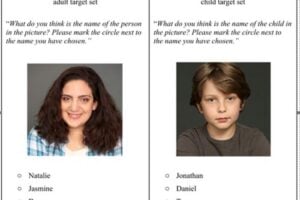
Examples of trials in Study 2 (A) is an example from the adult target set (left) B is an example from the child target set (right). This is a loos translation into English

Names may shape facial appearance over time new study suggests

Ohio State logo

Using AI to scrutinize, validate theories on animal evolution

Weill Cornell Medicine investigators used AI to discern subtypes of Parkinson's disease from diverse data sources. Credit: Shutterstock

Machine learning helps define new subtypes of Parkinson’s disease

A new tool enables someone to perform complicated statistical analyses on tabular data using just a few keystrokes. Credits:Image: MIT News; iStock

AI Tool Simplifies Complex Database Analysis, Outperforms Neural Networks

Visualization of K = 5 high-resolution and photo-realistic synthetic images conditioned on a text, and comparison with state-of-the-art methods (top) on the Caltech-UCSD Birds-200-2011 dataset

AI Creates Stunning Images from Text: New Model Beats Competitors

Daniel Bojar

AI Speeds Up Cancer Detection Through Sugar Analysis

Rhanor Gillette, left, and Ekaterina Gribkova developed an AI that can navigate new environments, seek novelty and rewards, and learn in real time. Their research into the neural pathways that drive behavior in sea slugs and octopuses guided the work.

New AI ‘CyberOctopus’ Learns Like Animals, Navigates and Explores on Its Own

Older posts
Newer posts
← Previous Page1 Page2 Page3 … Page9 Next →
Substack subscription form sign up

Comments

  • Karoly Mirnics on Common Prescription Drugs May Disrupt Cholesterol Pathways in the Womb and Raise Autism Risk
  • Aizen on Laziness helped lead to extinction of Homo erectus
  • Norwood johnson on Electrons in New Crystals Behave as If They Live in Four Dimensions
  • ScienceBlog.com on Hidden Geometry Could Finally Fix Quantum Computers
  • Theo Prinse on America Is Going Back to the Moon. This Time, It Plans to Stay
© 2026 ScienceBlog.com | Follow our RSS / XML feed