Skip to content
ScienceBlog.com
  • Featured Blogs
    • EU Horizon Blog
    • ESA Tracker
    • Experimental Frontiers
    • Josh Mitteldorf’s Aging Matters
    • Dr. Lu Zhang’s Gondwanaland
    • NeuroEdge
    • NIAAA
    • SciChi
    • The Poetry of Science
    • Wild Science
  • Topics
    • Brain & Behavior
    • Earth, Energy & Environment
    • Health
    • Life & Non-humans
    • Physics & Mathematics
    • Social Sciences
    • Space
    • Technology
  • Our Substack
  • Follow Us!
    • Bluesky
    • Threads
    • FaceBook
    • Google News
    • Twitter/X
  • Contribute/Contact

Machine Learning

A robot cooking. Image courtesy University of Cambridge

Cooking Videos Teach Robotic ‘Chef’ to Whip Up Delicious Dishes

Visualization Unveils Spatially Interacting Patterns of Tumor and Immune Activity in Breast Cancer Tissue Samples

Software IDs Molecular Interactions within Tumors

Illustration of a robot and man in a business suit

ChatGPT is still no match for humans when it comes to accounting

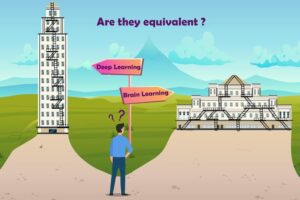
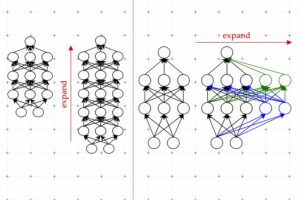
Figure: Scheme of Deep Machine Learning consisting of many layers (left) vs. Shallow Brain Learning consisting of a few layers with enlarged width (right). For more detail see https://www.nature.com/articles/s41598-023-32559-8

Is Deep Learning a necessary ingredient for Artificial Intelligence?

This image was generated using Stable Diffusion, a text-to-image generator, using the prompt “researchers working with huge piles of data.” UW–Madison’s Dane Morgan and Maciej Polak have published their solution for training ChatGPT to read academic articles, tabulate key data and check the results for accuracy, thereby saving valuable research time.

ChatGPT makes materials research much more efficient

Student walking across campus followed by a drone

Drones navigate unseen environments with liquid neural networks

Woman posing in yoga

No magic number for time it takes to form habits

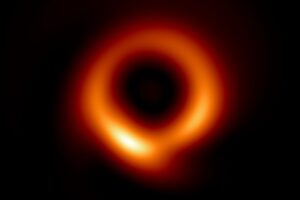
New image of M87 supermassive black hole generated by the PRIMO algorithm using 2017 EHT data

A sharper look at the M87 black hole

Futuristic looking robot looking at a video monitor

IBM, Samsung build “AI scientist” that combines theory and data

Four different autism subtypes identified in brain study

darts hitting a target

AI continues to surpass human performance; it’s time to reevaluate our tests

Caption:MIT researchers have found that neural networks can be designed so they minimize the probability of misclassifying a data input. Credits:Image: Jose-Luis Olivares, MIT, with figures from iStock

How to design neural networks optimally suited for certain tasks

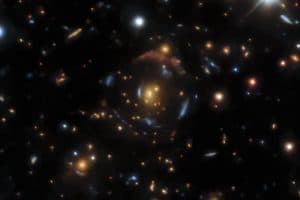
An example of a gravitational lens found in the DESI Legacy Surveys data. There are four sets of lensed images in DESI-090.9854-35.9683, corresponding to four distinct background galaxies — from the outermost giant red arc to the innermost bright blue arc, arranged in four concentric circles. All of them are gravitationally warped — or lensed — by the orange galaxy at the very center.

Astrophysicists show how to “weigh” galaxy clusters with artificial intelligence

The framework developed by the researchers accelerates training of a new, larger neural network model by using the weights in the neurons of an older, smaller model as building blocks. Their machine-learning approach learns to expand the width and depth of the larger model in a data-driven way. Credits: Image: Courtesy of the researchers, edited by MIT News

Learning to grow machine-learning models

Older posts
Newer posts
← Previous Page1 … Page6 Page7 Page8 Page9 Next →
Substack subscription form sign up

Comments

  • Mark Mellinger on Living Plastic Can Self-Destruct on Command
  • Marie Feret on The Silent Frequency That Makes Old Buildings Feel Haunted
  • Dax on The Silent Frequency That Makes Old Buildings Feel Haunted
  • Karoly Mirnics on Common Prescription Drugs May Disrupt Cholesterol Pathways in the Womb and Raise Autism Risk
  • Aizen on Laziness helped lead to extinction of Homo erectus
© 2026 ScienceBlog.com | Follow our RSS / XML feed