Skip to content
ScienceBlog.com
  • Featured Blogs
    • EU Horizon Blog
    • ESA Tracker
    • Experimental Frontiers
    • Josh Mitteldorf’s Aging Matters
    • Dr. Lu Zhang’s Gondwanaland
    • NeuroEdge
    • NIAAA
    • SciChi
    • The Poetry of Science
    • Wild Science
  • Topics
    • Brain & Behavior
    • Earth, Energy & Environment
    • Health
    • Life & Non-humans
    • Physics & Mathematics
    • Social Sciences
    • Space
    • Technology
  • Our Substack
  • Follow Us!
    • Bluesky
    • Threads
    • FaceBook
    • Google News
    • Twitter/X
  • Contribute/Contact

Obesity

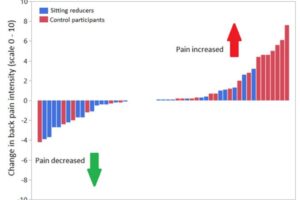
The figure presents the change in back pain intensity on a scale from 0 to 10. The blue bars represent individuals in the intervention group that reduced sitting and the red bars represent the control participants who did not change their sitting habits. Most of the participants in the intervention group decreased their back pain whereas the back pain in the control participants tended to increase.

Study Finds Reducing Daily Sitting Time May Prevent Back Pain Worsening

Cartoon of a man's belly at the beach

Long-term exercisers have ‘healthier’ belly fat

blue bubbles

Monthly Semaglutide Injection: A Game-Changer for Diabetes and Weight Loss Treatment

From the left: Vilém Charvát, Dr Andrea Pačesová, Dr Lenka Maletínská, head of the Pathophysiological Mechanisms of Food Intake Regulation group at IOCB Prague

Novel Compound Shows Promise in Treating Obesity and Alzheimer’s

Research on the therapy to induce appetite suppression is being conducted at Seoul National University Hospital with Korea Electrotechnolgy Research Institute (KERI).

Electrical Brain Stimulation Shows Promise in Appetite Suppression

Cake

Study Reveals Brain Circuit Balancing Hunger-Driven and Pleasure-Driven Eating

Candy

Brain Chemical Drives Choice Between Exercise and Snacking, Study Finds

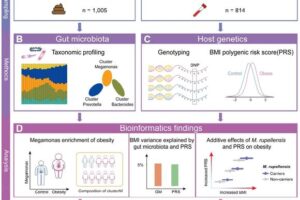
Figure S1. Study design, data analysis and experimental strategy for linking the human gut microbiota, genetics, and obesity. Related to STAR Methods. (A) Basic information of a Chinese obese cohort (n = 1,005). (B) Shotgun metagenomic sequencing and taxonomic profiling analysis on 1,005 collected fecal samples. (C) Whole genome sequencing conducted on 814 collected blood samples, and the calculation of polygenic risk score (PRS) for BMI based on BMI-associated common variants. (D) Identification of obesity-enriched microbial taxa, and assessment of the impacts of gut microbiota and host genetics on obesity. (E) Experimental design of functional examination of M. rupellensis and E. coli with heterologous expression of a myo-inositol-degrading enzyme in vitro and in vivo.

Megamonas bacterium found to influence obesity risk

Ohio State logo

What fat cats on a diet may tell us about obesity in humans

Heart illustration

Weight Gain in Young Adults Linked to Poorer Heart Health Later in Life

cartoon of pregnant mouse exercising

New Exercise Molecule Discovery Could Unlock Weight Loss for Stubborn Cases

Bathroom scale and tape measure

Obesity Diagnosis Gets Makeover: BMI No Longer Sole Factor

Researchers Rong Fan (left) and Soonkyu Chung (right) from the Department of Nutrition at the University of Massachusetts Amherst found that daily heat treatment improves metabolic health and insulin sensitivity in aging and menopause animal models.

Daily sauna appears to help prevent menopause-related weight gain

Olive oil and olives

Compound from olives shows promise for treating obesity and diabetes

Older posts
Newer posts
← Previous Page1 Page2 Page3 … Page7 Next →
Substack subscription form sign up

Comments

  • Karoly Mirnics on Common Prescription Drugs May Disrupt Cholesterol Pathways in the Womb and Raise Autism Risk
  • Aizen on Laziness helped lead to extinction of Homo erectus
  • Norwood johnson on Electrons in New Crystals Behave as If They Live in Four Dimensions
  • ScienceBlog.com on Hidden Geometry Could Finally Fix Quantum Computers
  • Theo Prinse on America Is Going Back to the Moon. This Time, It Plans to Stay
© 2026 ScienceBlog.com | Follow our RSS / XML feed