Skip to content
ScienceBlog.com
  • Featured Blogs
    • EU Horizon Blog
    • ESA Tracker
    • Experimental Frontiers
    • Josh Mitteldorf’s Aging Matters
    • Dr. Lu Zhang’s Gondwanaland
    • NeuroEdge
    • NIAAA
    • SciChi
    • The Poetry of Science
    • Wild Science
  • Topics
    • Brain & Behavior
    • Earth, Energy & Environment
    • Health
    • Life & Non-humans
    • Physics & Mathematics
    • Social Sciences
    • Space
    • Technology
  • Our Substack
  • Follow Us!
    • Bluesky
    • Threads
    • FaceBook
    • Google News
    • Twitter/X
  • Contribute/Contact

Obesity

Professor Elena Martín-García

Gut Bacteria Linked to Food Addiction: New Hope for Obesity Treatment

Man yawning

Diabetes Drug Tirzepatide Shows Promise as First Effective Therapy for Sleep Apnea in Obese Patients

Blood samples

Blood Variant Linked to Obesity and New Discovery Could Guide Treatment

WeGovy semaglutide

Combination of Weight Loss Drugs Before Surgery May Lower Risks for Patients with Severe Obesity

woman running at night

Evening Exercise May Be Most Effective for Lowering Daily Blood Sugar in Adults

brain food illustration

Weak Brain Connections Linked to Higher BMI

a stylized illustration of a person's silhouette with a glowing, orange-colored region in the upper back and neck area, representing active brown fat.

Scientists Discover “Off Switch” Protein That Limits Brown Fat’s Calorie-Burning Potential

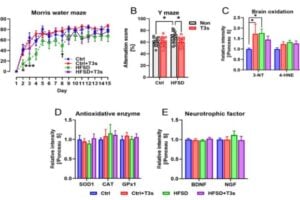
brain oxidation and tocotrienols infographic

Natural Compounds Show Promise in Protecting the Brain from Obesity-Related Cognitive Decline

a measuring tape around a waist

New Genetic Variants Significantly Increase Risk of Adult Obesity

A colorful scientific illustration. A balanced scale with sugar on one side and artificial and natural sweeteners on the other. The sweetener side outweighs the sugar side. Biscuits and a blood sugar meter with a smiley face are in the background.

Study Debunks Myth: Sweeteners Don’t Increase Appetite, Help Reduce Blood Sugar

Two plant extracts with potential as GLP-1 agonist weight loss pills are identified by AI-based analysis

Plants May Hold Key to New Weight Loss Pills

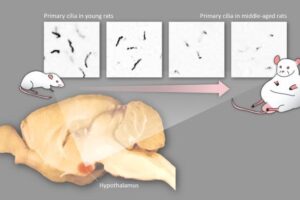
Shortening of MC4R+ primary cilia in the hypothalamus of the brain leads to middle-age obesity.

Middle-age obesity is caused by changes in the shape of neurons in the brain

Professors Erik Nelson, left, Kelly Swanson, and Brett Loman, far right, joined together on research using a mouse study on the gut microbiome and female sex hormones and their roles in metabolic dysfunction in postmenopausal women. Photo taken at the University of Illinois Urbana-Champaign on Tuesday, Jan. 23, 2024. (Photo by Fred Zwicky / University of Illinois Urbana-Champaign)

Mice study suggests metabolic diseases may be driven by gut microbiome, loss of ovarian hormones

Man taking his blood pressure

Weight loss medication tirzepatide may help lower blood pressure in adults with obesity

Older posts
Newer posts
← Previous Page1 Page2 Page3 Page4 … Page7 Next →
Substack subscription form sign up

Comments

  • Karoly Mirnics on Common Prescription Drugs May Disrupt Cholesterol Pathways in the Womb and Raise Autism Risk
  • Aizen on Laziness helped lead to extinction of Homo erectus
  • Norwood johnson on Electrons in New Crystals Behave as If They Live in Four Dimensions
  • ScienceBlog.com on Hidden Geometry Could Finally Fix Quantum Computers
  • Theo Prinse on America Is Going Back to the Moon. This Time, It Plans to Stay
© 2026 ScienceBlog.com | Follow our RSS / XML feed