Skip to content
ScienceBlog.com
  • Featured Blogs
    • EU Horizon Blog
    • ESA Tracker
    • Experimental Frontiers
    • Josh Mitteldorf’s Aging Matters
    • Dr. Lu Zhang’s Gondwanaland
    • NeuroEdge
    • NIAAA
    • SciChi
    • The Poetry of Science
    • Wild Science
  • Topics
    • Brain & Behavior
    • Earth, Energy & Environment
    • Health
    • Life & Non-humans
    • Physics & Mathematics
    • Social Sciences
    • Space
    • Technology
  • Our Substack
  • Follow Us!
    • Bluesky
    • Threads
    • FaceBook
    • Google News
    • Twitter/X
  • Contribute/Contact

physics

Ohio State logo

Ohio State professor selected for DOD high-risk basic research fellowship

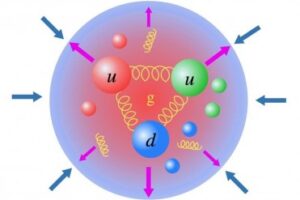
Scientists Discover Energy and Pressure Analogies Linking Hadrons, Superconductors, and Cosmic Expansion

Quantum Anomalies Link Subatomic Particles to Cosmic Expansion

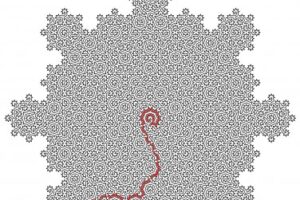
Image shows one possible solution exiting the simpler of the two mazes.

Scientists create world’s most amazingly difficult maze with future potential to boost carbon capture


Ohio State leads project to transform physics education

Scientists use generative AI to answer complex questions in physics

Scientists use generative AI to answer complex questions in physics

Understanding of the proton has changed from the 1980s view of the proton as made of three valence quarks (left) to the modern view that it is made of valence quarks, sea quarks, and gluons rotating in different directions around its spin axis (right).

New Theoretical Contribution Helps Examine the Internal Rotation of the Proton

Ibn al-Haytham (“Alhasen”) on the left pedestal of reason [while Galileo is on the right pedestal of the senses] as shown on the frontispiece of the Selenographia (Science of the Moon; 1647) of Johannes HeveliusIbn al-Haytham (“Alhasen”) on the left pedestal of reason [while Galileo is on the right pedestal of the senses] as shown on the frontispiece of the Selenographia (Science of the Moon; 1647) of Johannes Hevelius

11th Century Arab-Muslim Scientist’s Writings Revolutionized Optics, Transforming Physics in Europe

A split image showing a congested highway on one side and a dense bacterial colony on the other, illustrating the surprising connection between the two phenomena.

Scientists Uncover Surprising Link Between Traffic Jams and Bacterial Behavior

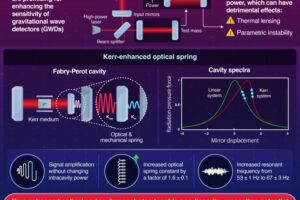
Kerr-enhanced optical spring demonstrates tunable non-linearity, presenting potential applications for enhancing GWD sensitivity and in various optomechanical systems.

Revolutionizing Gravitational Wave Detection: The Kerr-Enhanced Optical Spring

The study found that negatively charged silica microparticles suspended in water attracted each other to form hexagonally arranged clusters. Image credit: Cover image: Zhang Kang.

It’s not only opposites that attract – new study shows like-charged particles can come together

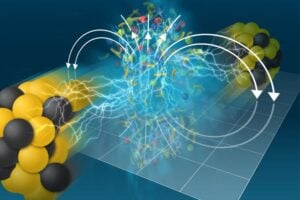
Collisions of heavy ions generate an immensely strong electromagnetic field. Scientists investigate traces of this powerful electromagnetic field in the quark-gluon plasma (QGP), a state where quarks and gluons are liberated from the colliding protons and neutrons.

Super strong magnetic fields leave imprint on nuclear matter

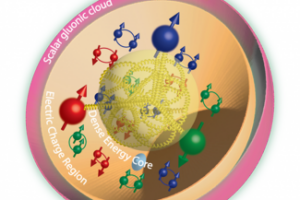
A proton’s valence quarks (blue, red, and green), quark-antiquark pairs, and gluons (springs). Scalar gluon activity (pink) extends beyond the electric charge radius (orange) that surrounds the gluonic energy core (yellow).

Scientists Locate the Missing Mass Inside the Proton

For the first time, MIT physicists have captured direct images of “second sound,” the movement of heat sloshing back and forth within a superfluid. The results will expand scientists’ understanding of heat flow in superconductors and neutron stars. Credits:Image: Jose-Luis Olivares, MIT

MIT physicists capture the first sounds of heat “sloshing” in a superfluid

For decades scientists have been trying to solve Feynman’s Sprinkler Problem: How does a sprinkler running in reverse—in which the water flows into the device rather than out of it—work? Through a series of experiments, a team of mathematicians has figured out how flowing fluids exert forces and move structures, thereby revealing the answer to this long-standing mystery. “Our study solves the problem by combining precision lab experiments with mathematical modeling that explains how a reverse sprinkler operates,” explains Leif Ristroph, an associate professor at New York University’s Courant Institute of Mathematical Sciences and the senior author of the paper, appears in the journal Physical Review Letters. “We found that the reverse sprinkler spins in the ‘reverse’ or opposite direction when taking in water as it does when ejecting it, and the cause is subtle and surprising.” “The regular or ‘forward’ sprinkler is similar to a rocket, since it propels itself by shooting out jets,” adds Ristroph. “But the reverse sprinkler is mysterious since the water being sucked in doesn’t look at all like jets. We discovered that the secret is hidden inside the sprinkler, where there are indeed jets that explain the observed motions.” The research answers one of the oldest and most difficult problems in the physics of fluids. And while Ristroph recognizes there is modest utility in understanding the workings of a reverse sprinkler—“There is no need to ‘unwater’ lawns,” he says—the findings teach us about the underlying physics and whether we can improve the methods needed to engineer devices that use flowing fluids to control motions and forces. “We now have a much better understanding about situations in which fluid flow through structures can induce motion,” notes Brennan Sprinkle, an assistant professor at Colorado School of Mines and one of the paper’s co-authors. “We think these methods we used in our experiments will be useful for many practical applications involving devices that respond to flowing air or water.” The Feynman sprinkler problem is typically framed as a thought experiment about a type of lawn sprinkler that spins when fluid, such as water, is expelled out of its S-shaped tubes or “arms.” The question asks what happens if fluid is sucked in through the arms: Does the device rotate, in what direction, and why? The problem is associated with pioneers in physics, from Ernst Mach, who posed the problem in the 1880s, to the Nobel laureate Richard Feynman, who worked on and popularized it from the 1960s through 1980s. It has since spawned numerous studies that debate the outcome and the underlying physics—and to this day it is presented as an open problem in physics and in fluid mechanics textbooks. In setting out to solve the reverse sprinkler problem, Ristroph, Sprinkle, and their co-authors, Kaizhe Wang, an NYU doctoral student at the time of the study, and Mingxuan Zuo, an NYU graduate student, custom manufactured sprinkler devices and immersed them in water in an apparatus that pushes in or pulls out water at controllable rates. To let the device spin freely in response to the flow, the researchers built a new type of ultra-low-friction rotary bearing. They also designed the sprinkler in a way that enabled them to observe and measure how the water flows outside, inside, and through it. “This has never been done before and was key to solving the problem,” Ristroph explains. To better observe the reverse sprinkler process, the researchers added dyes and microparticles in the water, illuminated with lasers, and captured the flows using high-speed cameras. The results showed that a reverse sprinkler rotates much more slowly than does a conventional one—about 50 times slower—but the mechanisms are fundamentally similar. A conventional forward sprinkler acts like a rotating version of a rocket powered by water jetting out of the arms. A reverse sprinkler acts as an “inside-out rocket,” with its jets shooting inside the chamber where the arms meet. The researchers found that the two internal jets collide but they do not meet exactly head on, and their math model showed how this subtle effect produces forces that rotate the sprinkler in reverse. The team sees the breakthrough as potentially beneficial to harnessing climate-friendly energy sources. “There are ample and sustainable sources of energy flowing around us—wind in our atmosphere as well as waves and currents in our oceans and rivers,” says Ristroph. “Figuring out how to harvest this energy is a major challenge and will require us to better understand the physics of fluids.” The work was supported by a grant from the National Science Foundation (DMS-1646339).

How does Richard Feynman’s “reverse sprinkler” work?

Older posts
Newer posts
← Previous Page1 Page2 Page3 Page4 Next →
Substack subscription form sign up

Comments

  • Karoly Mirnics on Common Prescription Drugs May Disrupt Cholesterol Pathways in the Womb and Raise Autism Risk
  • Aizen on Laziness helped lead to extinction of Homo erectus
  • Norwood johnson on Electrons in New Crystals Behave as If They Live in Four Dimensions
  • ScienceBlog.com on Hidden Geometry Could Finally Fix Quantum Computers
  • Theo Prinse on America Is Going Back to the Moon. This Time, It Plans to Stay
© 2026 ScienceBlog.com | Follow our RSS / XML feed