Skip to content
ScienceBlog.com
  • Featured Blogs
    • EU Horizon Blog
    • ESA Tracker
    • Experimental Frontiers
    • Josh Mitteldorf’s Aging Matters
    • Dr. Lu Zhang’s Gondwanaland
    • NeuroEdge
    • NIAAA
    • SciChi
    • The Poetry of Science
    • Wild Science
  • Topics
    • Brain & Behavior
    • Earth, Energy & Environment
    • Health
    • Life & Non-humans
    • Physics & Mathematics
    • Social Sciences
    • Space
    • Technology
  • Our Substack
  • Follow Us!
    • Bluesky
    • Threads
    • FaceBook
    • Google News
    • Twitter/X
  • Contribute/Contact

Solar System

Hot Jupiter

Jupiter’s Magnetic Shield Buckles Under Solar Wind, Unleashing Unexpected Heat Wave

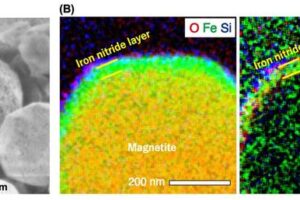
Colorized microscopic image of sodium carbonate deposit on Ryugu sample

Ancient Space Salt Reveals Solar System’s Watery Past

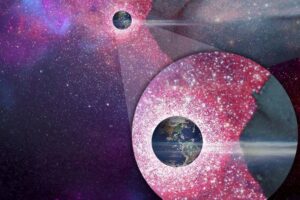
For a brief period of time millions of years ago, Earth may have been plunged out of the sun’s protective plasma shield, called the heliosphere, which is depicted here as the dark gray bubble over the backdrop of interstellar space. According to new research, this could have exposed Earth to high levels of radiation and influenced the climate. Photo courtesy of Opher, et al., Nature Astronomy

Earth’s Climate May Be Shaped by the Sun’s Galactic Journey

Probing the effects of interplanetary space on asteroid Ryugu

Asteroid Ryugu’s Secrets Revealed: Space Weathering, Micrometeoroids, and the Early Solar System

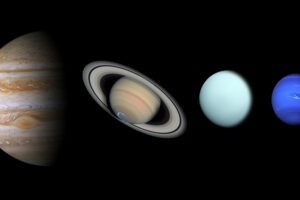
Our solar system's giant planets

Asteroid fragments narrow down timeframe for giant planets’ current orbits

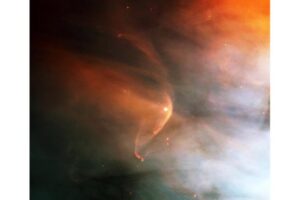
Infrared image of the shockwave (red arc) created by the massive giant star Zeta Ophiuchi in an interstellar dust cloud. The tenuous winds of sun-like main-sequence stars are much more difficult to observe

Stellar winds of three sun-like stars detected for the first time

Early earth, with a lake

Meteorite Analysis Shows Earth’s Building Blocks Contained Water

Nitrogen illustration

Meteorites likely source of nitrogen for early Earth

Meteors help answer riddles about water

Plot thickens in hunt for ninth planet

Plot thickens in hunt for ninth planet

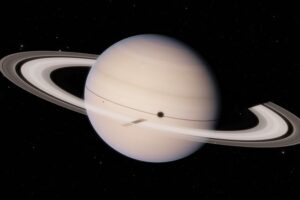
The panet Saturn with its trademark rings

Saturn’s rings are really young and mostly water

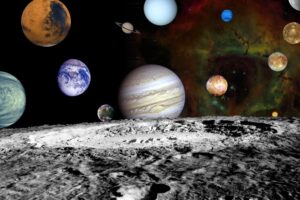
Solar system montage of the nine planets and moons of Jupiter in our solar system.

The planet that could end life on Earth

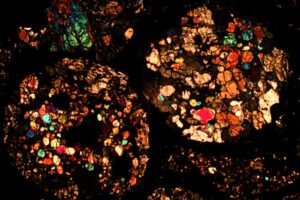
A meteorite thin section under a microscope. Different colors represent different minerals, because light travels through them in different ways. The round mineral aggregates are chondrules, which are a major component in primitive meteorites.

Solar System formed from “poorly mixed cake batter”

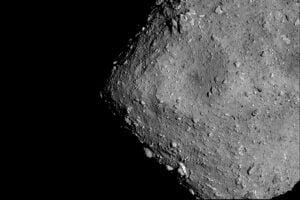
Ryugu asteroid closeup

Ryugu asteroid shares secrets on how the solar system was formed

Substack subscription form sign up

Comments

  • Kidreadytobreed on Global warming reduces available wind energy
  • James on Global warming reduces available wind energy
  • James on Global warming reduces available wind energy
  • Booklet AI on Key to online education: Test early and often
  • Karoly Mirnics on Common Prescription Drugs May Disrupt Cholesterol Pathways in the Womb and Raise Autism Risk
© 2026 ScienceBlog.com | Follow our RSS / XML feed