Skip to content
ScienceBlog.com
  • Featured Blogs
    • EU Horizon Blog
    • ESA Tracker
    • Experimental Frontiers
    • Josh Mitteldorf’s Aging Matters
    • Dr. Lu Zhang’s Gondwanaland
    • NeuroEdge
    • NIAAA
    • SciChi
    • The Poetry of Science
    • Wild Science
  • Topics
    • Brain & Behavior
    • Earth, Energy & Environment
    • Health
    • Life & Non-humans
    • Physics & Mathematics
    • Social Sciences
    • Space
    • Technology
  • Our Substack
  • Follow Us!
    • Bluesky
    • Threads
    • FaceBook
    • Google News
    • Twitter/X
  • Contribute/Contact

Super

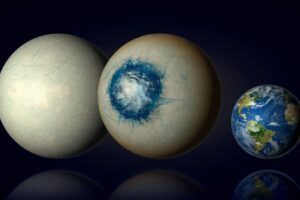
Temperate exoplanet LHS 1140 b may be a world completely covered in ice (left) similar to Jupiter’s moon Europa or be an ice world with a liquid substellar ocean and a cloudy atmosphere (centre). LHS 1140 b is 1.7 times the size of our planet Earth (right) and is the most promising habitable zone exoplanet yet in our search for liquid water beyond the Solar System. Image credit: B. Gougeon/Université de Montréal

Astronomers find surprising ice world in the habitable zone

Microscopic image

Superlensing without a super lens: physicists boost microscopes beyond limits

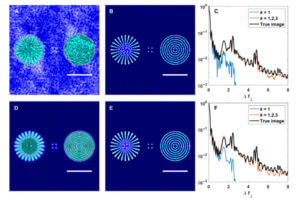
Insets (A) and (D) use classical information only. Insets (B) and (E) combine classical and quantum information.

Algorithm fuses quantum and classical information for high-quality imaging

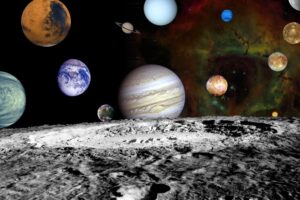
Solar system montage of the nine planets and moons of Jupiter in our solar system.

The planet that could end life on Earth

Substack subscription form sign up

Comments

  • Ashok Kumar on Machine Learning Matched the Right Lifestyle Fix to Each Depressed Patient, Doubling Remission Rates
  • Curtis Webber on The GPS-Killer? This Quantum Device ‘Feels’ Motion Like a Brain—Down to the Atomic Level
  • Ran on How the Age You First Had Sex Could Shape How You Age Decades Later
  • Sparty on How the Age You First Had Sex Could Shape How You Age Decades Later
  • Josh Mitteldorf on A Single TV Segment Sent Leucovorin Prescriptions for Autistic Children Soaring 2,000 Percent
© 2026 ScienceBlog.com | Follow our RSS / XML feed