Skip to content
ScienceBlog.com
  • Featured Blogs
    • EU Horizon Blog
    • ESA Tracker
    • Experimental Frontiers
    • Josh Mitteldorf’s Aging Matters
    • Dr. Lu Zhang’s Gondwanaland
    • NeuroEdge
    • NIAAA
    • SciChi
    • The Poetry of Science
    • Wild Science
  • Topics
    • Brain & Behavior
    • Earth, Energy & Environment
    • Health
    • Life & Non-humans
    • Physics & Mathematics
    • Social Sciences
    • Space
    • Technology
  • Our Substack
  • Follow Us!
    • Bluesky
    • Threads
    • FaceBook
    • Google News
    • Twitter/X
  • Contribute/Contact

Tropical forests

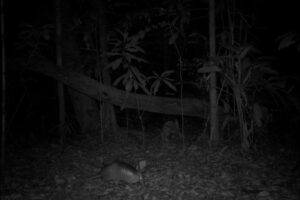
Armadillo. Armadillos are lunar phobic and less active when there is more lunar/moon illumination. Taken by a wildlife camera.

Moon Phases Influence Tropical Forest Mammals’ Behavior, Study Finds

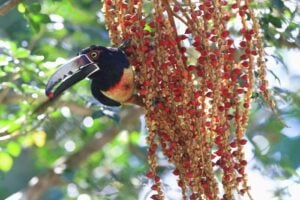
The Collared Araçari (Pteroglossus torquatus) is among the few birds that can disperse plants with large seeds and play a key role in dispersal in forests in Central and South America. It is especially important for young forests growing on abandoned land, as they bring in seeds of many different species that will help the forest regenerate a diverse tree community.

Tropical forests can’t recover naturally without fruit eating birds

Substack subscription form sign up

Comments

  • Karoly Mirnics on Common Prescription Drugs May Disrupt Cholesterol Pathways in the Womb and Raise Autism Risk
  • Aizen on Laziness helped lead to extinction of Homo erectus
  • Norwood johnson on Electrons in New Crystals Behave as If They Live in Four Dimensions
  • ScienceBlog.com on Hidden Geometry Could Finally Fix Quantum Computers
  • Theo Prinse on America Is Going Back to the Moon. This Time, It Plans to Stay
© 2026 ScienceBlog.com | Follow our RSS / XML feed