Skip to content
ScienceBlog.com
  • Featured Blogs
    • EU Horizon Blog
    • ESA Tracker
    • Experimental Frontiers
    • Josh Mitteldorf’s Aging Matters
    • Dr. Lu Zhang’s Gondwanaland
    • NeuroEdge
    • NIAAA
    • SciChi
    • The Poetry of Science
    • Wild Science
  • Topics
    • Brain & Behavior
    • Earth, Energy & Environment
    • Health
    • Life & Non-humans
    • Physics & Mathematics
    • Social Sciences
    • Space
    • Technology
  • Our Substack
  • Follow Us!
    • Bluesky
    • Threads
    • FaceBook
    • Google News
    • Twitter/X
  • Contribute/Contact

Water

Colorized microscopic image of sodium carbonate deposit on Ryugu sample

Ancient Space Salt Reveals Solar System’s Watery Past

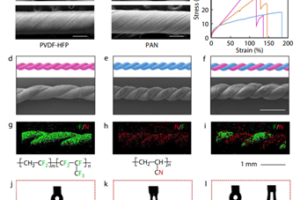
Morphology and wetting property. (a, b) SEM images of aligned PVDF-HFP and PAN fibers.

From Beetles to Bottles: Innovative Yarn Quenches Thirst with Fog

ice illustration

Even far below freezing, ice’s surface begins melting as temperatures rise

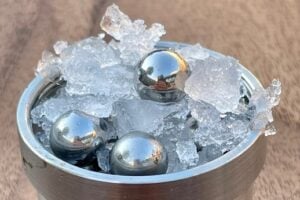
Part of the set-up for creating medium-density amorphous ice

Discovery of new ice may change understanding of water

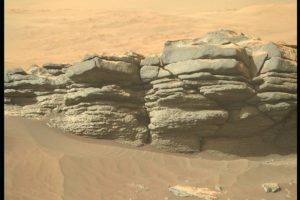
Mars rover Perseverance helped scientists study layered rocks like these in Jezero Crater on the Martian surface. Scientists initially thought they were sedimentary rocks, but further examination showed them to be igneous rocks – solidified lava. These rocks show evidence of interaction with water, but on a limited basis. They date back nearly 4 billion years, giving scientists a window into what conditions on the early planets were like. (Image/NASA/JPL-Caltech/ASU)

Mars was covered by 300 meter deep oceans

Substack subscription form sign up

Comments

  • Karoly Mirnics on Common Prescription Drugs May Disrupt Cholesterol Pathways in the Womb and Raise Autism Risk
  • Aizen on Laziness helped lead to extinction of Homo erectus
  • Norwood johnson on Electrons in New Crystals Behave as If They Live in Four Dimensions
  • ScienceBlog.com on Hidden Geometry Could Finally Fix Quantum Computers
  • Theo Prinse on America Is Going Back to the Moon. This Time, It Plans to Stay
© 2026 ScienceBlog.com | Follow our RSS / XML feed