Skip to content
ScienceBlog.com
  • Featured Blogs
    • EU Horizon Blog
    • ESA Tracker
    • Experimental Frontiers
    • Josh Mitteldorf’s Aging Matters
    • Dr. Lu Zhang’s Gondwanaland
    • NeuroEdge
    • NIAAA
    • SciChi
    • The Poetry of Science
    • Wild Science
  • Topics
    • Brain & Behavior
    • Earth, Energy & Environment
    • Health
    • Life & Non-humans
    • Physics & Mathematics
    • Social Sciences
    • Space
    • Technology
  • Our Substack
  • Follow Us!
    • Bluesky
    • Threads
    • FaceBook
    • Google News
    • Twitter/X
  • Contribute/Contact

Zoology

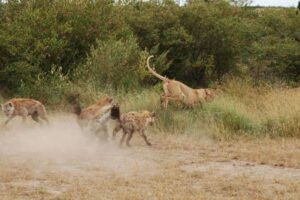
Four spotted hyenas watch a lioness bound away from them into tall grass.

‘Friendly’ hyenas are more likely to form mobs

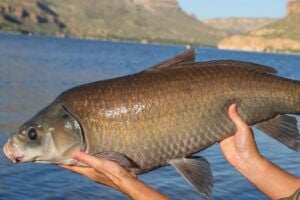
A century-old buffalofish from Apache Lake, Arizona.

Study uncovers hundred-year lifespans for three freshwater fish species in the Arizona desert

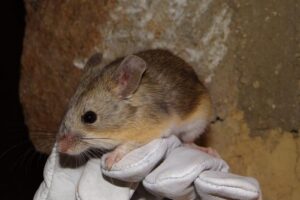
This photograph shows a member of a species of leaf-eared mouse called Phyllotis vaccarum.

Mouse mummies point to mammalian life in “Mars-like” Andes

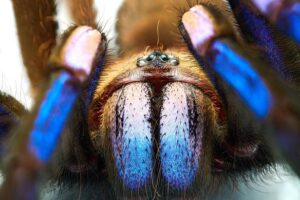
Electric blue tarantula close up.

New electric blue tarantula species discovered in Thailand

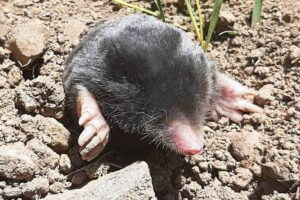
Talpa hakkariensis – found in the Hakkari region of southeastern Turkey – was identified as a new species of mole, highly distinctive in terms of both its morphology and DNA

Hidden moles in hidden holes: New species found after 3 million years

Nictation and leaping of dauer larvae under an electric field. Top row, single dauer larva; middle row, two dauer larvae; bottom row, a group of dauer larvae. (Takuya Chiba et al. Current Biology. July 10, 2023)

Worms joy ride across electric voltages

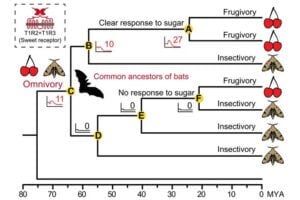
The ancestral sweet receptor of all extant bats (Node C) was functionally sensitive to natural sugars, with a lower level of sugar sensitivity than modern pteropodid bats (Node A), suggesting that common ancestors of bats were omnivorous.

Common ancestors of bats were omnivorous suggested by resurrection of ancestral sweet receptors

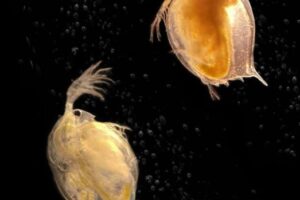
Daphnia water fleas (on the right sick Daphnia & on the left healthy Daphnia)

Parasites can have a positive effect on biodiversity and a crucial role in maintaining it

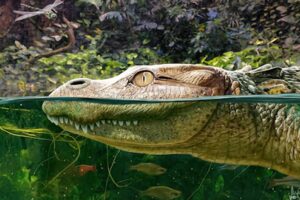
New alligator identified in Asia. Image courtesy of Nature.

New ancient Asian alligator species identified

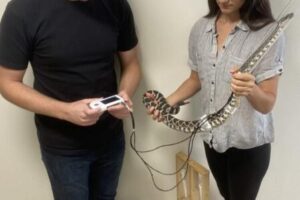
The scientists used a special testing apparatus for their measurements.

Rattlesnakes Help Each Other Destress

Hummingbird. Pixabay

Sipping at the Bar: Hummingbirds Consume Alcohol in Nectar

Field photo of woolly mammoth tusks, teeth and assorted bones collected on Wrangel Island by co-authors (and others) of the new Nature study. These specimens were not used in the study. They were found at least partly exposed while prospecting along river channels and banks. Image credit: Alexei Tikhonov

Surging testosterone found in male woolly mammoths

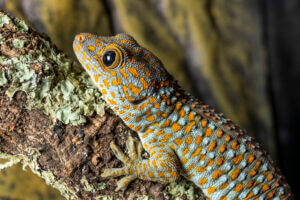
A closeup of a colorful gecko

Tasting Geckos

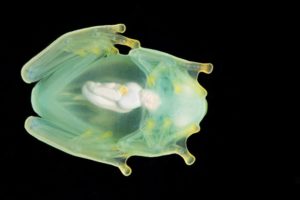
A sleeping glassfrog

Glassfrogs Use Reflective Livers to Achieve Transparency

Newer posts
← Previous Page1 Page2
Substack subscription form sign up

Comments

  • Dax on The Silent Frequency That Makes Old Buildings Feel Haunted
  • Karoly Mirnics on Common Prescription Drugs May Disrupt Cholesterol Pathways in the Womb and Raise Autism Risk
  • Aizen on Laziness helped lead to extinction of Homo erectus
  • Norwood johnson on Electrons in New Crystals Behave as If They Live in Four Dimensions
  • ScienceBlog.com on Hidden Geometry Could Finally Fix Quantum Computers
© 2026 ScienceBlog.com | Follow our RSS / XML feed