

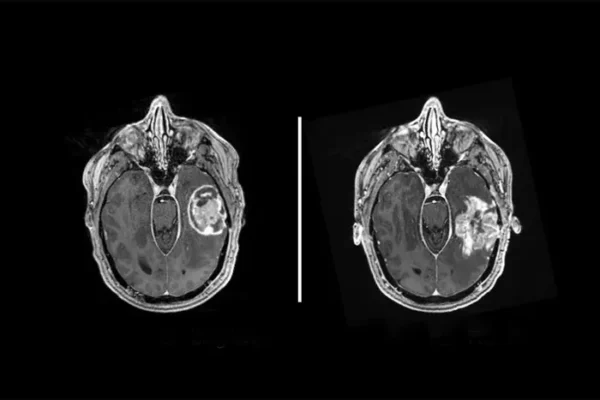
Everything oncologists thought they knew about testosterone and cancer pointed one direction. The hormone suppresses the immune system, shields tumors from attack, makes things worse. Strip it away and patients do better. That logic held across lung cancer, bladder cancer, melanoma, and dozens of studies. It was, by most accounts, one of the cleaner narratives in cancer biology. Then Juyeun Lee’s team at Cleveland Clinic started removing testosterone from mice with brain tumors, and the tumors grew faster.
The finding, published in Nature, doesn’t just complicate the testosterone-in-cancer story. It rewrites it in a way that could matter directly to patients with glioblastoma, the most common and lethal primary brain tumor in adults.
Lee, a veterinarian-turned-cancer-researcher now based at Cleveland Clinic’s Florida Research & Innovation Center, had started from a reasonable premise. Glioblastoma is more common in men than in women, more aggressive in men, and kills them faster. Sex hormones seemed a plausible culprit. “There are other findings on non-brain tumors that show that testosterone is basically the bad guy, suppressing the immune response and making the tumor grow faster,” she says. “This has been shown in multiple cancers, like lung and bladder cancer and melanoma. We wanted to know if the same result would occur in glioblastoma.” The team castrated male mice, implanted brain tumors, and watched survival times collapse rather than improve.
Collapse. Not improve. Which meant something particular to the brain was flipping the normal hormone logic on its head.
The researchers ran several checks to rule out the obvious alternatives. Perhaps testosterone was simply toxic to glioblastoma cells directly? But when the same tumor cells were implanted under the skin, in the flank, castration worked exactly as expected: tumor growth slowed. Bladder cancer and melanoma cells, implanted directly into the brain, also grew faster in castrated animals, ruling out a glioblastoma-specific cell effect. Whatever was happening had nothing to do with the cancer type. It had everything to do with where the tumor was sitting.
A Chain Reaction Starting in the Brain
Justin Lathia, who leads the Cleveland Clinic lab that conducted the research, describes what the team uncovered as a cascade with unusually long reach. “In cancers outside of the brain, blocking androgens can improve immunity,” he says. The brain reverses that logic entirely, he argues, because the effects travel far beyond the tumor site itself, reshaping neuroendocrine function in distant regions including the hypothalamus. “The location of a tumor significantly changes how hormones affect immunity.”
The mechanism, pieced together through spatial transcriptomics, single-cell RNA sequencing, and several knockout mouse strains, runs roughly like this: without testosterone, the brain’s resident immune cells, known as microglia, become hyperactivated at the tumor site. They ramp up production of two inflammatory signals, IL-1beta and TNF, which travel to the hypothalamus and jolt a circuit most people associate with stress rather than cancer. That circuit, the hypothalamic-pituitary-adrenal axis, responds by flooding the bloodstream with glucocorticoids, the body’s stress hormones. Glucocorticoids then suppress T cells throughout the body, not just in the brain, and the immune system’s capacity to fight the tumor drops. The team confirmed each link: mice missing receptors for IL-1beta or TNF didn’t show the castration effect at all. Blocking the glucocorticoid receptor with a drug called mifepristone extended survival in castrated mice. Microglia depletion reduced the inflammatory signals. The whole chain held together.
Particularly striking was what happened in the hypothalamus, a brain region that physically doesn’t touch the tumor. Transcriptomic analysis of hypothalamic tissue showed that castrated tumor-bearing mice had a distinct gene expression signature compared to their intact counterparts, one enriched for cytokine signaling pathways. The tumor, it seems, was reaching across the brain to reshape neuroendocrine function in a hormone-deprived setting.
The effect also worked in immunodeficient mice, which retain microglia but lack adaptive immune cells, pointing at the brain’s innate immune system as the initiating event rather than T cells directly. Microglia, it turned out, have a hair trigger for inflammasome activation when androgens are absent: in lab experiments, treating macrophages with dihydrotestosterone sharply reduced the condensation of ASC “specks,” a marker that the NLRP3 inflammasome is firing. Without the hormone, the specks multiplied.
Evidence from Patients
Whether any of this translates to people is, of course, the question that matters. The team went looking for an answer in the SEER-Medicare linked database, which tracks cancer outcomes for older Americans. Among men diagnosed with glioblastoma between 2008 and 2019 who received standard chemotherapy, those who also happened to be on testosterone supplementation (61 patients) had a median overall survival of about 16 months, compared with roughly 12 months for those receiving chemotherapy alone (more than 1,200 patients). After adjusting for age, disease burden, and other variables, the survival advantage translated to about a 38% reduced risk of death. Small numbers, retrospective data, all the usual caveats. But the direction matched the mouse experiments precisely.
Clinical translation faces real obstacles. Glioblastoma patients are frequently treated with dexamethasone, a potent glucocorticoid used to control brain swelling, particularly around surgery and radiation. That drug already suppresses the HPA axis and the immune system; adding testosterone supplementation to that picture creates interactions the current study hasn’t addressed. The mouse models also used young animals, which doesn’t capture the immunological and hormonal landscape of a typical glioblastoma patient in their late sixties.
Lathia is careful about what the findings claim. “What excites me about our findings is the new insight we are contributing to the growing field of cancer neuroscience,” he says. “This study looks beyond the tumor at the interaction with the nervous system, in addition to the immune system.” The lab’s position is that supplemental testosterone warrants formal evaluation as a glioblastoma therapy, not that it’s ready to prescribe. “We see so much potential for the future of glioblastoma treatment. Our ultimate assertion is that supplemental testosterone could be evaluated as a therapy, marking an important opportunity to advance our fight against cancer.”
What’s harder to qualify is the conceptual shift the paper forces. For anyone developing cancer immunotherapies, the assumption that androgen deprivation is reliably helpful, that removing testosterone always frees T cells to do their job, may now need a geographic footnote. Where the tumor lives, it seems, determines what the hormone does to the body trying to fight it.
DOI / Source: https://doi.org/10.1038/s41586-026-10451-5
Frequently Asked Questions
Why does testosterone help brain tumors but hurt other cancers?
The brain is an immunologically unusual organ, and it appears to use testosterone to regulate its own immune cells differently from other tissues. When testosterone is absent, microglia, the brain’s resident immune cells, become overactivated and trigger a chain of stress hormone signals that ultimately suppresses the body’s anti-tumor defenses. In tumors outside the brain, the opposite happens: testosterone keeps anti-tumor T cells suppressed, so removing it helps. The same hormone does opposite things depending entirely on where the tumor is.
Could testosterone therapy actually become a treatment for glioblastoma?
Possibly, but the evidence isn’t there yet to justify prescribing it. The Cleveland Clinic findings suggest a biological rationale and point to intriguing survival data in a retrospective patient analysis, but that kind of data has significant limitations. Formal clinical trials are the next step, and researchers also need to understand how testosterone interacts with dexamethasone, a drug most glioblastoma patients already receive that suppresses the same immune pathways. The study’s authors are calling for evaluation, not implementation.
Is this why men do worse than women with glioblastoma?
Probably not the whole story. Men have higher rates of glioblastoma and worse outcomes, a pattern researchers have been trying to explain for years using factors ranging from sex chromosomes to tumor biology. This study adds a new piece: in older men, declining testosterone levels may remove a protective brake on brain inflammation, allowing tumors to exploit a stress-hormone pathway that younger men or women with different hormone profiles don’t face in the same way. Whether that fully accounts for the survival gap remains an open question.
How does stress get involved in a brain tumor growing faster?
The hypothalamic-pituitary-adrenal axis, which governs the body’s stress response, can be triggered by inflammatory signals from the brain. When microglia fire up in the absence of testosterone, they release cytokines that reach the hypothalamus and activate this axis, flooding the bloodstream with cortisol-like hormones. Those stress hormones then dampen T cell activity throughout the body, not just near the tumor, effectively weakening the immune system’s ability to fight the cancer from a distance. It’s a route from local brain inflammation to systemic immune suppression that nobody had traced in this context before.