

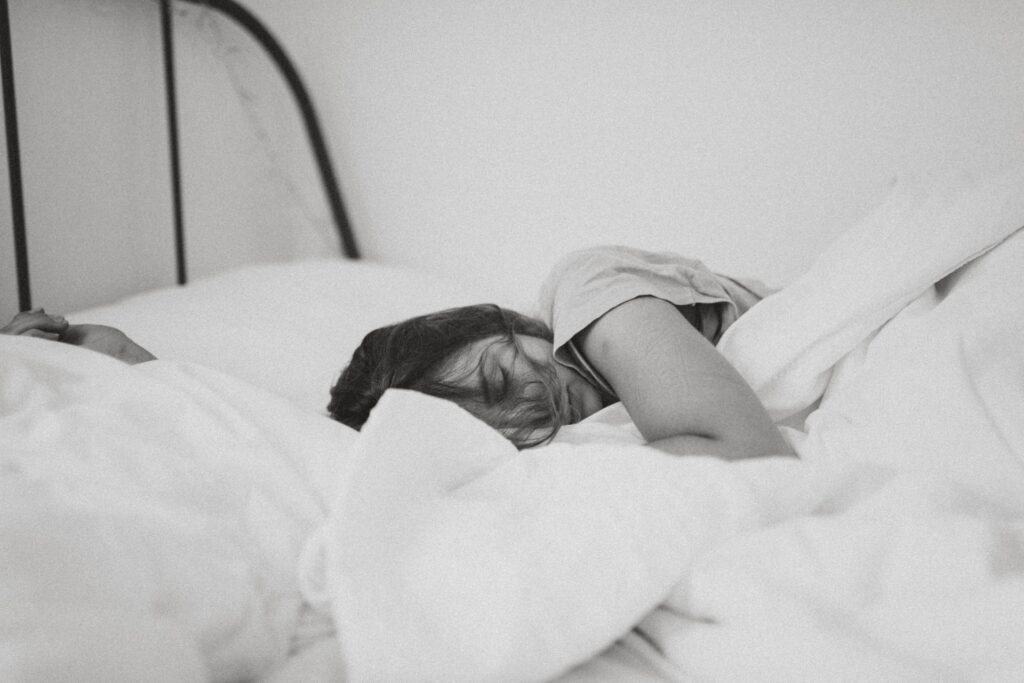
The bedroom speakers hum with steady, static-like sound—pink noise, supposedly the key to deeper, more restorative sleep. Millions play it every night. Spotify alone logs 3 million daily hours of white noise and ambient sound consumption, whilst the top five white noise videos on YouTube have racked up more than 700 million views. Parents place sound machines beside newborns’ cribs. Adults drift off to apps promising better rest. But what if this widespread habit is doing precisely the opposite?
A new study from the University of Pennsylvania suggests that pink noise, far from protecting sleep, may actually undermine it in ways we haven’t recognized. The findings challenge a booming industry and raise uncomfortable questions about what millions of people are doing to themselves—and their children—every single night.
Twenty-five healthy adults spent seven consecutive nights in a sleep laboratory, their brain activity monitored through polysomnography whilst researchers exposed them to different soundscapes. Some nights brought the roar of passing aircraft. Others filled the room with continuous pink noise at 50 decibels, roughly the volume of moderate rainfall. Still others combined both, or added earplugs into the mix. The setup was designed to mimic real-world scenarios: urban noise pollution, the sound machines marketed as sleep aids, and the simplest possible countermeasure.
The results were striking. Aircraft noise did what you’d expect, slashing deep sleep by about 23 minutes per night. But pink noise revealed a different signature entirely: it carved nearly 19 minutes from REM sleep—that peculiar stage of slumber when your eyes dart beneath closed lids and dreams unspool. This wasn’t a side effect of noise disrupting sleep generally. This was something else.
“REM sleep is important for memory consolidation, emotional regulation and brain development,” says Mathias Basner, professor of Sleep and Chronobiology in Psychiatry at Penn’s Perelman School of Medicine, who led the study. The implications, he notes, are particularly concerning for children: “our findings suggest that playing pink noise and other types of broadband noise during sleep could be harmful—especially for children whose brains are still developing and who spend much more time in REM sleep than adults.”
In newborns, REM sleep accounts for roughly half of all sleep time. It gradually decreases, stabilising at about 20% by age three. During these early years, REM sleep appears crucial for brain maturation and cortical development. Disrupting it could have consequences researchers are only beginning to understand; there are links between REM sleep abnormalities and psychiatric disorders including depression, anxiety, and post-traumatic stress disorder. REM sleep behavior disorder itself serves as an early warning sign for Parkinson’s disease and other neurodegenerative conditions.
When the researchers combined pink noise with aircraft sounds, things got worse rather than better. Both deep sleep and REM sleep dropped significantly compared to noise-free nights, and participants spent an extra 15 minutes awake—an effect seen with neither aircraft noise alone nor pink noise alone. The steady background hum, meant to mask disruptive sounds, seemed instead to compound them.
There were some benefits, mind you. Pink noise did reduce the number of times aircraft sounds jolted people towards wakefulness during the moments when planes passed overhead. At the loudest levels—65 decibels, roughly equivalent to a busy restaurant—pink noise at 50 decibels helped maintain deeper sleep compared to no background sound at all. A delicate trade-off emerged: pink noise protected against some of aircraft noise’s worst effects whilst simultaneously preventing the brain from entering or maintaining REM sleep.
Earplugs told a different story altogether. Simple foam earplugs recovered about 72% of the deep sleep lost to aircraft noise, with none of pink noise’s REM sleep penalties. They worked almost perfectly up to sound levels of 55 decibels. Only at 65 decibels—a threshold exceeded by fewer than 7% of nighttime noise events in a recent field study—did their protection begin to fail. Most participants found them comfortable; 76% said they slept a little better or much better wearing them.
Perhaps most revealing was what happened during quiet periods between aircraft passes. Even then, when no planes roared overhead, pink noise kept sleep lighter and less restful than silence. The autonomic nervous system, which typically settles during deep sleep, remained more aroused. The researchers tracked this through something called the odds ratio product, a continuous measure of sleep depth. In silence, it dropped to its lowest levels. With pink noise, it never quite got there.
The mechanisms remain unclear. Aircraft noise primarily disrupts deep sleep by triggering arousals—brief cortical activations that fragment sleep architecture. Pink noise appears to work differently, possibly inhibiting the midbrain and hypothalamus neurons that initiate and maintain REM sleep. Continuous sound might prevent these populations from firing properly, the way a never-ending alarm eventually fails to wake you but still keeps you from sleeping deeply.
“Overall, our results caution against the use of broadband noise, especially for newborns and toddlers,” Basner says, “and indicate that we need more research in vulnerable populations, on long-term use, on the different colors of broadband noise, and on safe broadband noise levels in relation to sleep.”
The study found no impact on next-morning performance: blood pressure, heart rate, cognitive tests, driving simulator results all remained unchanged regardless of nighttime noise exposure. But the participants still averaged more than seven hours sleep even on the worst nights, perhaps not enough deprivation to show measurable impairment. And subjective assessments told a different tale; after nights with aircraft noise or pink noise, people reported sleeping worse than usual, feeling more tired, more tense, sleepier. Earplugs mitigated these effects. Pink noise didn’t.
The findings arrive at an awkward moment. Sound machines cluster around cribs in millions of homes. Apps promise better sleep through ambient soundscapes. An entire industry has built itself on the premise that these tools work. Some evidence suggests they might help newborns settle—perhaps by consolidating otherwise fragmented infant sleep—but if the cost is impaired neurodevelopment through chronic REM deprivation, that’s a trade-off worth examining rather than assuming.
The study doesn’t close the book on broadband noise, but it does suggest we’ve been asking the wrong questions. The issue isn’t whether pink noise masks disruptive sounds—clearly it can. The issue is what it does to sleep architecture whilst doing so, and whether those changes matter over months and years rather than single nights in a laboratory. More work lies ahead: testing different noise colours, different volumes, different populations, different durations. Until then, perhaps the simplest tool remains the best. Foam earplugs cost pennies and work remarkably well.