

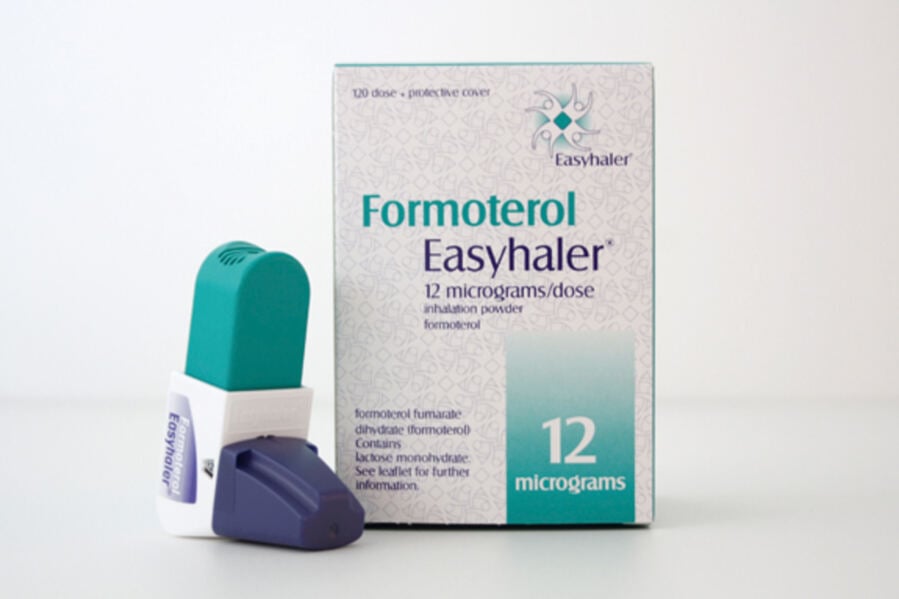
The livers were not supposed to be part of the experiment. Joshua Lipschutz and his team at the Medical University of South Carolina were studying something else entirely, running a mouse model of diabetic kidney disease, checking whether formoterol, a decades-old asthma drug, could slow the renal damage that so often grinds through patients with type 2 diabetes. The kidney results were encouraging. But when the researchers examined the surrounding tissue, they kept noticing something that had no obvious explanation. The mice’s livers looked different. Better, in fact. The fat deposits that should have accumulated after months on a high-fat diet had, in many cases, cleared.
“Kind of unexpectedly, we found that the liver damage also reversed,” said Lipschutz. It was the sort of finding that tends to sit in a notebook for a while before anyone decides whether it’s real.
Fatty liver disease is, by almost any measure, one of the quietly catastrophic public health problems of the 21st century. The advanced form, metabolic dysfunction-associated steatohepatitis, or MASH, affects hundreds of millions of people globally, almost all of them with type 2 diabetes or obesity or both. Fat accumulates in liver cells, then triggers inflammation, then fibrosis, then in some patients the wholesale structural collapse of the liver that ends in transplantation or death. Until very recently there were no approved drugs to treat it at all. Two now exist, but both offer only moderate relief. The pipeline is, to put it mildly, not exactly flush.
Which makes what Lipschutz’s team found rather intriguing. Formoterol is not a new drug. It has been prescribed for asthma and chronic obstructive pulmonary disease for roughly 35 years. Its safety profile is well understood. It is cheap. And in mice, it appears to do something that the approved MASH drugs do not: reverse the damage, not merely slow it.
Revving Up the Mitochondria
The follow-up study, published in npj Metabolic Health and Disease, was designed to test the liver finding properly. Mice were fed a high-fat diet for 16 weeks to establish fatty liver, then treated with formoterol for four weeks. The steatosis, meaning the pathological fat accumulation in liver cells, largely resolved. “This actually reversed the pathology on multiple different levels,” Lipschutz said. Activity scores combining fat burden, inflammation, and cellular ballooning all dropped significantly in the treated animals compared to controls. Lipid analysis confirmed decreases in several specific fat classes, including triacylglycerides, which are particularly relevant to metabolic liver disease.
The mechanism, or what looks like it so far, involves the mitochondria. In healthy liver cells, mitochondria burn fat. In MASH, that machinery starts failing; the mitochondria become fewer and less effective, and fat piles up partly because there’s nothing burning it efficiently. Formoterol, it seems, reverses this. Levels of PGC-1 alpha, the master regulator of mitochondrial biogenesis, were significantly elevated in treated animals. So were proteins from the electron transport chain. Electron microscopy showed more mitochondria per cell. “It looked like formoterol was rescuing the injury by increasing mitochondrial biogenesis,” Lipschutz explained. “It kind of revs up the mitochondria so they work better.” RNA sequencing added texture to this picture: genes related to oxidative phosphorylation were upregulated; genes related to lipid synthesis, inflammation, and the scaffolding proteins involved in liver scarring were suppressed.
The team also tested formoterol in a human liver cell line, HepaRG cells, exposing them to the sort of fatty acids typical of a Western diet. The cells treated with both fat and formoterol accumulated far less lipid than those given fat alone, and showed markedly increased oxygen consumption, suggesting the drug was boosting metabolic activity at a cellular level.
Nearly 60,000 Patients Later
Then came the human data, which is where things get genuinely interesting. The researchers conducted a retrospective analysis of nearly 60,000 patients with MASH in the TriNetX database, comparing those already prescribed long-acting beta-2 agonists for respiratory conditions against matched controls. Over a median follow-up of two years, patients taking the drugs had significantly lower rates of cirrhosis, dangerous fluid accumulation in the abdomen, bleeding from esophageal varices, bacterial infections of that fluid, kidney failure from liver disease, and death from any cause. Propensity score matching on 45 variables was used to try to control for the obvious confounds, though Lipschutz is the first to acknowledge this is observational data. It shows association, not causation.
“Not everything that works in mice works in humans,” he said. Large caveats remain. The mouse results used injected formoterol at doses substantially higher than asthmatic patients typically receive. Whether inhaled delivery reaches the liver in sufficient concentrations to produce these effects is unknown. What the optimal dose for metabolic disease might look like in a human has not been established. And formoterol does carry real cardiovascular risks at high systemic doses, including elevated heart rate and blood pressure, though toxicity studies show a wide safety margin at typical clinical doses.
Lipschutz’s team is currently enrolling patients in a 36-week randomised trial. The primary focus is diabetic kidney disease, but given that over 60% of patients with that condition also have MASH, liver outcomes including fibrosis scores and liver stiffness measurements are being tracked simultaneously. “So it is a two-for-one study,” he said. The existing approved MASH drugs, resmetirom and semaglutide, work by different mechanisms and have different side-effect profiles; repurposing something already on the market could, if the trial works out, move considerably faster than developing a novel compound from scratch. “If you can repurpose something that’s approved and already being used safely, that’s kind of our dream as physician-scientists,” said Lipschutz.
The broader story here, underneath the liver biology, is about what happens when researchers follow unexpected signals. The kidney trial was never meant to answer questions about fat metabolism. The liver data emerged sideways, almost as a nuisance finding, and it turned out to be the more interesting result. Whether formoterol ultimately becomes a treatment for MASH or not, the pathway it’s activating, essentially forcing liver cells to rebuild their metabolic machinery and burn fat more efficiently, points toward a mechanism that deserves serious attention. The liver has ways of rescuing itself, given the right stimulus. The question now is whether a decades-old inhaler can provide it.
DOI: 10.1038/s44324-026-00108-2
Frequently Asked Questions
Could people with asthma who take formoterol already be protecting their livers without knowing it?
Possibly, and the retrospective data hint at exactly that. In the analysis of nearly 60,000 MASH patients, those already prescribed long-acting beta-2 agonists for respiratory conditions had lower rates of serious liver complications than matched controls who weren’t taking them. That’s an observational finding, not proof of causation, but it’s the kind of signal that suggests the drug may be doing something beyond opening airways in patients who take it regularly.
Why would a drug designed for the lungs have any effect on the liver at all?
The beta-2 adrenergic receptor that formoterol activates isn’t exclusive to airway muscle. It’s present in liver cells too, and previous research showed that mice engineered to lack it in the liver develop worse fatty liver on a high-fat diet. Activating it appears to trigger mitochondrial biogenesis, essentially prompting cells to build more of the energy-generating machinery that tends to deteriorate in metabolic disease. The receptor seems to act as a kind of metabolic regulator across multiple organs, not just a bronchodilator.
How is this different from the MASH drugs already approved?
The two approved treatments, resmetirom and semaglutide, can improve liver markers in some patients, but neither has been shown to reverse established liver pathology in the way the mouse experiments suggest formoterol might. Lipschutz describes existing kidney disease drugs as slowing progression at best. The animal data here showed reversal at the histological, ultrastructural, and functional levels, which is a meaningfully stronger claim, though it still needs to be demonstrated in people.
What would stop this from being used as a MASH treatment right now?
Several things. The strongest data come from mice, and the doses used were considerably higher than those in a standard asthma inhaler. It isn’t known whether inhaled delivery reaches the liver in concentrations sufficient to produce these effects, or what the right dose for metabolic disease would even be. There are also real cardiovascular risks at high systemic doses. A randomised human trial is currently enrolling, and until those results are in, clinicians don’t have the evidence base they’d need to prescribe it specifically for liver disease.