

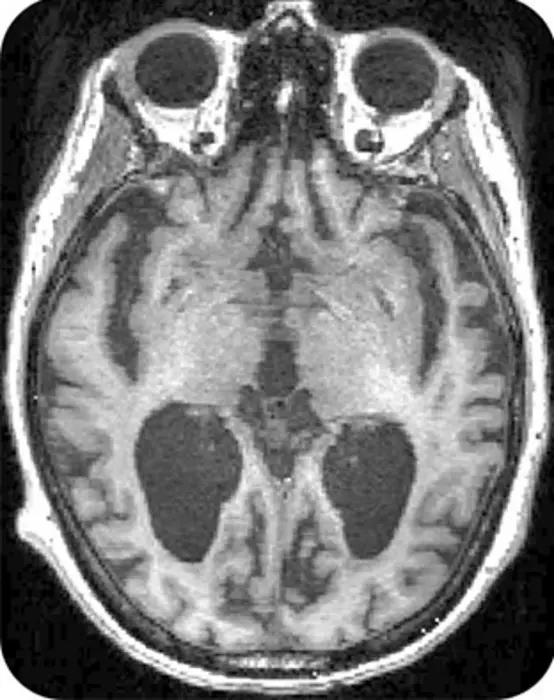
At two months old, the mice were brilliant navigators. By six months, they were hopelessly lost. Under bright lights they instinctively hated, they wandered a circular platform with 20 holes, unable to remember which one led to safety. The normal mice found the exit in under three minutes. These mice couldn’t find it at all.
What changed wasn’t a dramatic injury or infection. A single enzyme had been removed from their brains, one that produces hydrogen sulfide, the gas that makes rotten eggs smell terrible. At microscopic levels in neurons, though, this gas acts as a silent guardian of memory. When Johns Hopkins Medicine researchers genetically deleted the enzyme that makes it, the mice’s brains began deteriorating in ways that look remarkably like Alzheimer’s disease.
The enzyme, cystathionine gamma-lyase or CSE, is now emerging as a potential treatment target for a disease affecting more than six million Americans. Published December 26 in Proceedings of the National Academy of Sciences, the study shows that this protein isn’t just involved in cognition, it’s essential for maintaining the brain’s ability to protect and repair itself.
When the Brain Stops Making Its Own Protection
The progressive decline mirrors what happens in human neurodegeneration. CSE-deficient mice performed normally early in life, suggesting the enzyme doesn’t cause developmental problems. The cognitive collapse came later, as the animals aged without the protective gas their neurons needed.
Under electron microscopes, the damage became visible. The blood-brain barrier, which seals the brain from toxins circulating in the body, showed large gaps and breaches. Iron accumulated in brain tissue. DNA damage mounted. These are the same red flags pathologists find in Alzheimer’s patients.
“This most recent work indicates that CSE alone is a major player in cognitive function and could provide a new avenue for treatment pathways in Alzheimer’s disease,” Solomon Snyder, professor emeritus of neuroscience at Johns Hopkins, explains.
The enzyme’s loss also shut down neurogenesis, the brain’s process for birthing new neurons in the hippocampus. In healthy brains, these fresh cells migrate to where they’re needed and help form new memories. Without CSE, that production line ground to a halt. The molecular switches that trigger cell birth, including CREB and brain-derived neurotrophic factor, stayed turned off.
A Gas Too Toxic to Inject, but Essential to Make
Hydrogen sulfide can’t be used directly as a treatment because higher doses become poisonous. The discovery of CSE as the primary production engine offers a different strategy: boost or stabilize the enzyme itself, letting the brain regulate its protective gas safely.
Lead researcher Bindu Paul, an associate professor at Johns Hopkins, noted that oxidative stress and compromised barrier function were evident at multiple levels. The mice lacking CSE showed symptoms that correlate with what clinicians observe in Alzheimer’s progression, suggesting the enzyme sits upstream of several protective systems.
Current Alzheimer’s therapies do little to slow decline, typically targeting plaques and tangles after substantial damage has occurred. Focusing on CSE represents a shift toward preserving the brain’s own repair mechanisms before cognitive collapse begins. If treatments can keep this enzyme active, they might maintain the delicate processes that let neurons communicate, adapt, and survive into old age.
The spatial memory test that revealed the mice’s decline, the Barnes maze, is deceptively simple. Animals use visual cues to remember an escape route they’ve learned before. When that memory vanishes despite intact vision and movement, something fundamental has broken in the brain’s ability to hold onto the past. By identifying what breaks, the Johns Hopkins team may have found a way to keep those memories intact.
Proceedings of the National Academy of Sciences: 10.1073/pnas.2528478122