

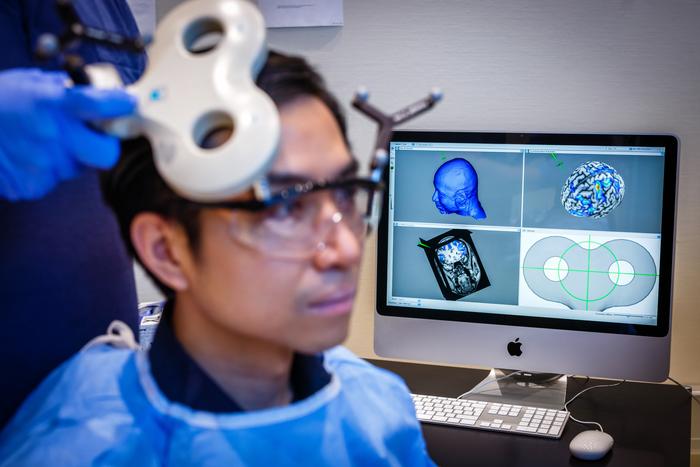
YOU ARE sitting in a quiet lab, electrodes pressed gently against your damp scalp. Outside, the noisy world is often a selfish place, but here, a subtle rhythm is about to change how you see it. Tiny currents are nudging your neurons, whispering a new song to your frontal lobes. It is a song of sharing, of seeing another person’s hidden need as your own.
This is the front line of a new neurobiology, where researchers are finally uncovering why some of us are naturally kinder than our peers. It turns out that the difference between a miser and a saint might not be a matter of moral character or upbringing, but a simple question of neural timing.
The tension between looking out for number one and helping a stranger is one of the oldest dramas in human history. For decades, we have watched this play out in the “Dictator Game,” a simple economic test where one person decides how to split a pot of cash with a stranger. It is a brutal, binary measure of altruism: you can keep it all, or you can give some away. Some of us are naturally generous; others cling to every cent.
To find out why, Jie Hu at East China Normal University and Christian Ruff at the University of Zurich decided to see if they could tune the brain like a radio. We already knew that two specific areas seem to light up when we face these choices: the frontal cortex, which helps us weigh up what other people want, and the parietal lobe, which acts like a biological calculator, adding up the evidence before we act.
But knowing they are active isn’t the same as knowing how they talk to each other. “We identified a pattern of communication between brain regions that is tied to altruistic choices,” says Ruff.
To prove it, the team recruited 44 volunteers for a high-tech nudge. Using a technique called transcranial alternating current stimulation (tACS), they beamed a specific frequency into the brain, forcing the frontal and parietal regions to fire in perfect sync. It’s a bit like forcing two distant instruments to play the same beat so they can finally find a harmony.
The rhythm they chose was the “gamma” band—a high-frequency pulse that the brain uses when it’s deeply engaged in processing information. As the participants played hundreds of rounds of the Dictator Game, making over 500 decisions about whether to share or hoard their money, the researchers turned the dial.
The results were striking. When the stimulation boosted the synchrony of those gamma waves, people became significantly more altruistic. They were more likely to offer more money to their partners, even when it meant they would walk away with less than the person they were helping.
It wasn’t just a random change in behavior. When the team tried a slower “alpha” rhythm, nothing happened. It had to be gamma. “We were struck by how boosting coordination between two brain areas led to more altruistic choices,” says co-author Marius Moisa. “When we increased synchrony between frontal and parietal regions, participants were more likely to help others, even when it came at a personal cost.”
Computational modeling of the data revealed what was happening behind the scenes. The stimulation wasn’t just making people “nicer” in a vague, fuzzy way; it was actually shifting their internal weights. It nudged their preferences, making them consider the other person’s welfare more heavily as they weighed each offer.
“What’s new here is evidence of cause and effect,” says Hu. “When we altered communication in a specific brain network using targeted, non-invasive stimulation, people’s sharing decisions changed in a consistent way—shifting how they balanced their own interests against others’.”
There are still hurdles to clear. The researchers didn’t record the brain’s electrical activity at the exact same time as the stimulation, so the next step involves using EEG to watch the neural dialogue unfold in real-time. We need to see if these patterns hold up in the messy, high-stakes decisions of the real world.
But the implications go far beyond the lab. Understanding this neural symphony could change how we think about social disorders where empathy is absent, or simply help us understand why some societies cooperate better than others. As Ruff puts it, this research “sets the stage for future research on cooperation—especially in situations where success depends on people working together.”
For now, it seems that kindness isn’t just a choice we make; it’s a frequency we tune into. If we can find the right rhythm, we might just find a way to turn the volume up on our better nature.
Study link: https://journals.plos.org/plosbiology/article?id=10.1371/journal.pbio.3003602